Attention!
Cette vidéo est disponible en anglais seulement.
Description
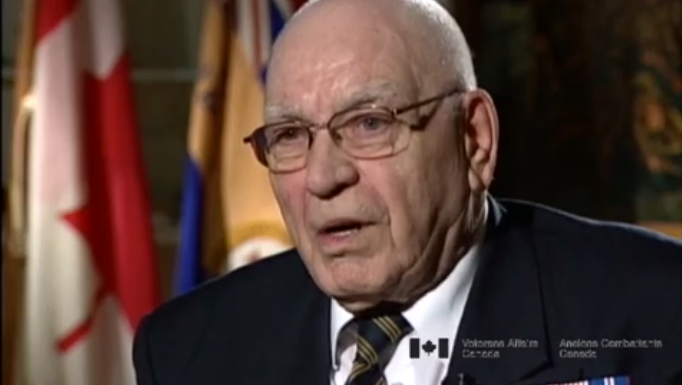
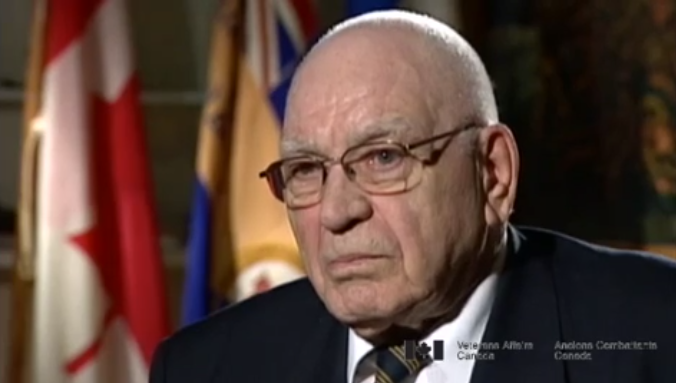
Mr Himes describes his role in the Battle of Hill 187 - the worst action he was involved in while in Korea.
Transcription
Interviewer: You had mentioned, Mr. Himes, that this action where your friend Mr. Newell was killed, that that happened within two weeks. You indicated that you've gone to the front in about a week and a half, so three or four days later... was it the first three or four days relatively quiet until the battle that you're referring to?
Well, they did a lot of ranging in. The Chinese were ranging in and so they wouldn't put a big barrage down until they'd send over, you know, a few shells here, there and whatnot. And that would.... ranging in... oh maybe one gun was firing so.... the time between another shot. And... but they were putting another one being ranged in, and all that...different spots.
Interviewer: So the trick here was that they were trying to get all of their artillery pieces sitting in the right area and they were then assumably getting ready for an attack of some sort.
Yeah.
Interviewer: What, what actually did happen?
"A" Company sent out a patrol, for a fighting patrol, there would be probably about thirteen, fourteen people on it. And when they entered into the valley, they ran into some Chinese. The patrol ran into some Chinese and a fight, fire fight started, which started the whole thing. And then all the artillery, the Chinese artillery and mortars were being dropped onto "C" Company, and a group of us, ten of us from "A" Company we got word that we had wounded down there, from the patrol. But by the time we got together and started down with stretchers we got about half way and it was time to throw the stretchers away, and carry on into the battle. As I say, I didn't see Doug Newell that night at all anywhere, and it was pretty well chaos. The Chinese were shooting at us, our own artillery was firing on our own hill. The lieutenant in "C" Company, he called down for a barrage from our own artillery and our mortars were fired, and... so we had everybody shooting at us I think. The armoured corps were firing their flat trajectory weapons, and machine guns, and... So on the way down, all I could, as I approached the hill, all it was just like a red cherry, the explosions were that fast.
Interviewer: What else do you remember about that night?
That we were very busy, and the time flew actually. I found the time just flew, I guess we were so busy.
Interviewer: And you were tending to the wounded at that time?
No way! No way. The wounded just have to wait in those cases there.
Interviewer: You would have to wait?
Yeah, see I wasn't a, I was just a stretcher bearer what they called... I knew first aid and I carried a rifle. And I also carried, when I went down there, I carried a bag that had the red cross on it. Well I got rid of that right away, because I was going to be shot if I was caught.
Interviewer: Why would you have been shot?
Disguised myself as a medic. And with a rifle in my hand!
Interviewer: Ok. So you would be seen as trying to camouflage what you really were.
Yeah.
Interviewer: Which was in infantry.
Yeah.
Interviewer: But your job, actually that night was as a stretcher bearer.
I was, supposed to go. Yeah.
Interviewer: And in a time of chaos and crisis you were expected to become an infantry man again.
Yeah. Always an infantry man.
Interviewer: After the Chinese backed out and the battle came to an end, was it light or dark?
It was light when they started, they were pulling out. It was over about, just at dawn they were on their way out.
Interviewer: And you men then went about the business of taking the wounded back?
Yeah, the wounded were coming back. They were going out from different directions because it was hard to keep track because a wounded person, if you could still walk - he was walking out himself, so.
Well, they did a lot of ranging in. The Chinese were ranging in and so they wouldn't put a big barrage down until they'd send over, you know, a few shells here, there and whatnot. And that would.... ranging in... oh maybe one gun was firing so.... the time between another shot. And... but they were putting another one being ranged in, and all that...different spots.
Interviewer: So the trick here was that they were trying to get all of their artillery pieces sitting in the right area and they were then assumably getting ready for an attack of some sort.
Yeah.
Interviewer: What, what actually did happen?
"A" Company sent out a patrol, for a fighting patrol, there would be probably about thirteen, fourteen people on it. And when they entered into the valley, they ran into some Chinese. The patrol ran into some Chinese and a fight, fire fight started, which started the whole thing. And then all the artillery, the Chinese artillery and mortars were being dropped onto "C" Company, and a group of us, ten of us from "A" Company we got word that we had wounded down there, from the patrol. But by the time we got together and started down with stretchers we got about half way and it was time to throw the stretchers away, and carry on into the battle. As I say, I didn't see Doug Newell that night at all anywhere, and it was pretty well chaos. The Chinese were shooting at us, our own artillery was firing on our own hill. The lieutenant in "C" Company, he called down for a barrage from our own artillery and our mortars were fired, and... so we had everybody shooting at us I think. The armoured corps were firing their flat trajectory weapons, and machine guns, and... So on the way down, all I could, as I approached the hill, all it was just like a red cherry, the explosions were that fast.
Interviewer: What else do you remember about that night?
That we were very busy, and the time flew actually. I found the time just flew, I guess we were so busy.
Interviewer: And you were tending to the wounded at that time?
No way! No way. The wounded just have to wait in those cases there.
Interviewer: You would have to wait?
Yeah, see I wasn't a, I was just a stretcher bearer what they called... I knew first aid and I carried a rifle. And I also carried, when I went down there, I carried a bag that had the red cross on it. Well I got rid of that right away, because I was going to be shot if I was caught.
Interviewer: Why would you have been shot?
Disguised myself as a medic. And with a rifle in my hand!
Interviewer: Ok. So you would be seen as trying to camouflage what you really were.
Yeah.
Interviewer: Which was in infantry.
Yeah.
Interviewer: But your job, actually that night was as a stretcher bearer.
I was, supposed to go. Yeah.
Interviewer: And in a time of chaos and crisis you were expected to become an infantry man again.
Yeah. Always an infantry man.
Interviewer: After the Chinese backed out and the battle came to an end, was it light or dark?
It was light when they started, they were pulling out. It was over about, just at dawn they were on their way out.
Interviewer: And you men then went about the business of taking the wounded back?
Yeah, the wounded were coming back. They were going out from different directions because it was hard to keep track because a wounded person, if you could still walk - he was walking out himself, so.
Catégories
Battle of Hill 187
Médium
Video
Propriétaire
Veterans Affairs Canada
Guerre ou mission
Guerre de Corée
Emplacement géographique
Corée
Campagne
Cote 187
Personne interviewée
Kenneth Albert Himes
Branche
Armée
Unité ou navire
<em>Royal Canadian Regiment</em>
Military Rank
Corporal
Occupation
Brancardier
Durée
05:10