Attention!
Cette vidéo est disponible en anglais seulement.
Description
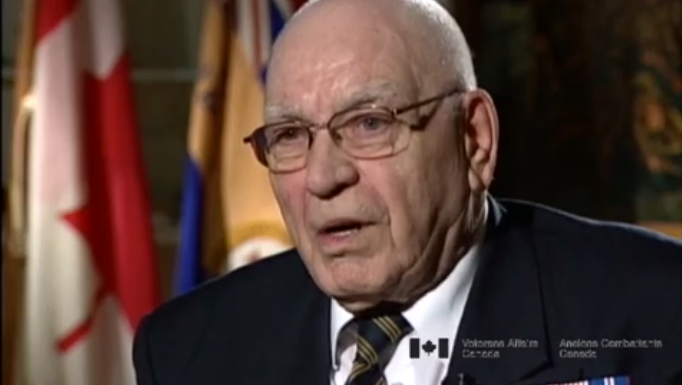
Mr. Sutherland-Brown describes how they sometimes operated around what they called the "moon period"
Transcription
Interviewer: During the fighting in the Imphal Valley and your participation in it, were most of the operations done during the day?
Well um, there is what we call the moon period. Two weeks of each month in which there was some moon and we had night operations scheduled at that time. And during a full moon it was ah, it could be very effective. One of the hazards was that, very commonly at night time, in the monsoon or other times, you'd have extensive ground mist so you couldn't see your targets and it couldn't be fully effective. But the fact is that we did ah, we limited their movement of their transport ‘til night, night operations and we were moderately effective ah, at night time too. And of course even during the non-moon periods we tended to attack at dawn and dusk when they were just starting to move.
Well um, there is what we call the moon period. Two weeks of each month in which there was some moon and we had night operations scheduled at that time. And during a full moon it was ah, it could be very effective. One of the hazards was that, very commonly at night time, in the monsoon or other times, you'd have extensive ground mist so you couldn't see your targets and it couldn't be fully effective. But the fact is that we did ah, we limited their movement of their transport ‘til night, night operations and we were moderately effective ah, at night time too. And of course even during the non-moon periods we tended to attack at dawn and dusk when they were just starting to move.
Catégories
Operation Timing
Médium
Video
Propriétaire
Veterans Affairs Canada
Guerre ou mission
Seconde Guerre mondiale
Emplacement géographique
Asie
Personne interviewée
Atholl Sutherland Brown
Branche
Aviation
Unité ou navire
Escadron <em>Bullfighter</em>
Occupation
Pilote
Durée
01:26