Attention!
Cette vidéo est disponible en anglais seulement.
Description
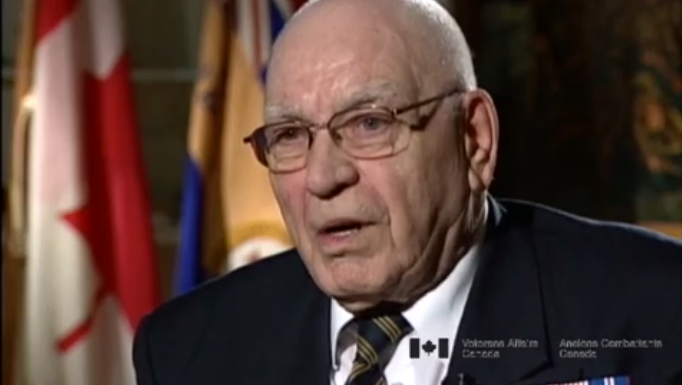
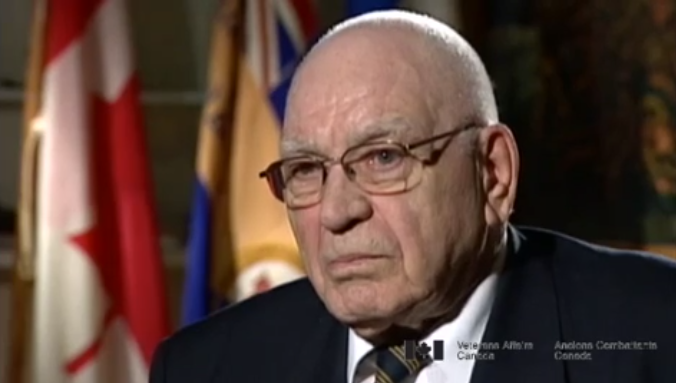
Mr. Miller describes the advantages to night fighting.
Transcription
Interviewer: What was your job then?
I got posted to a Canadian squadron of Beau Fighter airplanes that were assigned to night fighting, night, night support of the industrial Britain and... Manchester and the midlands. And, and our duty was to fly, have the airplanes up at night to, to ward off the German bombers as they come over the North sea. And we would, the first, first phase of night fighting where we'd go up in the black of night and no lights and things. And that was, and the Gerrys would, did their bombing at night of course so we had to work out a system where you could be of some, some value. So you worked, worked the system the way it, to your advantage; moonlights and cloud, and clear sky and bad weather, you know, whatever, whatever the system was, you worked whatever advantage you could get out of it. Like a nice clear night, cloudy night, our airplanes would go up, right in under the cloud and they could have a better view at the, see the water and see the... And when Gerrys would come in, in waves of maybe three or five or something, our boys would be sitting up right under the cloud and they would have the advantage of seeing them before they got seen or whatever, whatever tricks you could, whatever tricks you could pull. Bad weather you... And then radar was just coming into effect so we, we were sort of the leaders in using a screen to detect an airplane, you'd get a blip on your, on your screen and that was the beginning of... And that was a great, a great advantage to night fighting.
I got posted to a Canadian squadron of Beau Fighter airplanes that were assigned to night fighting, night, night support of the industrial Britain and... Manchester and the midlands. And, and our duty was to fly, have the airplanes up at night to, to ward off the German bombers as they come over the North sea. And we would, the first, first phase of night fighting where we'd go up in the black of night and no lights and things. And that was, and the Gerrys would, did their bombing at night of course so we had to work out a system where you could be of some, some value. So you worked, worked the system the way it, to your advantage; moonlights and cloud, and clear sky and bad weather, you know, whatever, whatever the system was, you worked whatever advantage you could get out of it. Like a nice clear night, cloudy night, our airplanes would go up, right in under the cloud and they could have a better view at the, see the water and see the... And when Gerrys would come in, in waves of maybe three or five or something, our boys would be sitting up right under the cloud and they would have the advantage of seeing them before they got seen or whatever, whatever tricks you could, whatever tricks you could pull. Bad weather you... And then radar was just coming into effect so we, we were sort of the leaders in using a screen to detect an airplane, you'd get a blip on your, on your screen and that was the beginning of... And that was a great, a great advantage to night fighting.
Catégories
Night Fighting
Médium
Video
Propriétaire
Veterans Affairs Canada
Guerre ou mission
Seconde Guerre mondiale
Personne interviewée
Douglas “Dusty” Miller
Branche
Aviation
Military Rank
Flight Sergeant
Occupation
Aircraft Rigger
Durée
02:24