Attention!
Cette vidéo est disponible en anglais seulement.
Description
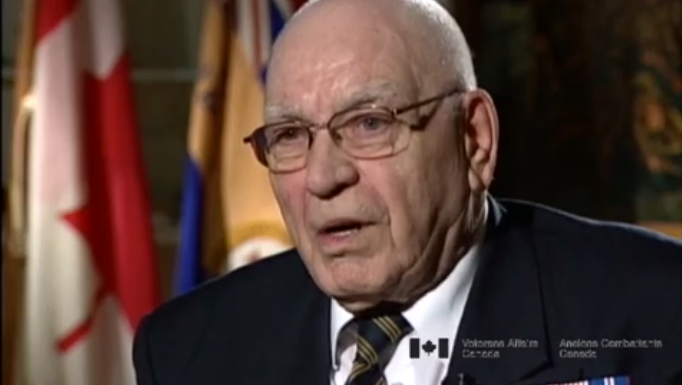
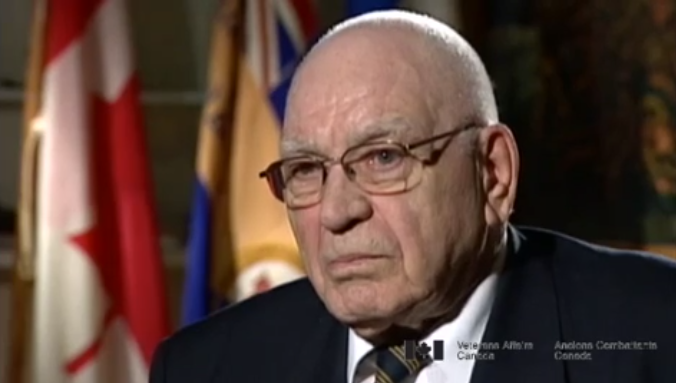
Dr. Vanner provides a retrospective on the positive results of liberating South Korea.
Transcription
Relatively recently, I became aware of the activities of the Korean Veterans Association. And this is the uniform, I'm wearing. And I wasn't even aware that for instance, when I came back, I had, I had 2 medals that I knew of, but I didn't realize is, that I had a bunch more that I was entitled too and had never asked and never claimed, you know. So I joined the Korean Veterans Association, and I belonged to unit two out of Stratford. And this was quite interesting, because these were people who had gone through the same things, different corps, but the same thing as I had in Korea. And we found it very interesting to meet with them on a regular basis and socialize with them. And we hear the odd war story, but it's something the Veterans don't talk about an awful lot. And but going back to Korea, was an excellent experience because we went back, 28 of us went back. And we, we found that very, very interesting. The Korean people greeted us with open arms, the South Korean people. And we were welcomed everywhere we went. They toured us around in a large modern buses, with banners on the side, Korean, Korean War Veterans, you know. Canadian, Canadian War Veterans, well actually, there were New Zealand, Australian and British as well. There was about 150 all together. And we were 28 of those, plus the odd spouse that decided to go.
South Korea is now a modern nation. You don't see the type of poverty we saw during there. You don't see the primitive methods of agriculture there. You see cities built up, highways built up, people well fed and well educated. The schools are full. And looking at, leading very, very good lives, you see. Now just north of that, of course, what you could see of North Korea over the boundaries lines, with, usually with our binoculars or whatever our cameras with their telephoto lenses, it's not the same at all, you know. They put on a show, but when we were at Panmunjom, touring there, they had a, on their side, which we were just a few feet away from, they brought so called tourists in, but we were quite sure that this was a show thing. The people there are just so poor there, that they just don't have tourists, like we do, and a . . . Yeah, so I think the message is that we have to try as much as possible, to avoid wars. And when they occur, try to finalize them as quickly as possible with the least loss of life and limb.
I, I've become a little more active in the military things, you know. And that's a good feeling too because I think there's not enough realization on the part of people, in civilian life, what was done on their behalf. And what the United Nations was able to achieve in Korea, you know, which sadly wasn't achieved since, because there's never been an action like there was in Korea since, where the United Nations had 26 nations involved in Korea, you see. And where it took troops from all these various nations and used them for a single purpose, that was to correct tyranny. And now they tend to have small, so called peacekeeping groups and so on. They've never had that, that sort of thing again. If they could do it, we wouldn't have places like Rwanda, you know. If they'd, if they could get together and get the nations cooperative, to establish large groups of trained people, who would go there for one purpose and that is to say to correct the tyranny. And, and give the people back their basic freedom.
South Korea is now a modern nation. You don't see the type of poverty we saw during there. You don't see the primitive methods of agriculture there. You see cities built up, highways built up, people well fed and well educated. The schools are full. And looking at, leading very, very good lives, you see. Now just north of that, of course, what you could see of North Korea over the boundaries lines, with, usually with our binoculars or whatever our cameras with their telephoto lenses, it's not the same at all, you know. They put on a show, but when we were at Panmunjom, touring there, they had a, on their side, which we were just a few feet away from, they brought so called tourists in, but we were quite sure that this was a show thing. The people there are just so poor there, that they just don't have tourists, like we do, and a . . . Yeah, so I think the message is that we have to try as much as possible, to avoid wars. And when they occur, try to finalize them as quickly as possible with the least loss of life and limb.
I, I've become a little more active in the military things, you know. And that's a good feeling too because I think there's not enough realization on the part of people, in civilian life, what was done on their behalf. And what the United Nations was able to achieve in Korea, you know, which sadly wasn't achieved since, because there's never been an action like there was in Korea since, where the United Nations had 26 nations involved in Korea, you see. And where it took troops from all these various nations and used them for a single purpose, that was to correct tyranny. And now they tend to have small, so called peacekeeping groups and so on. They've never had that, that sort of thing again. If they could do it, we wouldn't have places like Rwanda, you know. If they'd, if they could get together and get the nations cooperative, to establish large groups of trained people, who would go there for one purpose and that is to say to correct the tyranny. And, and give the people back their basic freedom.
Catégories
Twenty-eight of us went back.
Médium
Video
Propriétaire
Veterans Affairs Canada
Guerre ou mission
Guerre de Corée
Emplacement géographique
Asie
Campagne
Corée
Personne interviewée
Dr. George Vanner
Branche
Armée
Unité ou navire
Division britannique du Commonwealth
Military Rank
Capitaine
Occupation
Chirurgien
Durée
03:55