Attention!
Cette vidéo est disponible en anglais seulement.
Description
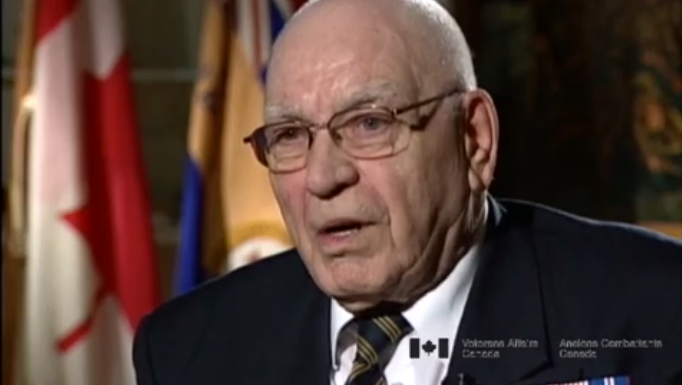
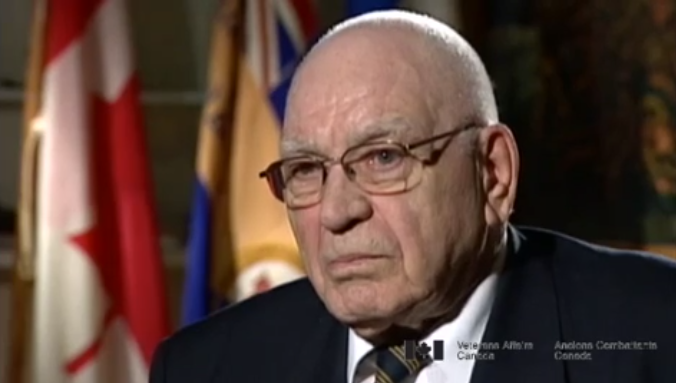
Mr. Yeomans describes German anti-bomber defence, RAF losses, and being shot down.
Transcription
We then converted from Wellingtons, went onto Halifaxs and then onto Lancasters and joined number 156 Pathfinder Squadron and that was in . . . we joined the squadron in December of 1943, which incidentally, was in the mists of what was called the Berlin Series, starting in, I think it was about October of 1943 and it went on until the beginning of march, 1944, was what they call, the Berlin Series of Raids. And I think there were something like15 raids against Berlin. All of them done by, between four and 900 heavy bombers. And of course, this was thought this might be a way of finishing the war. Actually it didn't finish the war, but what was the intention. The German . . . I should perhaps mention now German defences. The Germans had very, very strong anti-aircraft defences. And they had about, a total of about a million men involved in total. With the anti-aircraft guns, with the search light, batteries, but primarily with the, the night fighter force, which was very strong, very good. And it was nothing remarkable to lose 40, 50 aircraft a night. And in fact during the Berlin Series, that I had mentioned, we lost over a thousand heavy bombers. The RAF lost a thousand heavy bombers, in that period from October to March against Berlin. We did seven trips against Berlin and all of them were rough, you know. You could expect you would be in search lights part of the time, that you were going to be hit by flak. And it was very rare that we would get back home without a whole bunch of holes in the aircraft that the ground crew had to fix, before you could fly again. But up until then, we'd only been attacked by fighters on two occasions and neither one had pressed home the attack against us. The Lancaster had a rear gunner, and a mid-upper gunner, not like the American Aircraft who had a downward facing gunner and side gunners as well. So anything that formatted underneath , you couldn't see it. And they would then fire on you and you wouldn't know they were there, until you were attacked. That is what had happened to us, I'm sure because we were flying along and then next thing we know, is the aircraft is on fire. And there were sparks everywhere. The wireless operator who was sitting here, is dead. There's a fire in the cockpit, looking down the fuselage, its dark other than sparks. And then the next thing I know is, I'm walking along on the ground, in about 18 inches of snow.
Catégories
We did seven trips against Berlin
Médium
Video
Propriétaire
Veterans Affairs Canada
Guerre ou mission
Seconde Guerre mondiale
Emplacement géographique
Europe
Campagne
Allemagne, Série de raids de B
Personne interviewée
John Yeomans
Branche
Aviation
Unité ou navire
156<sup>e</sup> Escadron <em>Pathfinder</em>
Military Rank
Wing Commander
Occupation
Navigator
Durée
4:20