Attention!
Cette vidéo est disponible en anglais seulement.
Description
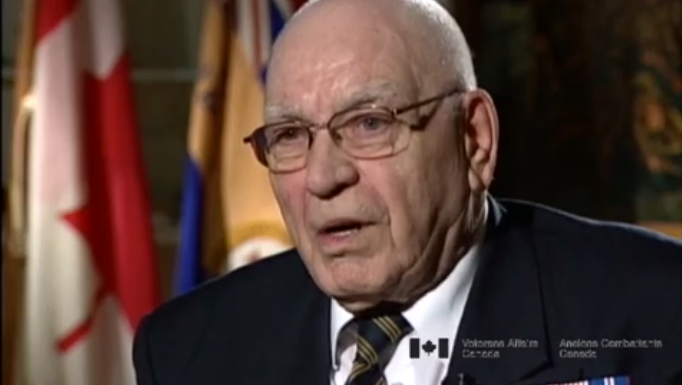
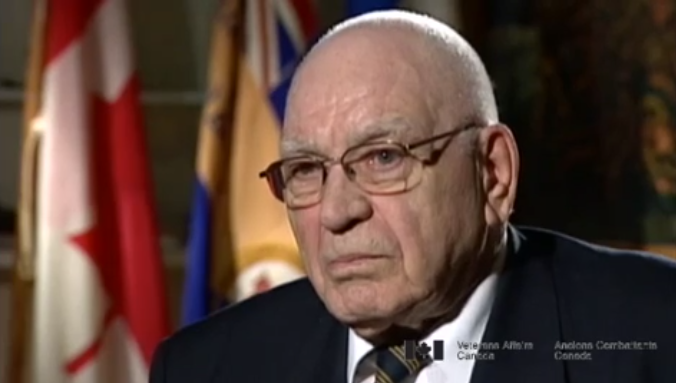
David McCrindle
Le père de M. McCrindle a immigré au Canada en 1911 et a servi durant la Première Guerre mondiale au sein du Black Watch de Montréal. Après la guerre, il est resté en Écosse et est retourné au Canada lorsque David était âgé de deux ans. M. David McCrindle a quitté l'école durant la Crise car sa famille n'avait pas les moyens de payer des études. Il a travaillé pour un bijoutier pour 6,50 $ par semaine et, en juin 1940, il s'est joint à la MANP, le soir et la fin de semaine. Le 9 janvier 1941, le jour de son 19e anniversaire, il s'est joint à l'équipe de Woodstock et a reçu son instruction à Woodstock, Ontario. M. McCrindle s'est rendu en Angleterre où il a reçu son instruction de signaleur. Il a participé à la campagne d'Italie et est revenu au Canada après la guerre.
Transcription
Well, they didn't have any signal equipment, but first of all I had to learn to drive a truck. That was because being a signaller your wireless set was inside the truck, and you had, and all the equipment, so you had to be able to drive the thing. If you couldn't drive it, forget it. So we took the driver's course, and I'll tell you it was a very strenuous driver's course. Some guys didn't pass it. You had to be on the ball.
Interviewer: How many men would be involved in the signals operations for the 35th Anti-Aircraft?
There'd be two per troop, two for...I was in "C" troop, and Boyco, which was my partner, he's from Alberta, and there were two in each troop, three troops. That's six, plus two in Battery headquarters, so that's eight for Battery. And there are three Batteries. And I don't know to this day whether Regimental headquarters had any signal personnel.
Interviewer: The purpose of the signals operation in each Battery was for what purpose?
For relaying information of incoming enemy aircraft, or our own aircraft in order to not fire at them. So, then from the, we would get the message on the wireless set and we would then relay it to the guns by telephone. We had wire, I'll tell you a story about the wire, but we had telephone wire going out to each gun. And it was one hell of a job when you were keeping moving all the time, economy wise you had to bring that wire back in. We got that after a while we got fed up with it and we used to leave it and get new equipment issued.