Hope Returns and Freedom

Attention!

Cette vidéo est disponible en anglais seulement.

Video file

Description

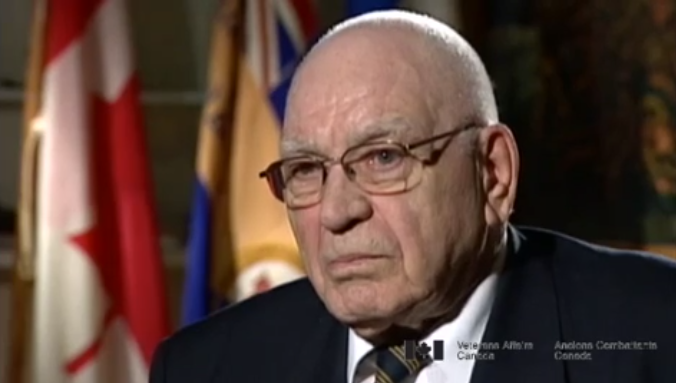
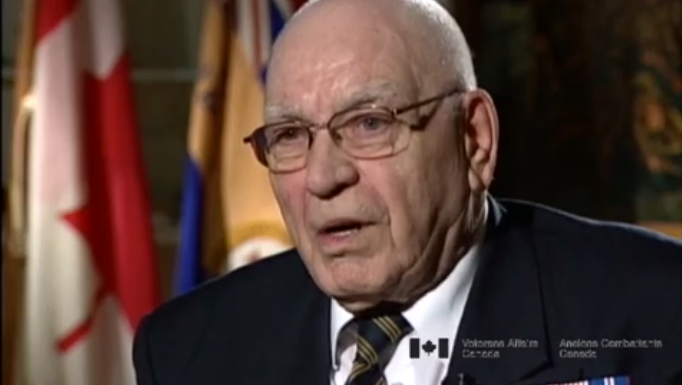
Mr. Castonguay recalls fearing that the Japanese would kill the POW's should Japan be invaded. Meanwhile, they could see the Americans bombing a nearby city every night which gave them hope that they would soon be saved.

Bernard Castonguay

Bernard Castonguay est né à Montréal, au Québec, le 9 février 1921. Il était le quatrième d'une famille de 11 enfants. Son père était monteur de tuyaux à vapeur pour la Canadian Pacific Railway. M. Castonguay a quitté la maison à l'âge de 16 ans, à la recherche d'aventure. Il a travaillé comme bûcheron et à la construction des chemins de fer. En 1940, incapable de trouver du travail, M. Castonguay s'est rendu à Québec pour s'enrôler dans le Royal Rifles of Canada. Il fut envoyé à Gander, à Terre-Neuve, où il fut signaleur et sentinelle. On l'envoya ensuite à Saint John, au Nouveau-Brunswick. À Hong Kong, M. Castonguay fut fait prisonnier par les Japonais et envoyé au camp de prisonniers de guerre (Omeni) de Nagasaki, au Japon, pour travailler dans une mine de charbon. Après son service, M. Castonguay a travaillé pour l'Institut national canadien pour les aveugles (INCA). Il devint par la suite directeur régional de l'INCA. Il fut également bénévole pour le Conseil canadien des aveugles.

Transcription

We had half Australian half Chinese men with us from the Hong Kong volunteers, they could read Japanese. So once in a while a puntijo(sp) would bring a newspaper down the line, would pass it on to us, he could read the news. Yes. We knew what was going on. So we were always very optimistic towards the end, but not at the beginning because we had rumours that the Japanese had a special plan to kill us all if ever Japan was being attacked. But towards the end we had more hope as things went on. While at camp, prisoner, we saw these B-52's American you know, 250 at a time, bombarding Fukuoka, which was six, seven miles away from us. And it was fire bomb, you know, the whole sky was full of fire. And it was wave after wave, that was every night. So suddenly there was none, so it's finished? You know. We had heard about the bomb, Nagasaki or Hiroshima so it took maybe a day or so and a camp commandant, the Japanese camp commandant got us on parade and he read us that we were free. He read a speech that the war was finished and that we were free. We were going to go back home.

Catégories