Attention!
Cette vidéo est disponible en anglais seulement.
Description
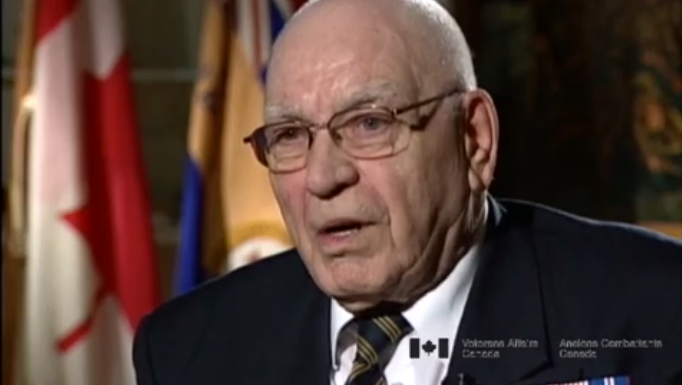
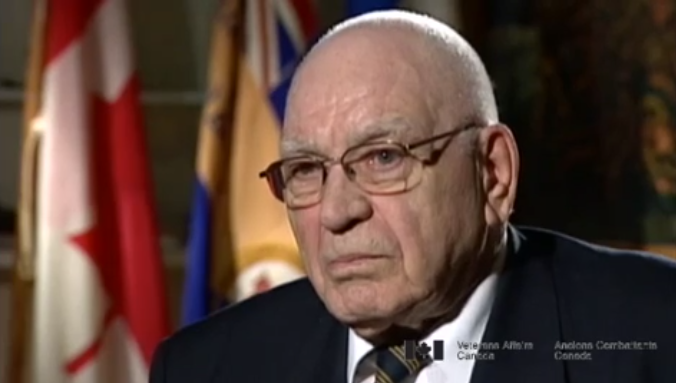
Hugh Victor Letendre
M. Letendre est né le 4 mars 1925 dans le petit village de Lac Ste-Anne (Alberta). Comme Métis, il a appris à parler cri, français et anglais. Il faisait partie d’une grande famille : il avait un frère et huit soeurs. Son père était trappeur et faisait une pêche commerciale importante. M. Letendre a appris à chasser et à pêcher de son père. <br><br> À l’âge de 11 ans, il est devenu concierge de l’école à classe unique où il était également élève. Il balayait les planchers, préparait le feu le matin et transportait l’eau et le charbon. Pour tous ses efforts, on le payait quatre dollars par mois, qu’il remettait à ses parents puisqu’ils avaient très peu d’argent à l’époque. <br><br> Il s’enrôla à l’âge de 18 ans et il servit pendant la Seconde Guerre mondiale comme carabinier dans les Calgary Highlanders. Pendant son déploiement outre-mer, il a servi dans la campagne de Normandie après le jour J. Après la guerre, il devint le chef de l’Association nationale des anciens combattants autochtones.
Transcription
Oh yes, we were a proud bunch of boys. We all said at any cost that we would take Dieppe. But you know we never fired a shot. Germans gave up. I remember parading on Main Street, whole Canadian Army. And we come back.
Interviewer: It's my understanding that General Montgomery wasn't very happy that the Canadians felt that they had to do this. Do you think it was necessary?
Yes it, for me it is. And I think for every Canadian soldier it was. We, we owed something to them.
Interviewer: What do you remember about the reception that you Canadians got from the people of Dieppe.
Oh it was marvellous, it was marvellous, I can still see it. People through the windows, all over. It was marvellous yeah.
Interviewer: Things turned rough again?
Yeah, they went rough again. I remember going through into Dunkirk. We fought right into Dunkirk. And we were going to take Dunkirk, we were going to take Dunkirk and the British said, "No that's our battle, we're going to take it." Well ok, it's yours, go ahead and take it. So we left it to the British and war was over and they still hadn't taken it. Yeah, well I guess they saved a few lives anyway.
Interviewer: There were many other coastal ports that held out as well and required the Canadians to, to move in and roust them out.
Well I remember, most of all I could remember my early fighting days there, but that's mostly along the coast. Pill boxes, gun nests, crossing (inaudible) wires, all kinds. And that was our job, is along that coast. And I always say that we got the dirtiest end of the stick there. You know, that was bad. You know they were dug in and we had to get them out.
Interviewer: Not as glamorous as what the Americans were doing in the South, but necessary because the Allies needed a useable port. Why was that Mr. Letendre? Why was gaining a port so important?
Well I guess mostly so that we can bring in equipment, men, whatever we needed to bring in. I don't really know how they put their things together but I am sure that going in on a ship to France in, on the coast Normandy there that you had to have some kind of a port in order to get supplies to your men. You gotta have supplies to your men some how. So ports are very important.