Attention!
Cette vidéo est disponible en anglais seulement.
Description
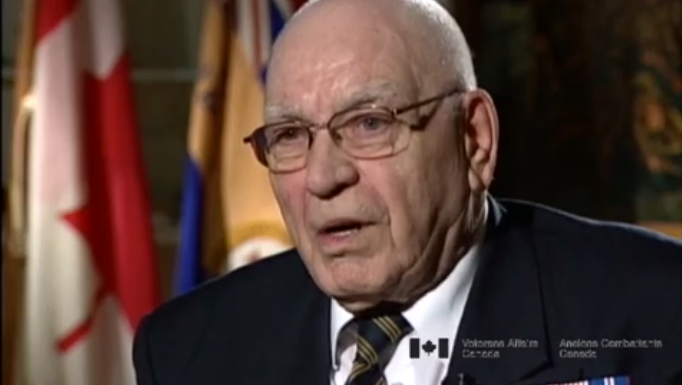
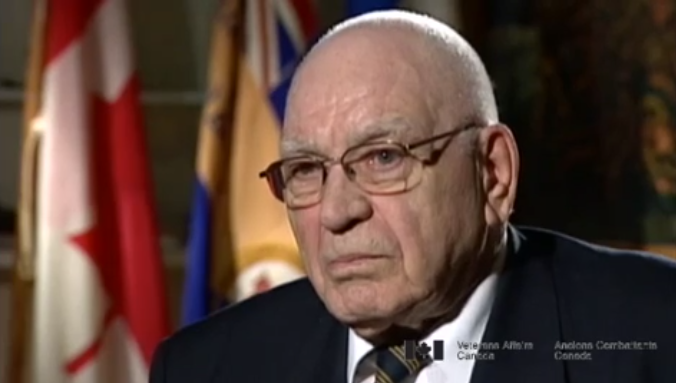
Guy Robitaille
Guy Robitaille est né le 2 octobre 1920, à Lauzon-Lévis, une petite ville militaire. M. Robitaille avait quatre frères et trois soeurs. Sa mère est morte en 1925 et son père, en 1936. Après le décès de son père, M. Robitaille décide de quitter l'école et d'aller travailler pour aider sa famille. Le 26 août 1936, il reçoit ses documents de mobilisation et s'engage à plein temps dans l'armée. Peu de temps après, on le transfère au camp d'entraînement des « Vandoos » (les 22). En août 1941, il arrive à Brockville où il devient officier. Il retourne plus tard à Valcartier. En Italie, M. Robitaille est blessé à la cuisse et à la poitrine; il passe neufs mois à l'hôpital et subit cinq opérations. Pendant ce temps, il apprend par la radio de la CBC qu'il est récipiendaire de la Croix militaire. En novembre 1943, il revient au Canada passer sa convalescence dans un hôpital de Québec. Une fois rétabli, il reprend le service dans l'armée canadienne.
Transcription
Early morning, about nine o’clock, that 9:30, daytime. The German had seen us coming from where, you remember when I mentioned the advance group was, the Recce platoon, detachment? I think the, I saw the Germans running on the hill with, with mortar bombs on their arms, running on top, so they had seen us coming. So the question was, do we stop there? Or do we keep going? Our job is to attack and, and capture the hill and whether they are there or not makes no difference, that’s where we’re going. And I was a soldier enough to want to go. Married, I’d been married a month and a half, a year, a year and a half.