Attention!
Cette vidéo est disponible en anglais seulement.
Description
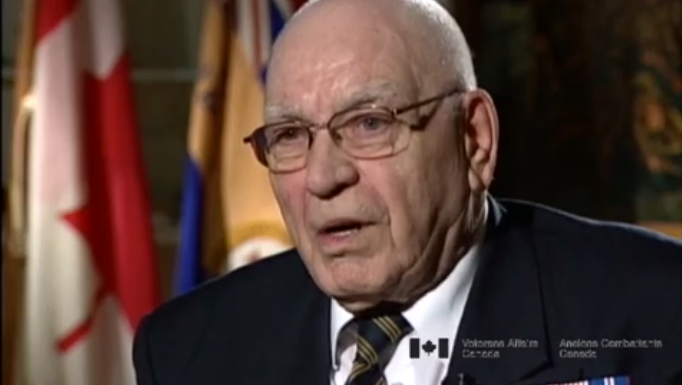
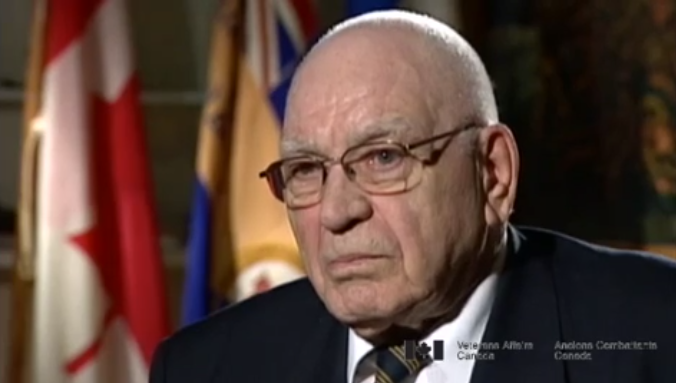
Mr. Edwards and his ground crew were called back to England from Italy to take part in D-Day operations. He shares his impressions of the whole affair.
Transcription
There were three squadrons, Spitfire squadrons, going back and to be in on the D-Day, see. And I don’t know whether they needed the squadrons. They already had so many in England. But it was a great thing, particularly for the ground crew who had been away from home now for two or three years and never been in (inaudible) civilization. So we went back to England and we went over to the Naples side and got on a boat and damned if it wasn’t that old boat that we’d gone from Iceland to England in. It was all fixed up. And there we formed a new wing of Spitfires. We got brand new air craft and a new wing commander and we started operations. We were in on the D-Day thing. Well, up to D-Day, we were getting operational with our air craft and this is quite a feat. It only could be done by people coming from the desert. To come to a new country, be given new air planes, they were similar air planes...Spitfires are similar but they’re different marks and more advanced and so on. And yet the ground crew could cope in that short time. It wasn’t so difficult to take over as a pilot except it’s a new area. But the ground crew being able to service those air planes that quick and turn them around and become operational when some people would take months. These squadrons were, in two weeks were operational and we moved into the front line. We flew out of Tangmere at that time and we actually had, would you believe there were twenty squadrons flying out of this. Twenty squadrons. There were four or five wings of air planes in there and you had to fly around in fours, you know. Land and take-off in fours and you had to fly in a close twelves so that the other group could see you, see. So it was a professional thing. It wasn’t just a.....no place for sprogs. This whole show of D-Day was, was only difficult for those people who were going and landing there. From the air our point of view, there was no Hun, we never got mixed up in the flak to any degree. We saw the transports, and there were different types of transports pulling gliders. We saw them going in and landing and letting these gliders go right in the enemy lines, and we had no communication with them. This was the bad part. Why they didn’t have this little bit of communication. We could see them looking down that they were dropping their gliders right in the...across the enemy lines, and of course they’re just mowing them down. But we had so many, we actually took over. It was a big thing because we knew that we were going to land and from then on, we would push our way in and sometime the war would be over. Nobody knew when. We thought that the Hun would be there in terrific force, you see, be really upset now that we’re landing on Europe. But something was wrong over on the German side and they weren’t coping with this.
Catégories
D-Day - From A Spitfire
Médium
Video
Propriétaire
Veterans Affairs Canada
Guerre ou mission
Seconde Guerre mondiale
Emplacement géographique
France
Personne interviewée
James Francis Edwards
Branche
Aviation
Unité ou navire
RAF 274 Escadron
Military Rank
Capitaine d'aviation
Occupation
Pilote
Durée
03:35