Description
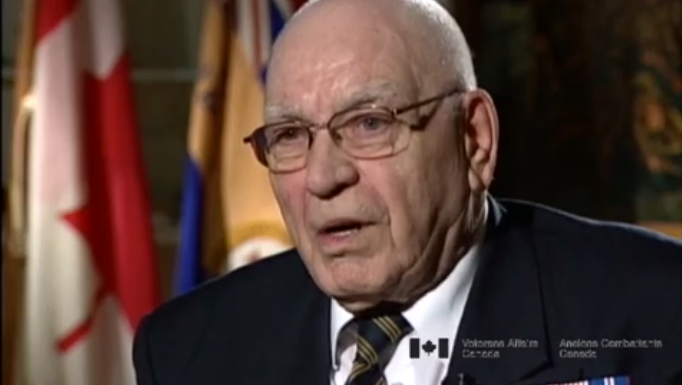
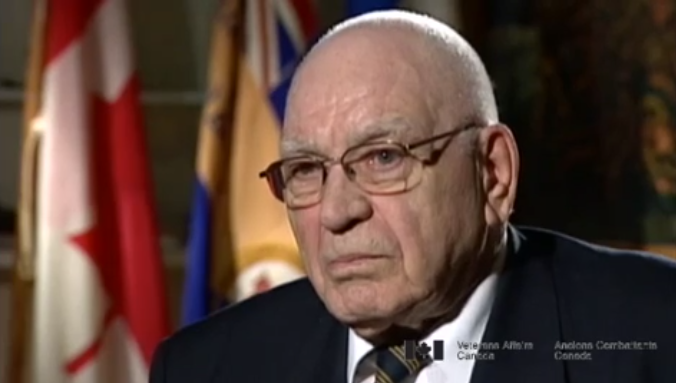
Mr. Robitaille talks about the attack at Santa Maria, and getting wounded.
Guy Robitaille
Guy Robitaille est né le 2 octobre 1920, à Lauzon-Lévis, une petite ville militaire. M. Robitaille avait quatre frères et trois soeurs. Sa mère est morte en 1925 et son père, en 1936. Après le décès de son père, M. Robitaille décide de quitter l'école et d'aller travailler pour aider sa famille. Le 26 août 1936, il reçoit ses documents de mobilisation et s'engage à plein temps dans l'armée. Peu de temps après, on le transfère au camp d'entraînement des « Vandoos » (les 22). En août 1941, il arrive à Brockville où il devient officier. Il retourne plus tard à Valcartier. En Italie, M. Robitaille est blessé à la cuisse et à la poitrine; il passe neufs mois à l'hôpital et subit cinq opérations. Pendant ce temps, il apprend par la radio de la CBC qu'il est récipiendaire de la Croix militaire. En novembre 1943, il revient au Canada passer sa convalescence dans un hôpital de Québec. Une fois rétabli, il reprend le service dans l'armée canadienne.
Transcription
So I got wounded, obviously the company commander, I saw the company commander, give us our orders, I went as far as I could being in the, what I might call, the river bed, what was the river bed. In World War One they might had called it well a river bed or a big trench, but it was wide enough. Now the danger of staying in that bloody river bed was that to me as a mortar platoon officer qualified, was an obvious target. I would have had my mortar pluck on that, on that target for anyone coming down there and catch them with the two high banks on both sides and have the guy in between the sandwich you see. Oh God, I couldn’t believe it. I couldn’t believe it, so I didn’t dare go far on because there their gun went sloping down. Otherwise we would have had to make a big detour, that’s what they did after. So we, we attack and in no time I got a bullet in my leg, my thigh and then I got something here in the elbow and then, and then I got the chest wound. And then, after I recovered, my senses from the chest wound on the right side, if it had been an inch further to the left, I would have been dead, an inch to the right what saved my life, it’s funny how it works. After that the, the what do you call it, then I had the German, my, my troops came to obviously give me medical pressure to strap around my chest. We had no, no anti-doping no shot that we could give ourselves.
Interviewer: Morphine?
No, no, no.
Interviewer: Sulfa?
No, no, no, no, we didn’t have that.