Attention!
Cette vidéo est disponible en anglais seulement.
Description
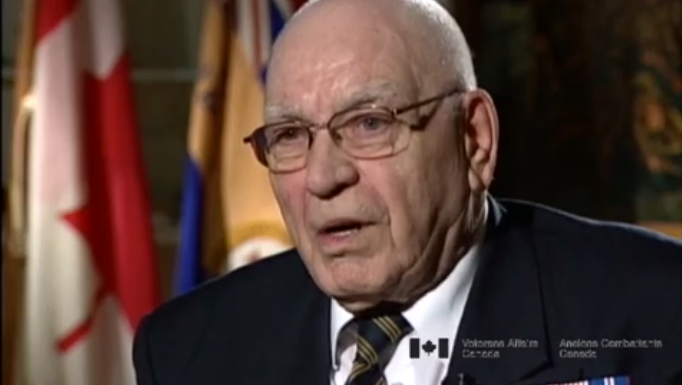
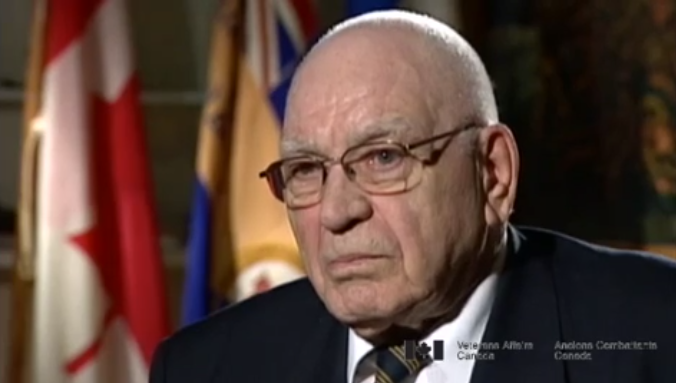
Back in France, Mr. Ross is re-assigned to a mortar platoon as it moves into Belgium and the battle for Antwerp
Transcription
Back To The Front Line
Our next subject was to take out the Breskens Pocket, which was part of the Scheldt estuary to make Antwerp a usable port. Because the, they had pretty well captured Antwerp but they didn’t go the extra mileage to get over the causeway and that result is it cost a lot more lives of, of the British and Canadians because of wanting plans, wanting to go further into Germany rather than do what you’re supposed to do first. Planning wasn’t always the best, you know, as far as the solider was concerned. But the strategists figured that they had it well planned. But, in effect, if they were, had to go into the Polders and fight in the Polders of the Scheldt pocket, and there’s no coverage. They were sitting high on the dyke where you’re clawing through water. It was an unbelievable experience in the, fighting the Scheldt pocket alone.
Interviewer: And as long as, if I may Mr. Ross, as long as that area of the Scheldt was kept, or held by the Germans, Antwerp would be...
It was not, not unusable.
Interviewer: And why was Antwerp important to the Allies at that point?
Well, I must, the lines of supply were stretched from the Mulberry docks. Sherbrooke was not unusable, to any great extent, it was further away. They had to get more lines of supply closer to the fighting forces. They whole front was, suddenly stopped. Patton was looking for supplies. Montgomery was looking for supplies. They’re all wanting, they all figured they all had priorities, you know, if you look in history they all thought they had priorities and, you know. Unbelievable, the only thing that did take place was commonsense through Eisenhower, I think, you know. He’s still, when he used the broad approach on all fronts.
Interviewer: So the orders were for the Canadians...
The orders then for Canadians to take out the Beveland and Scheldt pocket and Scheldt estuary and the, there would be British forces involved with the Canadians. At that particular time, our Crerar was ill and General Simmons came into the picture and he was quite an aggressive individual and I think he got in the good books of Montgomery because he got a little more support when he was needed. But sometimes too late.
Our next subject was to take out the Breskens Pocket, which was part of the Scheldt estuary to make Antwerp a usable port. Because the, they had pretty well captured Antwerp but they didn’t go the extra mileage to get over the causeway and that result is it cost a lot more lives of, of the British and Canadians because of wanting plans, wanting to go further into Germany rather than do what you’re supposed to do first. Planning wasn’t always the best, you know, as far as the solider was concerned. But the strategists figured that they had it well planned. But, in effect, if they were, had to go into the Polders and fight in the Polders of the Scheldt pocket, and there’s no coverage. They were sitting high on the dyke where you’re clawing through water. It was an unbelievable experience in the, fighting the Scheldt pocket alone.
Interviewer: And as long as, if I may Mr. Ross, as long as that area of the Scheldt was kept, or held by the Germans, Antwerp would be...
It was not, not unusable.
Interviewer: And why was Antwerp important to the Allies at that point?
Well, I must, the lines of supply were stretched from the Mulberry docks. Sherbrooke was not unusable, to any great extent, it was further away. They had to get more lines of supply closer to the fighting forces. They whole front was, suddenly stopped. Patton was looking for supplies. Montgomery was looking for supplies. They’re all wanting, they all figured they all had priorities, you know, if you look in history they all thought they had priorities and, you know. Unbelievable, the only thing that did take place was commonsense through Eisenhower, I think, you know. He’s still, when he used the broad approach on all fronts.
Interviewer: So the orders were for the Canadians...
The orders then for Canadians to take out the Beveland and Scheldt pocket and Scheldt estuary and the, there would be British forces involved with the Canadians. At that particular time, our Crerar was ill and General Simmons came into the picture and he was quite an aggressive individual and I think he got in the good books of Montgomery because he got a little more support when he was needed. But sometimes too late.
Catégories
Back To The Front Line
Médium
Video
Propriétaire
Veterans Affairs Canada
Guerre ou mission
Seconde Guerre mondiale
Emplacement géographique
Europe
Campagne
La bataille de Normandie
Personne interviewée
Joseph William Ross
Branche
Armée
Unité ou navire
<em>Queen's Own Rifles of Canada</em>
Occupation
Carabinier
Durée
03:16