Description
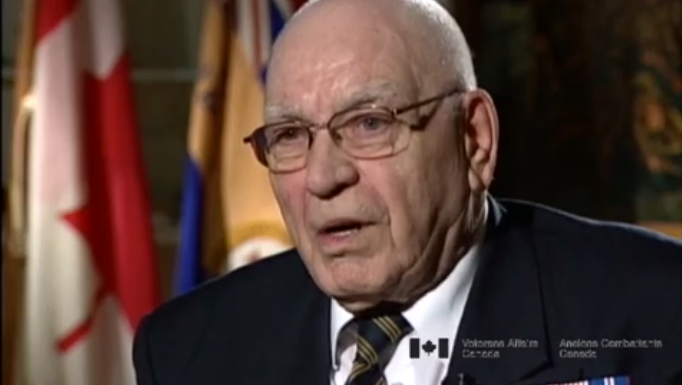
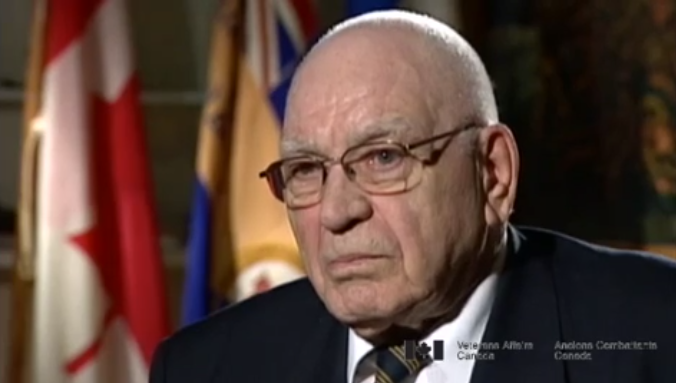
Mr. Chisholm describes the feelings he had as a young pilot heading out on his first operational sortie.
William Lawrence (Red) Chisholm
Le père de M. Chisholm était chef de gare à Berwick (Nouvelle-Écosse) pour le Dominion Atlantic Railway. Il a déménagé à la gare de Windsor (Nouvelle-Écosse), puis a quitté les chemins de fer pour s'acheter un magasin à Kentville (Nouvelle-Écosse). M. Chisholm a terminé ses études dans le système scolaire à Kentville. Après avoir obtenu son diplôme d'études secondaires, il a travaillé pendant une courte période pour son père, puis il est allé travailler comme serre-frein pour le Dominion Atlantic Railway.
Après s'être enrôlé dans l'Aviation royale canadienne en 1940, il suit son premier entraînement à Toronto. Il fait ensuite partie des 500 membres environ qui sont envoyés aux premiers cours, d'une durée de deux mois, donnés à l'école de formation de Regina dans le cadre du Programme d'entraînement aérien du Commonwealth. On l'envoie ensuite à l'école d'aviation de London (Ontario). M. Chisholm devient par la suite un as pilote et reçoit la Croix du service distingué dans l'Aviation (DFC), avec barrette.
Transcription
First Operational Sortie
Interviewer: Coming back to your first operational flight, when you went out at first in a Hurricane with the rest of your flight, what, went through your mind, do you recall your feelings of.
Mr. Chisholm: Scared cross, scared cross-eyed, like we all were.
Interviewer: So you, you were all feeling apprehensive and anxious.
Mr. Chisholm: Oh absolutely. I, I don’t think I ever met anybody that wasn’t frightened. Frightened on the way as to what was going to happen and frightened on the way back because you wonder how come it, it didn’t happen.
Interviewer: Well at that time, the Luftwaffe had very seasoned pilots.
Mr. Chisholm: Yes they did and they had excellent fighter pilot, the one, the Messerschmitt 109, and they were much faster than we are, we were. They weren’t quite as manoeuvrable and, but the thing is, the advantage they had they could break off an engagement due to their speed whenever they wanted to. If we attacked them, if we, we had them outnumbered, they wouldn’t stick around at all, they’d switch right back to their own lines. If they had us outnumbered, why they would stick around and put up a pretty good fight. Interviewer: How many, how many other, other planes would you normally fly with on a patrol?
Mr. Chisholm: If maintenance was a, was a problem down there with the sand, sand and sandstorms and so on, maintenance was always a problem. Sometimes we might, we never flew with any more than twelve. That was considered squadron strength. We had, we must have had about eighteen or twenty airplanes, there was always a bunch of them being fixed, bullet holes and engine problems due to sand and that sort. Usually we probably flew with eight to, eight to ten.
Interviewer: Would the Luftwaffe normally be in similar numbers?
Mr. Chisholm: Normally they were, they were, they were in probably in six or twelve, but every once in a while they flew huge. We met, we met one, one time there was about thirty in the group, yeah and in fact that was one of the most frightening experiences I had. My flight commander and I were sent up over, we were still back in the, in the Delta at this time, and my flight commander and I were sent up, there was a, the navy had picked up radar indications that a German bomber was on it’s way over from Crete to take a whack at Alexandria, which was a pretty important naval base then and we were sent out, Morgan and I were sent out and we couldn’t find it and then we were told it had disappeared off the radar and come back. On our way back we were diverted over toward the bomb line, just to see what was going on and then the ground controller called up and he said, “I’m, we’re showing ten or twenty to thirty bogies, about ten miles west of you. So watch out for them.” Well this, Morgy, who was a Welshman, one of the few people that never seemed to be very frightened, he, he was gung-ho to try anything, so he said, we had, we pretty well knew the height of the Germans, so Morgy said, “Let’s climb above em, Red, and see what they look like from above.” So we looked down and here was this swarm of 109s tooting along.
So we were well above them, probably four or five thousand feet above them and Morgy said, “Red, let’s dive down through, take a good squirt at them as we go by, and then head like hell for home.” Well I didn’t think that sounded too dangerous and I said, “Ok, Morg, let’s go.” So he started down, me following him and of course being Morgan, he got down amongst this crowd and they went into a big defensive circle, they must have thought that there was a whole bunch of us attacking, they didn’t realize that there were only two of us, they went into a big defensive circle. Morgan decided to join the defensive circle and here we were going around the great huge circle, thirty or so ME-109s and Gordon, Morgy and I.. I lost track of him and I was trying to get a shot at something but you had to watch your tail all the time somebody was going to take a crack at you. So once I, this bloody airplane appeared and I just about ready to push the button and I said, “Jesus Christ that’s, that’s Morgy.” So we went, this, this went on, is was the damnedest thing, is was right over a way, well in behind our own lines and now where the other aircraft and fighters and squadrons were, I don’t know but we stayed up there for, well it seemed like hours, but it was probably just a few, a very few minutes and finally I called Morgy. I said, “Morgy I’m, my, my engine’s throwin’ oil all over my windscreen. I gotta get out of here.” And he said, “Ok, Red, I’m going too.” And so we just rolled over and down we went and we weren’t that far from our field. And so we landed safe, neither one of us had a bullet hole in us. They were everywheres. The most amazing thing to survive that one.