Description
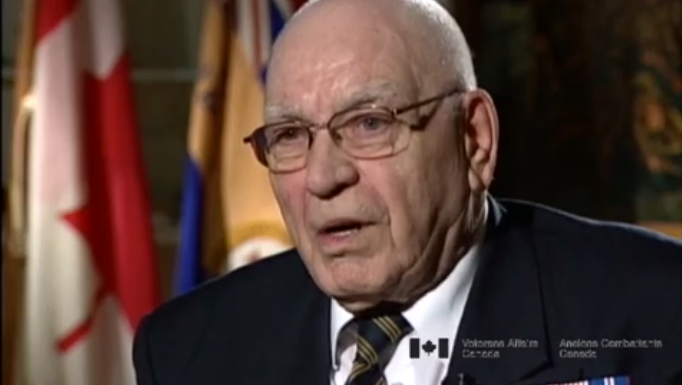
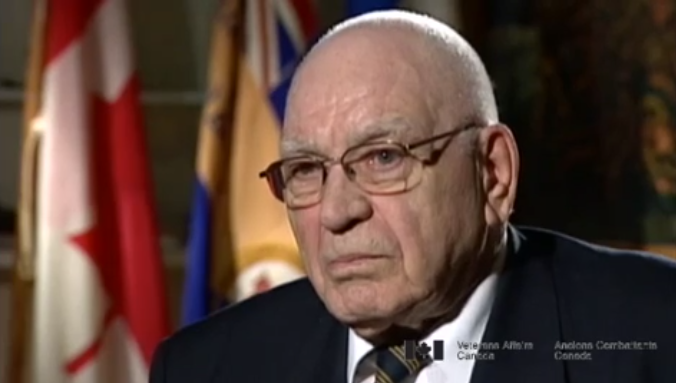
Mr. Chisholm speaks of reaching his required 200 hours of operational flying and returning to Cairo to train new pilots.
William Lawrence (Red) Chisholm
Le père de M. Chisholm était chef de gare à Berwick (Nouvelle-Écosse) pour le Dominion Atlantic Railway. Il a déménagé à la gare de Windsor (Nouvelle-Écosse), puis a quitté les chemins de fer pour s'acheter un magasin à Kentville (Nouvelle-Écosse). M. Chisholm a terminé ses études dans le système scolaire à Kentville. Après avoir obtenu son diplôme d'études secondaires, il a travaillé pendant une courte période pour son père, puis il est allé travailler comme serre-frein pour le Dominion Atlantic Railway.
Après s'être enrôlé dans l'Aviation royale canadienne en 1940, il suit son premier entraînement à Toronto. Il fait ensuite partie des 500 membres environ qui sont envoyés aux premiers cours, d'une durée de deux mois, donnés à l'école de formation de Regina dans le cadre du Programme d'entraînement aérien du Commonwealth. On l'envoie ensuite à l'école d'aviation de London (Ontario). M. Chisholm devient par la suite un as pilote et reçoit la Croix du service distingué dans l'Aviation (DFC), avec barrette.
Transcription
Posted to Train New Pilots in Cairo
Mr. Chisholm: This is actual combat flying, you can’t, if you take your engine up for an engine test or a cannon test or something there, that’s not operational hours. It has to be actual hours on active duty on the battlefield. That’s the, it seemed like a hell of a long time sometimes getting in that two hundred hours.
Interviewer: So when you got your two hundred hours in, your operational tour was over.
Mr. Chisholm: I was finished, yeah.
Interviewer: Now what, what happened then?
Mr. Chisholm: Then I was sent back to Cairo, and I was sent to an operational training unit down there to train young pilots who were arriving in the Middle East how to fly Kittyhawks, and Tomahawks, and Spitfires, and Hurricanes. I had one session I had to, they’d given the Turks a bunch of Hurricanes and we had to teach the Turkish pilots how to fly Hurricanes. We only had one interpreter and I, you’d take em up in a Harvard, which has two seats of course, and try to talk to the guy and tell him to do this and do that and do the other thing, and they’re, they were already pilots, although they hadn’t flown any really highly operational aircraft like a Hurricane or a Spitfire or even a Harvard. Their aircraft were way, you know, old, ancient aircraft, and I had a few very very shaky dues because we didn’t, didn’t have, couldn’t, didn’t have an interpreter in the cockpit and these guys would decide to do something I didn’t want em to do. We had some great, that was quite interesting for a while.
Interviewer: It might have been safer back at the front.
Mr. Chisholm: Oh much safer. I, I told the CO one day, I said, “Christ, Neville, why, how about sending me back.” He says, I says, “This, this is more dangerous than it ever was up at the front. At least I knew what the hell was going on up there.”