Attention!
Cette vidéo est disponible en anglais seulement.
Description
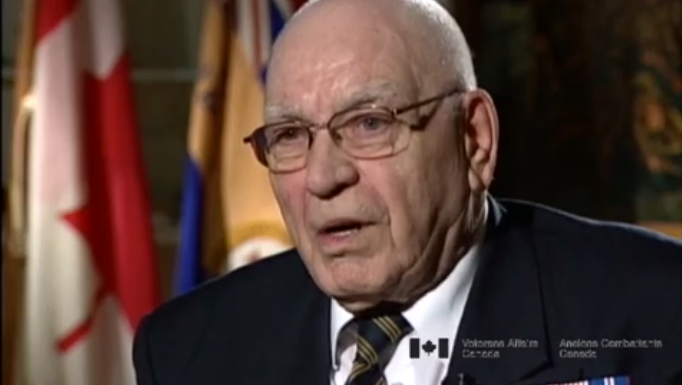
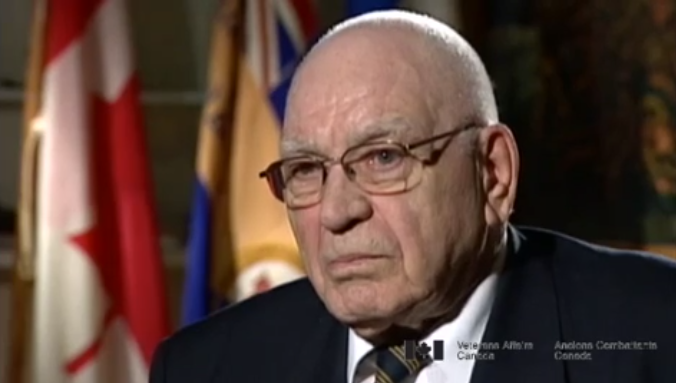
Noel Knockwood
Le 17 juillet 1932, M. Knockwood voit le jour dans la Première nation Indian Brook à Shubenacadie, en Nouvelle-Écosse. Il fait ses études primaires à la Shubenacadie Indian Residential School. En 1951, il s'enrôle dans l'Armée canadienne et, à la suggestion de son frère aîné, ancien combattant de la Seconde Guerre mondiale, il décide de s'engager dans l'artillerie. Il compte six années de service au Canada, aux États-Unis, au Japon et en Corée. Il reçoit son entraînement de base à Shilo, au Manitoba. Au cours de son entraînement, il suit des cours de guerre atomique, biologique et chimique. Il n'a que 18 ans lorsqu'il part à l'étranger pour combattre en Corée pendant 413 jours. À son retour, M. Knockwood donne des cours sur l'artillerie légère et devient sergent instructeur. Au terme de son service militaire, M. Knockwood poursuit ses études et fait une majeure en sociologie à la Saint Mary's University. Il enseigne ensuite à la Dalhousie University ainsi qu'à la Saint Mary's University, en plus d'être le conférencier invité dans plusieurs autres universités des Maritimes. En 2002, il est récipiendaire du Prix national d'excellence décerné aux Autochtones dans la catégorie patrimoine et spiritualité. Au moment de la présente entrevue, M. Knockwood agissait à titre de sergent d'Armes pour la Nouvelle-Écosse.
Transcription
Well, there was quite a bit on television. On nightly there would be different newscasts coming about. And to me, I was a young man and it sounded quite exciting and I said I would like to be there. So, I sort of wanted to finish my training faster and quicker(laughs). But I did manage to get over there within that year.
Interviewer: Ok. You say you were young. What age were you went?
Well I was seventeen when I... I was eighteen rather and that’s pretty young; just sort of a kid, you’re not fully matured yet and things like that you know. And coming from an Indian reservation was a little bit different because you know we spoke the aboriginal language on the reserve and then we had to kinda be bilingual and understand it to survive in the military world.
Interviewer: When you were there, did you feel or did you think that the war could be won?
I always felt that the war would be won. But history tells us that in war there is no winners. There’s only losers. Meaning that, you know, both sides people are killed. And but, you don’t learn that prior to going there, you learn that after you come back, as you start thinking about it.