Attention!
Cette vidéo est disponible en anglais seulement.
Description
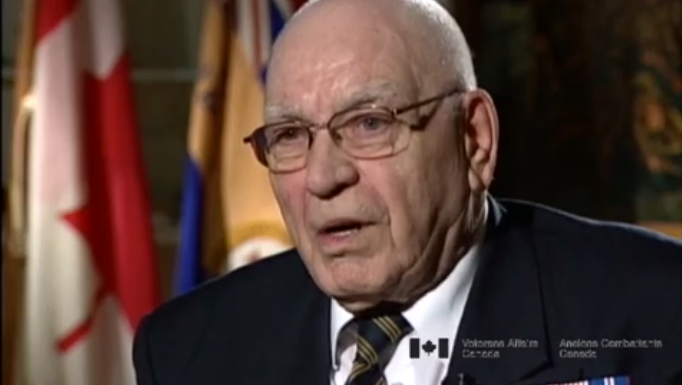
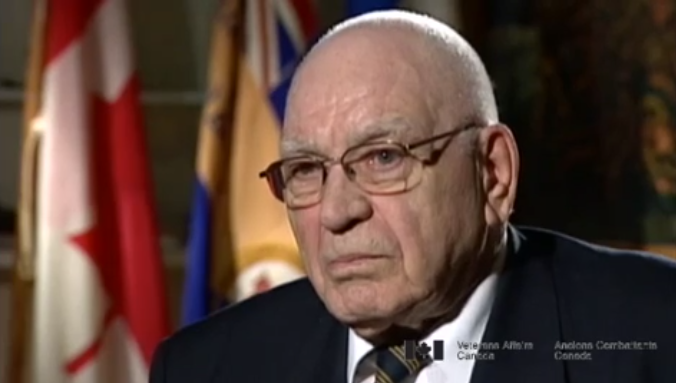
Noel Knockwood
Le 17 juillet 1932, M. Knockwood voit le jour dans la Première nation Indian Brook à Shubenacadie, en Nouvelle-Écosse. Il fait ses études primaires à la Shubenacadie Indian Residential School. En 1951, il s'enrôle dans l'Armée canadienne et, à la suggestion de son frère aîné, ancien combattant de la Seconde Guerre mondiale, il décide de s'engager dans l'artillerie. Il compte six années de service au Canada, aux États-Unis, au Japon et en Corée. Il reçoit son entraînement de base à Shilo, au Manitoba. Au cours de son entraînement, il suit des cours de guerre atomique, biologique et chimique. Il n'a que 18 ans lorsqu'il part à l'étranger pour combattre en Corée pendant 413 jours. À son retour, M. Knockwood donne des cours sur l'artillerie légère et devient sergent instructeur. Au terme de son service militaire, M. Knockwood poursuit ses études et fait une majeure en sociologie à la Saint Mary's University. Il enseigne ensuite à la Dalhousie University ainsi qu'à la Saint Mary's University, en plus d'être le conférencier invité dans plusieurs autres universités des Maritimes. En 2002, il est récipiendaire du Prix national d'excellence décerné aux Autochtones dans la catégorie patrimoine et spiritualité. Au moment de la présente entrevue, M. Knockwood agissait à titre de sergent d'Armes pour la Nouvelle-Écosse.
Transcription
Well, what I had envisioned in my mind was somewhat close to that because the atmosphere, the weather conditions in Korea were about the same as they are here. Geographically, they had high mountains and they had a lot of rice paddies and things like that. Although we don’t have rice paddies here, we have some mountainous areas. It was quite nice to see that kind of geography, but on the other hand you knew that you were threatened all the time that there was a possibility that some kind of a... something could happen. You know, you could be shot or you could be shelled or you could be, you know ambushed or whatever. So that always was with you and stayed with you so you had to be alert. Your best friend at that time, you know, was your rifle and we took great care of our rifle.