Attention!
Cette vidéo est disponible en anglais seulement.
Description
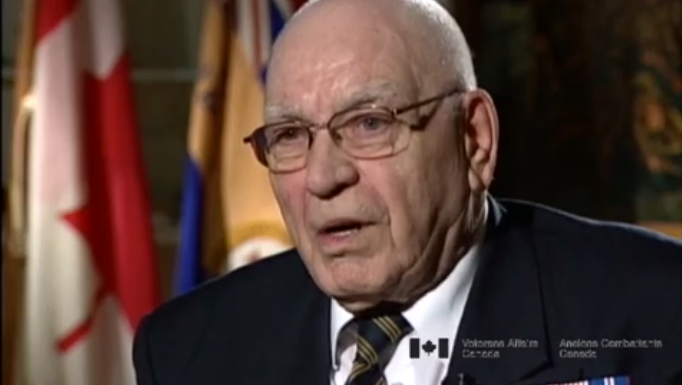
Noel Knockwood
Le 17 juillet 1932, M. Knockwood voit le jour dans la Première nation Indian Brook à Shubenacadie, en Nouvelle-Écosse. Il fait ses études primaires à la Shubenacadie Indian Residential School. En 1951, il s'enrôle dans l'Armée canadienne et, à la suggestion de son frère aîné, ancien combattant de la Seconde Guerre mondiale, il décide de s'engager dans l'artillerie. Il compte six années de service au Canada, aux États-Unis, au Japon et en Corée. Il reçoit son entraînement de base à Shilo, au Manitoba. Au cours de son entraînement, il suit des cours de guerre atomique, biologique et chimique. Il n'a que 18 ans lorsqu'il part à l'étranger pour combattre en Corée pendant 413 jours. À son retour, M. Knockwood donne des cours sur l'artillerie légère et devient sergent instructeur. Au terme de son service militaire, M. Knockwood poursuit ses études et fait une majeure en sociologie à la Saint Mary's University. Il enseigne ensuite à la Dalhousie University ainsi qu'à la Saint Mary's University, en plus d'être le conférencier invité dans plusieurs autres universités des Maritimes. En 2002, il est récipiendaire du Prix national d'excellence décerné aux Autochtones dans la catégorie patrimoine et spiritualité. Au moment de la présente entrevue, M. Knockwood agissait à titre de sergent d'Armes pour la Nouvelle-Écosse.
Transcription
We had all kinds of responsibilities, you know, that was placed on us by the system, the military system gives you all kinds of responsibilities. More so for your conduct. Speaking conduct wise, Canada was well recognized at that time, and I think it still is; that to be Canadian is to be a proud soldier and we had our history. Combat history to prove it and we did our duties accordingly and executed our responsibilities according to the way that we were trained. And we are still equal to all other armies that were over there at the time: the Australians, New Zealanders, and the Americans and people from India and things like that. So Canada held it’s own and I was very proud to be a Canadian. I still am proud to be a Canadian today. And our contribution for a defence in this country, in my mind shall never be erased. That will always be there and I’m very proud to say that.