Attention!
Cette vidéo est disponible en anglais seulement.
Description
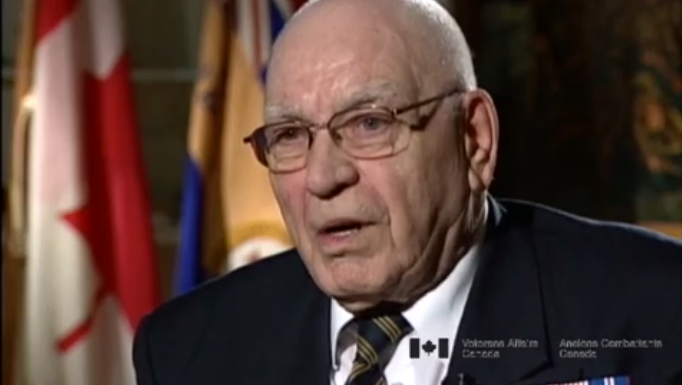
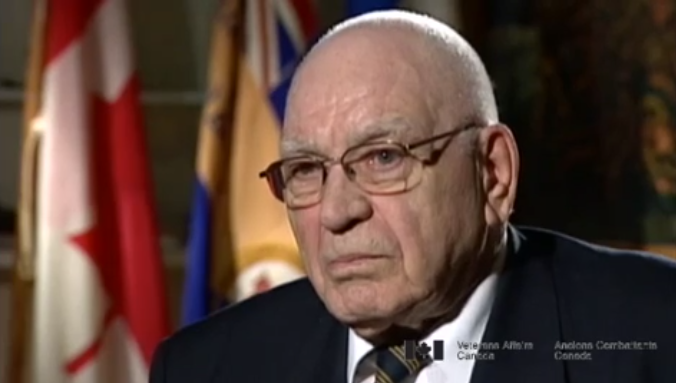
Noel Knockwood
Le 17 juillet 1932, M. Knockwood voit le jour dans la Première nation Indian Brook à Shubenacadie, en Nouvelle-Écosse. Il fait ses études primaires à la Shubenacadie Indian Residential School. En 1951, il s'enrôle dans l'Armée canadienne et, à la suggestion de son frère aîné, ancien combattant de la Seconde Guerre mondiale, il décide de s'engager dans l'artillerie. Il compte six années de service au Canada, aux États-Unis, au Japon et en Corée. Il reçoit son entraînement de base à Shilo, au Manitoba. Au cours de son entraînement, il suit des cours de guerre atomique, biologique et chimique. Il n'a que 18 ans lorsqu'il part à l'étranger pour combattre en Corée pendant 413 jours. À son retour, M. Knockwood donne des cours sur l'artillerie légère et devient sergent instructeur. Au terme de son service militaire, M. Knockwood poursuit ses études et fait une majeure en sociologie à la Saint Mary's University. Il enseigne ensuite à la Dalhousie University ainsi qu'à la Saint Mary's University, en plus d'être le conférencier invité dans plusieurs autres universités des Maritimes. En 2002, il est récipiendaire du Prix national d'excellence décerné aux Autochtones dans la catégorie patrimoine et spiritualité. Au moment de la présente entrevue, M. Knockwood agissait à titre de sergent d'Armes pour la Nouvelle-Écosse.
Transcription
Speaking of celebrations, you know when I came back from Korea, of course we sailed on American ships and went all around America ships and so we came back on American ships and we landed in Seattle. And Seattle, they had a big parade, they had bands and they had dancing girls and they had confetti coming down from the buildings and it was a great reception. However, when we got to Canada; like we went by train from Seattle to Vancouver, when we got to Vancouver all we received was a coffee from the Red Cross. And then, that was not very good we expected a little bit more than that from our own country. Then, got on the trains and proceeded back to the base that we took our basic training and that was in Winnipeg, where our headquarters were and when I got to Winnipeg, the same thing, we got another cup of coffee. So the reception was not all that good and we made it known that too, later on that you know, we were treated as second-class citizens and even one soldier experienced, as he got off the train in Vancouver that a woman just spit in his face and that was sort of an insult too and that was a tragic part of the event. However we did manage to convince the authorities because the bureaucrats at the time and the Veteran Affairs were saying well, Canada didn’t go to war because there was no war. Canada did not declare war, Canada went to keep peace and that’s what we did. It was several, several years later I think it was about 30 or 40 years later that finally Canada did say, yes Korea was a war, and we’ll reward you and when that came about we received the Canadian Voluntary Service Medal. So now we have a Canadian Voluntary Service Medal and we wear it today and we wear it with our Korean medals and things like that. But that’s the story behind Canada and the kind of attitude when we got back and when we came back we were not Veterans because we went to keep peace, we didn’t go to war. However the peacekeeping event had all the characteristics of war; people died, we killed others and others killed us and that was the sad part about it. But we can’t concentrate on the sad part, we gotta concentrate on the good part and we still live in one of the best countries in the world and I’m very proud to say that.