Attention!
Cette vidéo est disponible en anglais seulement.
Description
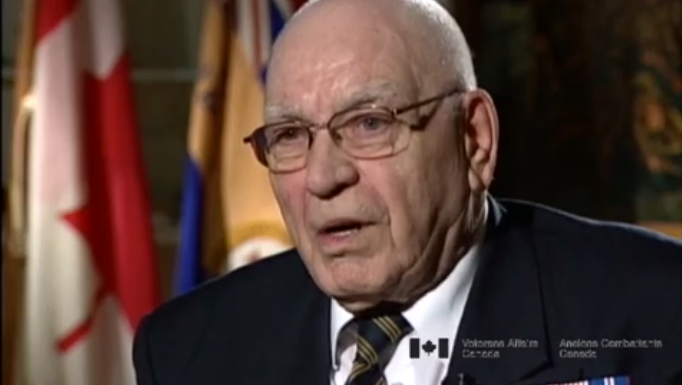
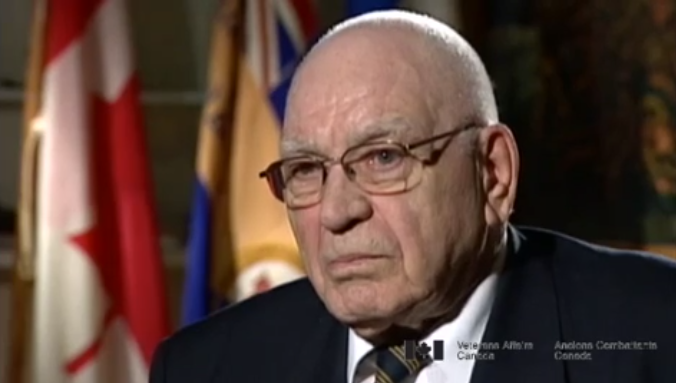
Noel Knockwood
Le 17 juillet 1932, M. Knockwood voit le jour dans la Première nation Indian Brook à Shubenacadie, en Nouvelle-Écosse. Il fait ses études primaires à la Shubenacadie Indian Residential School. En 1951, il s'enrôle dans l'Armée canadienne et, à la suggestion de son frère aîné, ancien combattant de la Seconde Guerre mondiale, il décide de s'engager dans l'artillerie. Il compte six années de service au Canada, aux États-Unis, au Japon et en Corée. Il reçoit son entraînement de base à Shilo, au Manitoba. Au cours de son entraînement, il suit des cours de guerre atomique, biologique et chimique. Il n'a que 18 ans lorsqu'il part à l'étranger pour combattre en Corée pendant 413 jours. À son retour, M. Knockwood donne des cours sur l'artillerie légère et devient sergent instructeur. Au terme de son service militaire, M. Knockwood poursuit ses études et fait une majeure en sociologie à la Saint Mary's University. Il enseigne ensuite à la Dalhousie University ainsi qu'à la Saint Mary's University, en plus d'être le conférencier invité dans plusieurs autres universités des Maritimes. En 2002, il est récipiendaire du Prix national d'excellence décerné aux Autochtones dans la catégorie patrimoine et spiritualité. Au moment de la présente entrevue, M. Knockwood agissait à titre de sergent d'Armes pour la Nouvelle-Écosse.
Transcription
I’d just like to, you know, to remind people that I’m not promoting war. I’m not glorifying war and I don’t wish to do that but at the same time, I repeat myself, I’d like to say that we need to defend the most beautiful country in the world. The principles that we follow are democratic, the principles that we follow are great because we have human rights and we have dignity of the individuals, that’s paramount, and Canada stands foremost in my mind throughout the universe as the best country in which to live. And the Veterans made it that way. And that’s what I say, cause young people join the military, it’s a good life. As we mentioned to the younger people too that military life is necessary, that we have to defend our country, our nation and the principles that we follow, so you know, the freedoms that we exercise today as came about because of the native people and Aboriginal Veterans who have sacrificed their lives so that you and I continue to carry on the experiences that they fought for. So this is the nice part, I think, that should be mentioned. However, again I have to say, I’m not in a position to promote war because war is not good for any country. But the defence of our country has to be in our minds at all times. Today there is different kinds of warfare now could possibly happen and we have terrorists and we have different other methods and ways today that we have to be able to counter these movements and the Canadian Forces are there for that purpose and I would like to encourage them to continue to do that because we live in a beautiful country. We exercise freedom and privileges and we have human rights that other countries do not have, but Canada has. And for that reason I would like to say that Canada is a beautiful country in which to live. It’s the best in the world.