Attention!
Cette vidéo est disponible en anglais seulement.
Description
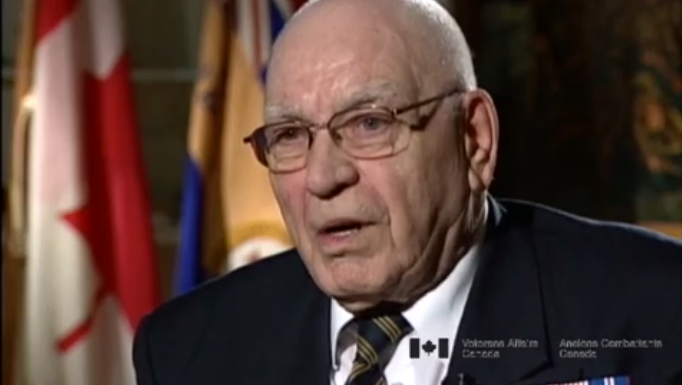
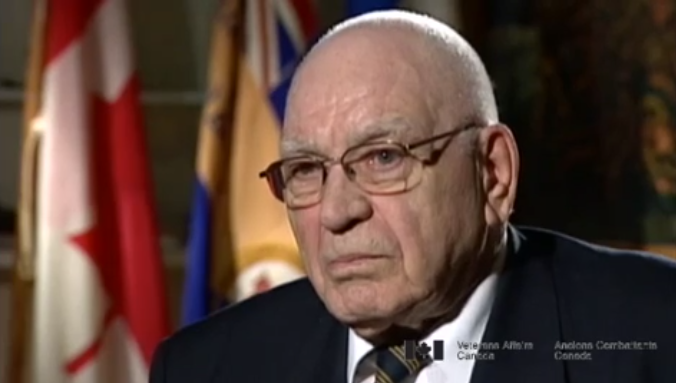
The war is over. But, Mr. MacLean’s work was not.
Transcription
I was posted back to Belgium, to Brussels first, in charge of a unit that was set up after the war, there were four of them set up by the Commonwealth Air Forces, to try to find the fate of airmen who were posted as missing and were never accounted for, and there were four of these units in England, in Europe and I was in charge of Number Two Unit which was responsible for Belgium and Holland and Luxembourg and the French Zone in Germany and Czechoslovakia. And during the two years that I was in charge of that, we accounted for about 3500 missing airmen. But in no case was there a happy ending, it was a matter of finding isolated graves and determining that in mass graves there were seven, perhaps, instead of four or something, which was the original thing. And when I was in Brussels, I didn’t know the real names of the people that had helped me during the war, and I was able to find some of them and of course when I found some they knew which others had survived the war and I visited them and it was a very rewarding experience because of all the, at that point it was quite early. The Royal Air Force Escaping Society hadn’t been formed at that point, and it was very rewarding and comforting because I was the first person in most cases that these people had seen of all the people they’d helped and they didn’t know whether their help was successful or not because for security reasons, they only knew of their own link in the chain of escape and they never knew whether the people they helped had made it all the way or not. And that was one of the most rewarding things I was able to do was visit the Peley’s (sp.) in Holland and, and the various people who, Mondeau, Dedee Dejong and all of the people, the Koshay’s (sp.) and so on.
Catégories
Post-War Responsibilities
Médium
Video
Propriétaire
Veterans Affairs Canada
Guerre ou mission
Seconde Guerre mondiale
Emplacement géographique
France
Personne interviewée
John Angus MacLean
Branche
Aviation
Unité ou navire
<em>Bomber Command</em>
Military Rank
Capitaine
Occupation
Pilote
Durée
02:49