Description
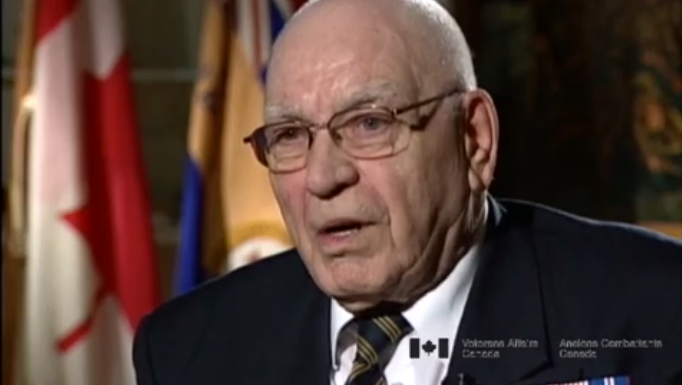
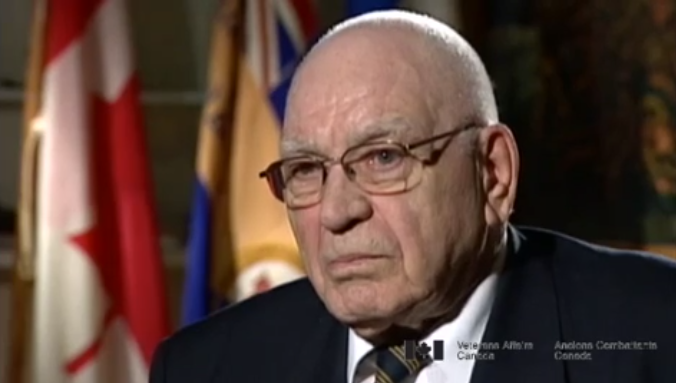
Mr. Ethell describes the role of his battalion during the Cyprus deployment.
Donald Stewart Ethell
Donald Stewart Ethell est né en juillet 1937 et a grandi à Victoria (Colombie-Britannique). Son père était un ancien combattant de la Première Guerre mondiale et de la Seconde Guerre mondiale. Sa mère était infirmière. Sa soeur et lui ont étudié dans un pensionnat en raison des emplois qu’occupaient ses parents et ils retournaient à la maison seulement à Noël et pendant les vacances d’été. La mère de M. Ethell est décédée lorsque ce dernier n’avait que 10 ans.
<br><br>
Lorsqu’il s’est enrôlé, M. Ethell a joint les Queen's Own Rifles à Calgary. Après plusieurs années de service comme soldat d’infanterie, on l’a recommandé pour qu’il reçoive la formation d’officier. M. Ethell réussit le programme et s’éleva au rand de colonel. Plus tard, il a commandé des troupes canadiennes et des troupes des Nations Unies au cours de divers missions partout dans le monde. Au milieu des années 1990, Col. Ethell a pris sa retraite après plus de trente-cinq ans de services distingués.
Transcription
Our battalion really was to, remembering that there was a large Turkish enclave, the battalion had a number of missions; one, was to escort the Greek convoy through from Nicosia, through the enclave to Kirinia, which was done in conjunction with other forces, the Finnish armoured cars, vehicles and outriders would accompany the, the company that was deployed to escort the people through, they also deployed through some of the villages to stand in place so the Turks wouldn't shoot at or throw rocks at the Greeks. So that was a convoy going up and going down and it was a matter of surveillance and stability in place. At one point in our career, our fellow battalion from Ireland, to the east, there was a political problem and they were withdrawn, for a month and we were assigned a larger area, which made it awkward because our Royal Reserve Company had to be deployed from the base camp, outside Nicosia, called Lizard Flats, because it was hot and full of lizards, so we had no reserve, or very little reserve, except it was the, in the case of reconnaissance platoon it was a long drive just to get there. So in addition to going through and along the tops of the mountains, where you could look across to Turkey, 44 miles away, in some instances and down into the dust ball where the Turks are. You had to make sure you got through and over to a place called Lefka, which is where the Irish battalion was there. So that was an additional work load. There was a number of incidents where the Turk Cypriots decided to pin down half of bravo company that was moving up the hill, firing over their head, we were deployed very quickly to our "RV" points for observation and observe and report. We didn't run into any problem really. As it was the commanding officer went to the Turkish battalion headquarters and sorted it out an no, no uncertain terms with the Turkish commander. And you were always conscious of the fact that it, there was only X number of months before we arrived that the slaughter houses where they were hanging kids on hooks from one side or the other and there's two houses of atrocity just outside of Nicosia. So you always knew that, that had the potential of happening, we also had, remember this was United Nations Force 1965, what they call the Saber Force, which is when there was a dust up in one of the villages, that were getting a little too big for their britches, the Saber Force would appear, this would be the Finnish armoured cars, usually the reserve company deployed in trucks where they could see a whole bunch of soldiers, the 106 recoilless rifles, would be accompanying them, in other words it was establishing a presence, in other words, you really don't want to do that because these folks are gonna make, you're gonna make these guys day, so that was an interesting tour.
Interviewer: So it was a show of force to intimidate the..
The "Locals".
Interviewer: The locals.
Yeah.