Attention!
Cette vidéo est disponible en anglais seulement.
Description
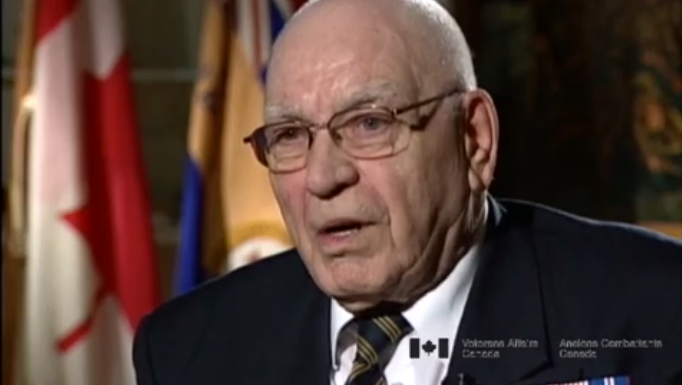
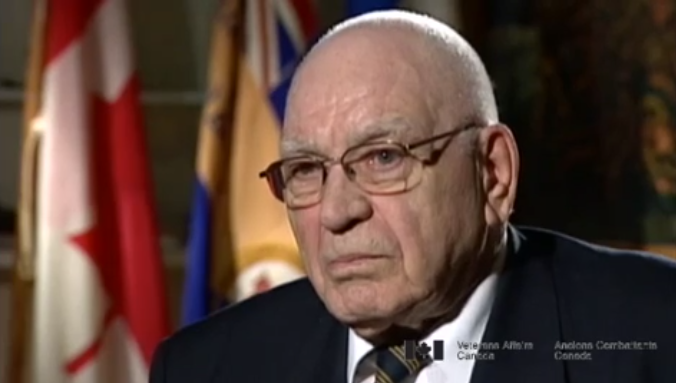
Mr. Tanner describes in detail the makeup of a convoy, the positioning of ships within it and ensuring the safety of surviving ships.
Transcription
Convoy is a formation of ships in about four abreast. Like I said, the most important cargos of air planes and tanks and ammunition and oil tankers was in the middle of the convoy and less perilous goods was on the outside of the convoy. And normally when the war first started, when I started in ‘39, I signed in ‘39 but I never sailed out til January and there was two escorts on the front with the commodore, and then if we had more than. Well, that never happened during my time in the war that we had more escorts than we needed. So there was corvettes, when the corvettes come on site, then they would use the corvettes on the back end and the destroyers on the front end. Convoys was all formed in Halifax and they were housed in the dockyard. They formed all the convoys, gave them each a number, every captain knew what he had to do. If he was a straggler he’d be left behind. They wouldn’t pick him up. We were told that if there’s survivors in the water, the convoy wouldn’t stop to pick them up. They keep on going. What do you do? Stop and pick up fifteen men or stop a ship and lose two hundred men? So the odds were against the people in the water.
Catégories
Convoy Structure
Médium
Video
Propriétaire
Veterans Affairs Canada
Guerre ou mission
Seconde Guerre mondiale
Personne interviewée
Allen Tanner
Branche
Marine marchande
Unité ou navire
D/S Sirehei
Occupation
Steward
Durée
1:35