Attention!
Cette vidéo est disponible en anglais seulement.
Description
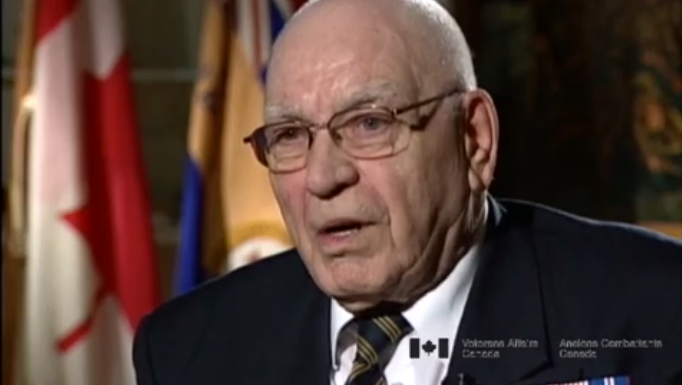
Mr. Cromwell provides detail of the process of loading ammunition and bringing it close to the front line.
Transcription
We had thirty truck loads of ammunition, we had thirty truck loads of jerry tins, gas, and we had thirty truck loads of combo packs and we kept moving up off where we go and then we’d stop and then we’d off load, get settled, emptied everything off our trucks and then stack them up and those were there for reserve and then we’d go back down to the beach where they had the big depots and then load up and then take it up, up through supply the units as we go along that’s where we kept doing it like that, eh. And then when we’d move, we would have to load these all back on these trucks and then you move them. Overnight you would move up then you’d off load and load again and then we got to where we started, most of it just helped keep you going we’d scrounge the booze and stuff. We always had a bottle in the truck and when they would say well you gotta take up a load of ammunition then we’d drive up and we’d go so far and then all lights out and you’re going right up, with the guns there and you take the ammunition off. Reach in and have a couple of good shots of Cognac or something. And then they’d say okay turn around there but be careful we haven’t cleared that mines yet and here you got a big 60 hundred weight truck you gotta turn around.Interviewer: During the time that you’d be taking supplies, ammunition and the like to the front, you’d be well within range of the German artillery.Oh jee whiz yes, yes, from where we were, from where our belts would be we would be right in range of the artillery. Sometimes we went up to more than miles from the front line.
Catégories
Trucks Loaded Down with Ammunition
Médium
Video
Propriétaire
Veterans Affairs Canada
Guerre ou mission
Seconde Guerre mondiale
Personne interviewée
Everett Sylvester Cromwell
Branche
Armée
Unité ou navire
Royal Canadian Army Service Corps
Military Rank
Private
Occupation
Transport
Durée
2:15