Attention!
Cette vidéo est disponible en anglais seulement.
Description
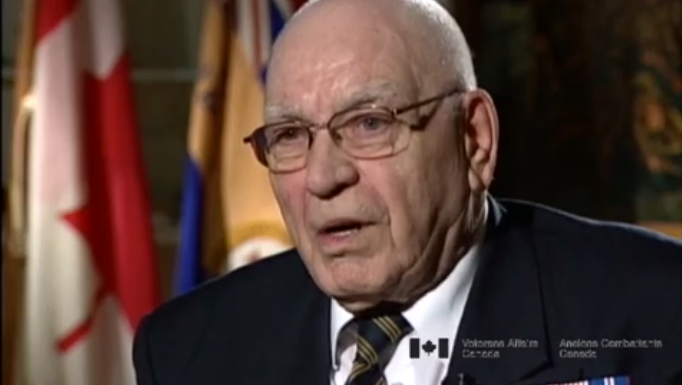
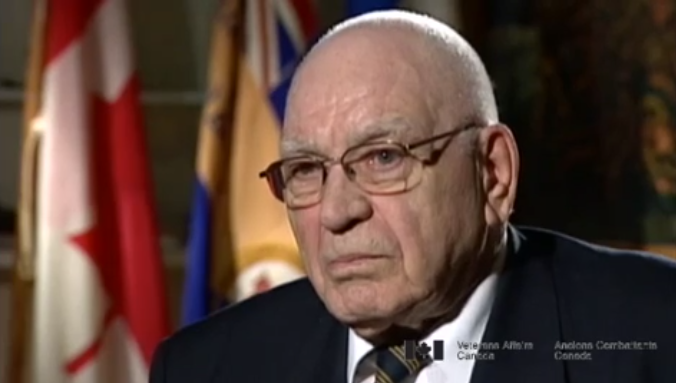
Mr. MacLeod describes reactions to battle stress such as what the troops called “losing it” and causing self-inflicted wounds which would necessitate hospitalization and avoid combat.
Transcription
When you’re young you don’t worry about it. You know that the chances are, you’re going to get hurt but it’s a matter of hopefully not badly and perhaps not at all. And you can’t worry about it. If you did.... We had some people that did worry about it, went, went, they had to be taken out, you know. I saw one fellow, we were in a canal, there was lots of machine gun fire and so on going over on top, he lost it and he was walking around, everybody was afraid to try and get him back down, you know. I don’t know what he was doing. He didn’t know himself I guess. Finally he got close enough, somebody grabbed him by an ankle and hauled him down and held him down, but I often wondered what would happen to a person like that, you know. He was just plain terrified, I don’t know. And we took over from the Fusiliers from Montreal, in a small town and it was black as pitch and I stationed a fellow on, we were all to station – the Germans, apparently were not too far away – outside a building and I was walking away. I was just about, going about, oh, 40 or 50 feet away and I would stay there and all of a sudden there was a gun shot and he started to moan and I didn’t see or hear. It sounded like it was right there. I didn’t know what to do so finally I went back and a sergeant came from around the other side, heard the commotion, he had put a rifle in his foot and shot his foot. He was terrified. He lost it, yeah. I often wondered too, what would happen to a man like that, what would he, the rest of his life, you know, what would he think or do, you know, like, I don’t know. It’s something to think about.
Catégories
“Losing it” and Self-inflicted Wounds
Médium
Video
Propriétaire
Veterans Affairs Canada
Guerre ou mission
Seconde Guerre mondiale
Campagne
Europe du Nord-Ouest
Personne interviewée
Malcolm MacLeod
Branche
Armée
Military Rank
Private
Occupation
Fantassin
Durée
2:13