Attention!
Cette vidéo est disponible en anglais seulement.
Description
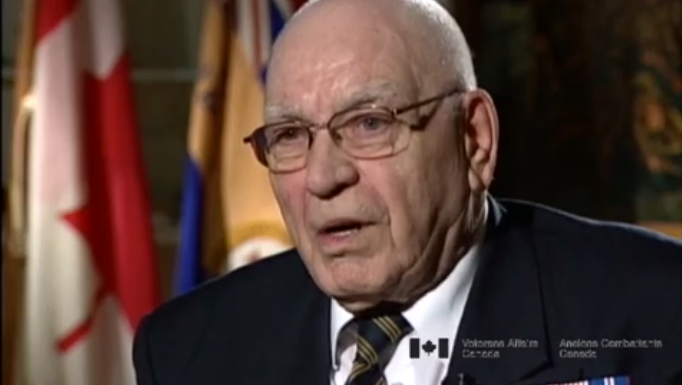
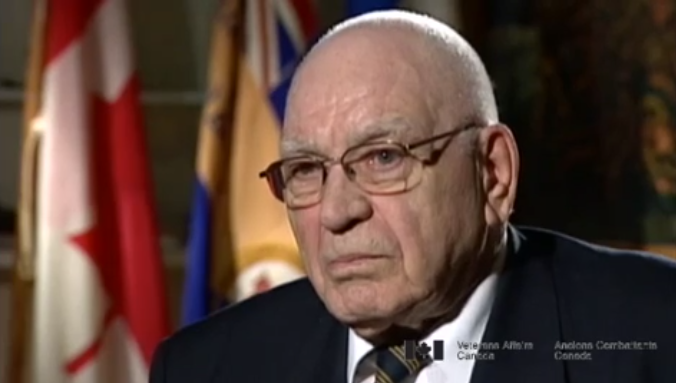
Mr. Hickey explains some of the facets of his police work and the struggles that ensued.
Transcription
In Kosovo, there was a few shootings and things like that. There was people being killed by landmines or unexploded ordinances that were off into the fields. A lot of unexploded ordinance left around over there and you can’t walk there but sometimes children don’t understand that and in they go. It was a hard way to live but it was, I guess, it was worthwhile in the end when you left there and like I said before as long as you can, you know, think in your own mind that yeah it will be good here.
As a police officer we went there in December of ’99 just after the bombing, a couple months after the bombing and we stayed there for nine months and again that place was… when I came back I had to wear reading glasses because I was used to reading under candlelight. We lived off the economy, in other words, you went out and rented a house somewhere. I lived with two Americans that were over there and my job there, I ran a police station in a place called Melacheval, it was a rebel stronghold during the war or an Albanian stronghold during the war and I had 39 police officers from 13 different countries and I think it was 13 or 14 police cadets and a bunch of civilian staff. And the Russian Army, we were in the Russian Army sector that provided security for us. So when you have that (oh, there’s a word for it) that many people from that many countries and you’ve got totally different values, I had police officers from India, Pakistan, Philippines, Germany, US, a couple of African countries, and so forth and so on, so anyway we were there to take, our main job was obvious because there was no police force there so we had to do policing work and we also had to take a lot of statements from people concerning war crimes. And when you have a person from a different country whose mother tongue is Arabic, they can’t speak English that well, they’re taking a statement from an Albanian or Serb who can’t speak English and they’re taking a statement through an interpreter and now you’re trying to get that down and the Arabic writes right to left and when I got some of the statements I looked at the guys and said listen we got to stop this. This is, I said, what you got here I mean a two year old wouldn’t be able to read it. This thing got to go higher up through the UN chain and maybe ten years from now it will be in front of a war crimes commission or whatever so what I did, I wasn’t well liked for it, I fired the whole lot of them. They couldn’t take a statement because policing in this country and that country is different than policing in Europe and North America. So I got into a little bit of trouble but that’s the way she goes. You have to look at the future, you have to look at why you’re there, some of these people were, like an elderly woman wanted to come in and say listen I have, my such and such and such were murdered six months ago, I want to tell you about it, and in their country, the police officers country, “We don’t talk to women, get out!”
As a police officer we went there in December of ’99 just after the bombing, a couple months after the bombing and we stayed there for nine months and again that place was… when I came back I had to wear reading glasses because I was used to reading under candlelight. We lived off the economy, in other words, you went out and rented a house somewhere. I lived with two Americans that were over there and my job there, I ran a police station in a place called Melacheval, it was a rebel stronghold during the war or an Albanian stronghold during the war and I had 39 police officers from 13 different countries and I think it was 13 or 14 police cadets and a bunch of civilian staff. And the Russian Army, we were in the Russian Army sector that provided security for us. So when you have that (oh, there’s a word for it) that many people from that many countries and you’ve got totally different values, I had police officers from India, Pakistan, Philippines, Germany, US, a couple of African countries, and so forth and so on, so anyway we were there to take, our main job was obvious because there was no police force there so we had to do policing work and we also had to take a lot of statements from people concerning war crimes. And when you have a person from a different country whose mother tongue is Arabic, they can’t speak English that well, they’re taking a statement from an Albanian or Serb who can’t speak English and they’re taking a statement through an interpreter and now you’re trying to get that down and the Arabic writes right to left and when I got some of the statements I looked at the guys and said listen we got to stop this. This is, I said, what you got here I mean a two year old wouldn’t be able to read it. This thing got to go higher up through the UN chain and maybe ten years from now it will be in front of a war crimes commission or whatever so what I did, I wasn’t well liked for it, I fired the whole lot of them. They couldn’t take a statement because policing in this country and that country is different than policing in Europe and North America. So I got into a little bit of trouble but that’s the way she goes. You have to look at the future, you have to look at why you’re there, some of these people were, like an elderly woman wanted to come in and say listen I have, my such and such and such were murdered six months ago, I want to tell you about it, and in their country, the police officers country, “We don’t talk to women, get out!”
Catégories
Policing Duties
Médium
Video
Propriétaire
Veterans Affairs Canada
Guerre ou mission
Forces armées canadiennes
Personne interviewée
Bill Hickey
Military Rank
Adjudant-maître
Occupation
Police Officer
Date d’enregistrement
Durée
4:22