Attention!
Cette vidéo est disponible en anglais seulement.
Description
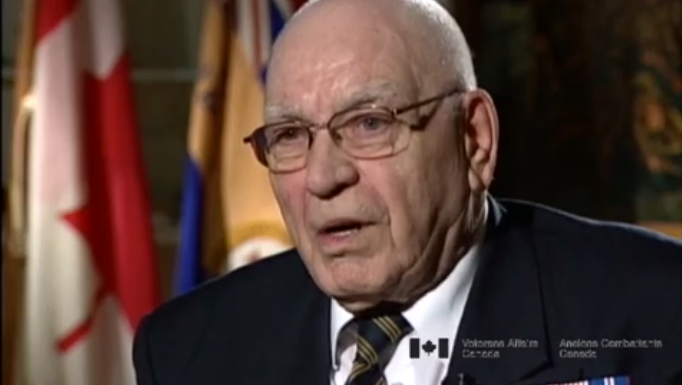
Mr. McCue describes his first impressions of the Bosnian culture and understanding their needs and wants for everyday existence.
Transcription
Training you can do but until you are on the ground, until you are dealing with the situations that are facing you it really is a steep learning curve to start and you are well prepared. You are well trained and the army gets you to a point where you are very effective and then it’s up to you to take on the other nuances of the particular operation that you are on. You remember certain things. I remember coming off the plane in Bosnia and you got hit with this wafting smell of burning garbage. And it dawns on you then that the infrastructure of this country has really fallen apart. They are burning garbage in their front yard in order to get rid of it so it’s like the burn pit on the farm but the whole country smelled like that and it was very strong. So that’s your first impression of the country and you kind of go, okay, things aren’t like they are at home so you get nervous. Now in 2003 there wasn’t much going on in Bosnia, not like there was back in ‘93. For me we were well established, the routines were there and the fighting had pretty much subsided. We were doing more policing and that is something that we weren’t really trained to do in the army, we were trained to be soldiers. Policeman have a completely different role and a different mission so we had a bit of a learning curve to get us able to operate effectively in that area in Bosnia. And you feel for these people. Millions of mines in that country just scattered everywhere you could possibly imagine. You didn’t go off the beaten path, you didn’t take a dirt road unless you knew it had been cleared and there was lots of civilians that came to you with missing limbs and things from the rampant use of mines in the country and it was shocking. The people were happy to have us there to be present but there was also a very solemn feeling amongst the people that were there. There was a lot of issues and they were not necessarily getting the support they wanted or needed but we also learned a lot of lessons too. If you gave one family a stove to help them with their living conditions, the next morning you would have thirty families lined up waiting for a stove out the door. They didn’t need a stove but they wanted one because this person got a new stove, why shouldn’t we get a new stove? So we had to come up with ways to integrate that kind of behaviour we wanted to see, you know, if you help us we’ll help you and help yourselves. But it was a lot of learning to do to learn how to best help them. As Canadians you want to help everybody and you want to be open and you’d like to give everyone a stove. We don’t have the resources for that so you have to manage those expectations but we had to do it in a way that was not offensive or not selective that certain people were getting privileges. Again like we know perception is everything and we wanted to make sure that it was standard across the board that it was only for the people that needed it the most.
Catégories
Understanding the Bosnian Culture
Médium
Video
Propriétaire
Veterans Affairs Canada
Guerre ou mission
Forces armées canadiennes
Emplacement géographique
Bosnie
Campagne
Bosnia
Personne interviewée
Robert McCue
Branche
Armée
Unité ou navire
Princess Patricia's Canadian Light Infantry (PPCLI)
Military Rank
Sergent
Date d’enregistrement
Durée
3:24