Attention!
Cette vidéo est disponible en anglais seulement.
Description
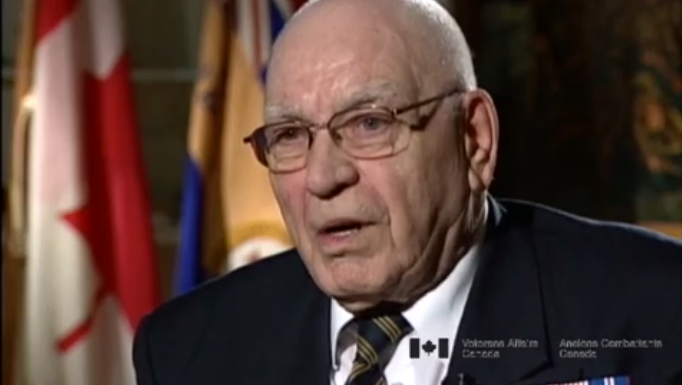
Mr. Mac Culloch explains the phases one goes through during military engineer training and the feelings of satisfaction he obtained during his career path.
Wayne Mac Culloch
Le Major Wayne Mac Culloch est né en 1953 au Cap Breton et il a grandi au Québec. À 18 ans, il a fréquenté le Collège royal militaire pour ensuite s’enrôler en 1968, à titre d’ingénieur militaire. M. Mac Culloch a été déployé trois fois en Bosnie et une fois en Haïti. Il a pris sa retraite après 41 ans de service. Il a ensuite travaillé avec le Ministère de la Défense nationale. Depuis 2004, M. Mac Culloch est un bénévole dévoué pour présenter le “Module de la paix” avec le programme Rencontres du Canada, partageant avec les jeunes l’importance du service et du sacrifice.
Transcription
The training would take place in the summer periods between academic years at RMC and it was divided into four basic phases. The first phase is basic officer training to make sure that you have the skills and abilities to actually conduct leadership exercises. And that’s all done common, everyone does the same training. And for phase 2 that’s when you start your occupational training and for phase 2 military engineer when I went through we were essentially employed as young sappers, young privates so we would actually do the bridge building and the digging of the pits for explosives and all of the manual work to get a feel for what that was like and learn from the ground up how to do engineering. Phase 3, the following summer, was spent learning how to plan the tasks and phase 4 was leadership in a leadership role actually commanding your peers through different tasks and all the same sort of thing whether it was trying to create potable water from brackish water or whether it was building a bridge or firing a demolition - all the tasks basically repeated themselves every year but with different emphasis.
Well the first thing that happened to me after graduation is I was sent back out to the Canadian Forces School of Military Engineering to be the course officer on the first francophone officer course that they had which was an interesting experience. And a number of the graduates of that course distinguished themselves in their careers in the Canadian Armed Forces and I, in fact, ended up working for a number of these folks in my later career. That was a lot of fun and, you know, watching the young folks finally getting a chance to learn in their own mother tongue was really rewarding. I did sufficiently well there that I managed to be posted to the French language engineer regiment just north of Quebec City where I got the opportunity to build airfields in the Arctic along with building bridges in Quebec. I also became a diving officer at that point in time, a combat diving officer. And we used to do a number of exercises. Val Cartier is known for its rather large and rough terrain training area so we had quite a fun time back there trying to build trails through thick forest and rugged rock terrain. A lot of call for chainsaws and explosives.
Well the first thing that happened to me after graduation is I was sent back out to the Canadian Forces School of Military Engineering to be the course officer on the first francophone officer course that they had which was an interesting experience. And a number of the graduates of that course distinguished themselves in their careers in the Canadian Armed Forces and I, in fact, ended up working for a number of these folks in my later career. That was a lot of fun and, you know, watching the young folks finally getting a chance to learn in their own mother tongue was really rewarding. I did sufficiently well there that I managed to be posted to the French language engineer regiment just north of Quebec City where I got the opportunity to build airfields in the Arctic along with building bridges in Quebec. I also became a diving officer at that point in time, a combat diving officer. And we used to do a number of exercises. Val Cartier is known for its rather large and rough terrain training area so we had quite a fun time back there trying to build trails through thick forest and rugged rock terrain. A lot of call for chainsaws and explosives.
Catégories
Training as Military Engineer
Médium
Video
Propriétaire
Veterans Affairs Canada
Guerre ou mission
Forces armées canadiennes
Emplacement géographique
Canada
Personne interviewée
Wayne Mac Culloch
Military Rank
Private
Occupation
Ingénieur
Date d’enregistrement
Durée
3:25