Service militaire
Lieu de l’enterrement/commemoration
Fils de Leo et Mary Prokop, de Kitchener, Ontario. Frère de Leo, Wanda, Victoria, Nellie, Hilda et Josephine.
Galerie numérique de Sapeur Edward Prokop
Galerie numérique de
Sapeur Edward Prokop
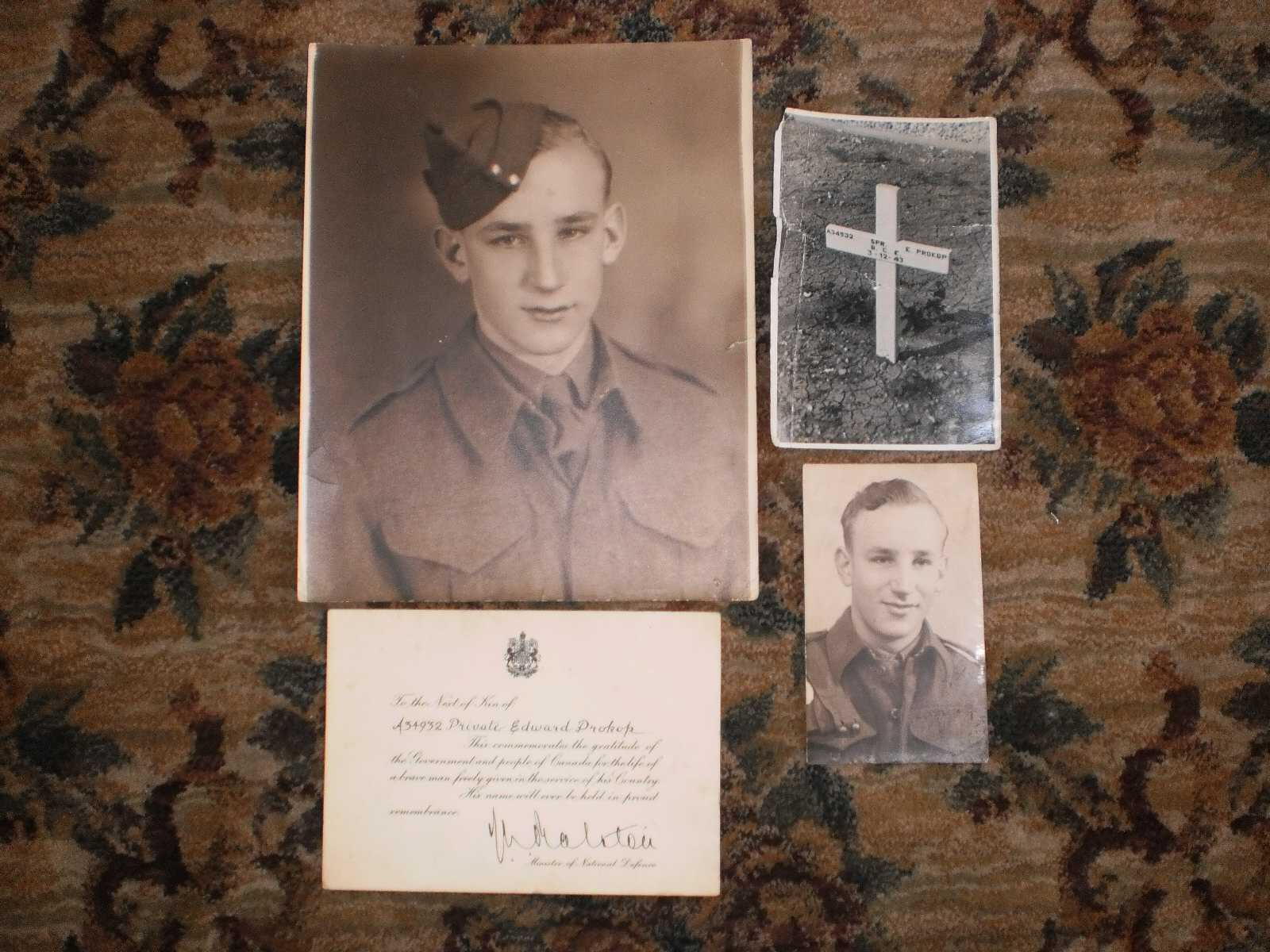
Edward Prokop's medals, photos, etc were all found at a garage sale by one of our RCL Ontario Br 50 (Fred Gies) members and purchased for the branch. The items have been properly mounted, framed etc and are on display along with a brief bio of his life: Edward Prokop was a member of the pre–war Scots Fusilers of Canada. He transferred to the Royal Canadian Engineers who were pleading for men. Trained at Knollwood Park in Kitchener, he soon found himself in England and assigned to 3 Field Company. He was sent to participate in the Italian Campaign and fought in several major actions in 1943. Sadly, Edward was killed at the approaches of the Moro River in Italy on 3 December 1943, one month after penning a Christmas card to his mother, Mary. He had been overseas for two years. In addition to his mother, he left his father Leo, a brother — Leo Jr, and five sisters —Josephine, Hilda, Nellie, Vickie, and Margaret. He was just 20.
Galerie d'images
-
Edward Prokop's medals, photos, etc were all found at a garage sale by one of our RCL Ontario Br 50 (Fred Gies) members and purchased for the branch. The items have been properly mounted, framed etc and are on display along with a brief bio of his life: Edward Prokop was a member of the pre–war Scots Fusilers of Canada. He transferred to the Royal Canadian Engineers who were pleading for men. Trained at Knollwood Park in Kitchener, he soon found himself in England and assigned to 3 Field Company. He was sent to participate in the Italian Campaign and fought in several major actions in 1943. Sadly, Edward was killed at the approaches of the Moro River in Italy on 3 December 1943, one month after penning a Christmas card to his mother, Mary. He had been overseas for two years. In addition to his mother, he left his father Leo, a brother — Leo Jr, and five sisters —Josephine, Hilda, Nellie, Vickie, and Margaret. He was just 20.
-
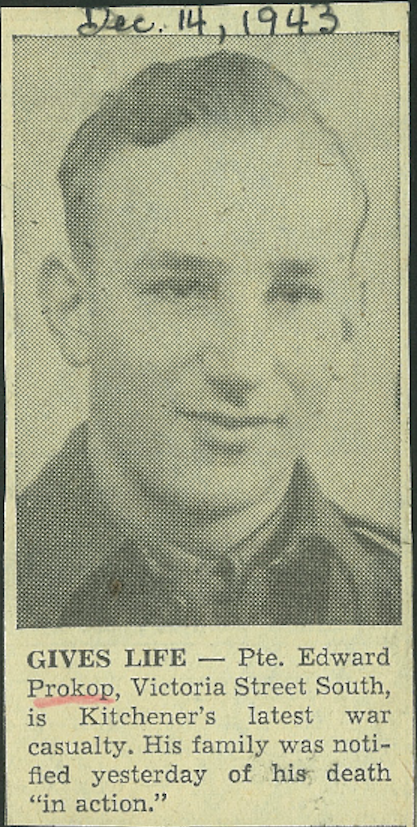
From the Kitchener Public Library Collection of World War Two Soldier Information Cards. Submitted for the project Operation Picture Me.
-
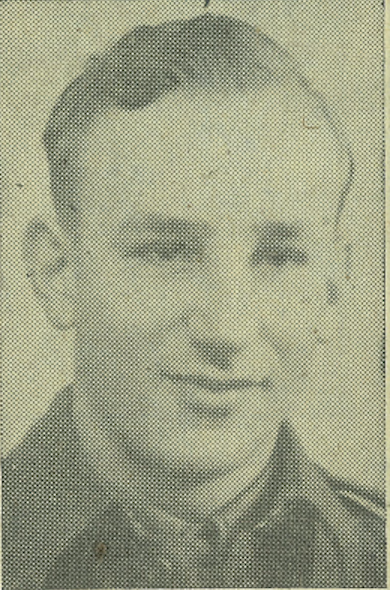
From the Kitchener Public Library Collection of World War Two Soldier Information Cards. Submitted for the project Operation Picture Me.
-
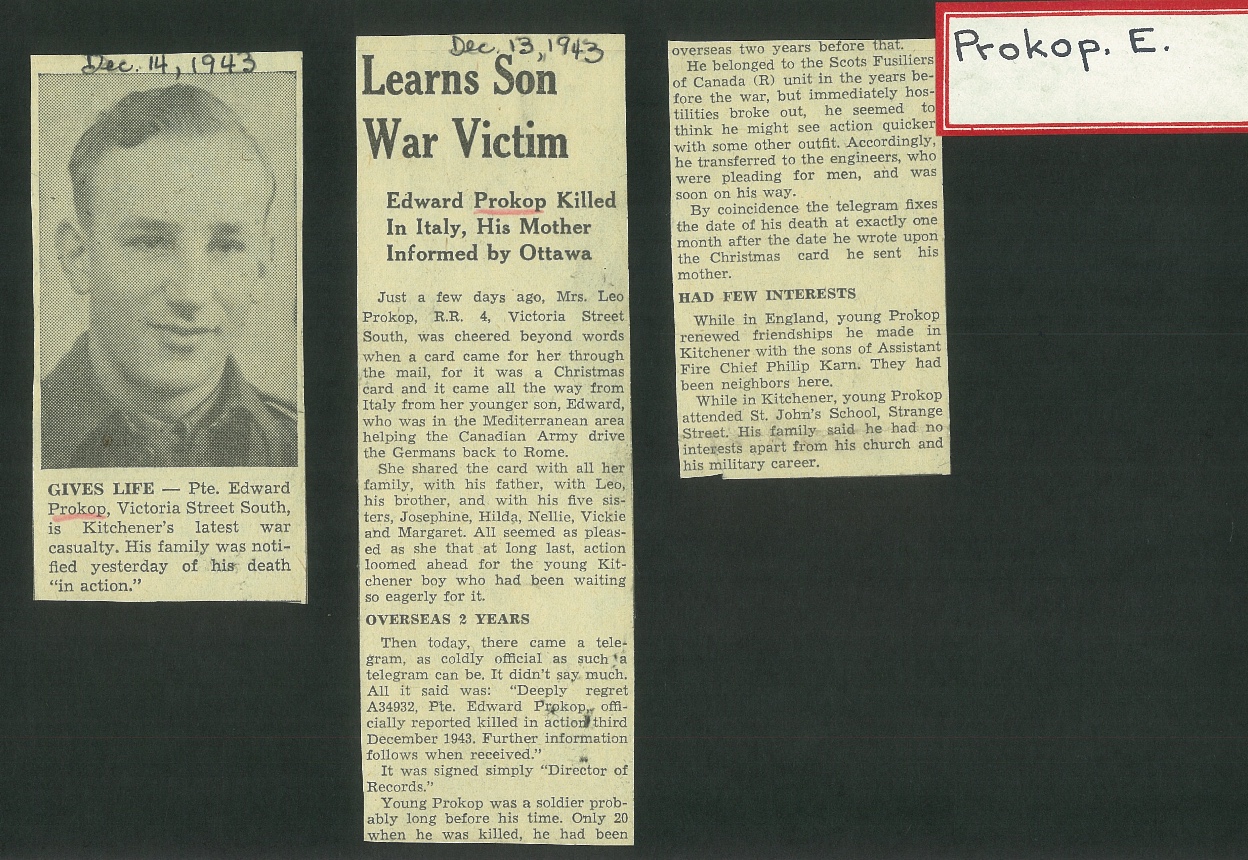
From the Kitchener Public Library Collection of World War Two Soldier Information Cards. Submitted for the project Operation Picture Me.
Dans les livres du souvenir
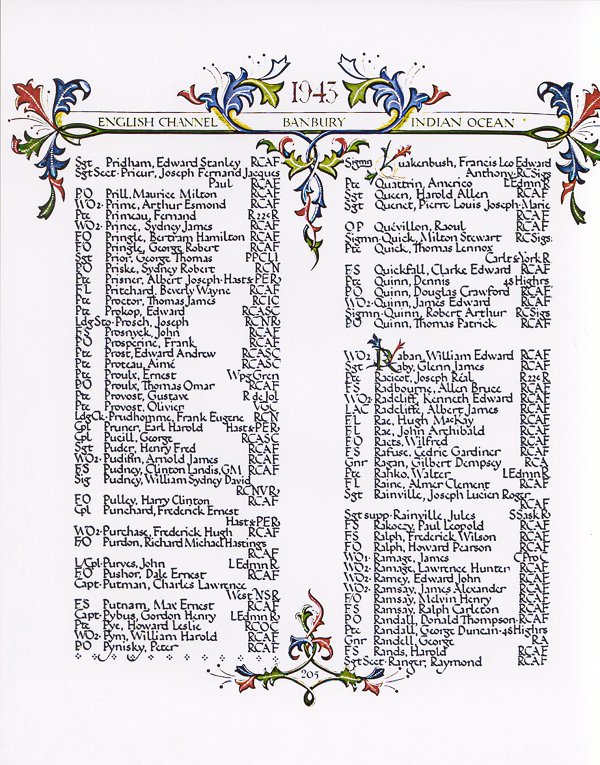
Inscription commémorative sur la :
Page 205 du Livre du Souvenir de la Seconde Guerre mondiale.
Commander cette page
Télécharger cette page
Cimetière de guerre canadien de la Moro Italie
Le cimetière de guerre canadien de la Moro se trouve dans la région de San Donato dans la commune d'Ortona, province de Chieti, et est situé sur des terres élevées, près de la mer, juste à l'est de la route côtière adriatique principale (route no SS16). Si vous êtes à Rome, vous pouvez vous y rendre en prenant l'autoroute A25 (Rome - Pescara). Vous n'avez qu'à bifurquer sur l'autoroute A14 et la quitter à Ortona. La route latérale qui relie le cimetière à la route principale passe sous une arche attenante à la petite église de San Donato. Le cimetière est toujours ouvert et peut être visité en tout temps.
Pendant l'hiver de 1943, les armées allemandes en Italie défendaient une ligne qui s'étendait depuis la mer Thyrénéenne au nord de Naples, jusqu'à l'Adriatique au sud d'Ortona. L'objectif des Alliés consistait à enfoncer cette ligne et à s'emparer de Rome. De son côté, la 1re Division de l'infanterie canadienne devait franchir la rivière Moro et s'emparer d'Ortona. En janvier 1944, les Corps d'armée canadien choisit ce site, afin d'y inhumer ceux qui périrent au cours de la bataille d'Ortona et des combats livrés pendant les semaines qui l'avaient précédée et suivie. Aujourd'hui, on y trouve 1 651 sépultures dont plus de 50 non identifiées et celles de 1 375 Canadiens.
Pour plus d’informations, visitez la Commission des sépultures de guerre du Commonwealth (site disponible en anglais seulement).
L’image du coquelicot est une marque déposée de la Légion royale canadienne (Direction nationale) et est utilisée avec sa permission. Cliquez ici pour en savoir plus sur le coquelicot.
Avons-nous oublié quelque chose ?
Contribuer à cette page commémorative
Avez-vous des photos, des informations ou une correction concernant la page commémorative de cet individu? Apprenez-en plus sur le MVGC et les informations que nous collectons.