Le caporal Darryl Ross, un électricien de la BFC North Bay, a été tué dans un accident de la route le 3 mars 1978, au cours d’une mission de maintien de la paix sur le plateau du Golan. Avant de se joindre aux Forces canadiennes, le caporal Ross a fait partie des Cadets de l’Air, dans le 150e escadron Hamilton Tiger. À sa mort, les cadets de son escadron ont recueilli des fonds en vue de la création d’un trophée à sa mémoire, attribué chaque année au cadet subalterne de l’escadron ayant obtenu les meilleurs résultats scolaires.
Ontario
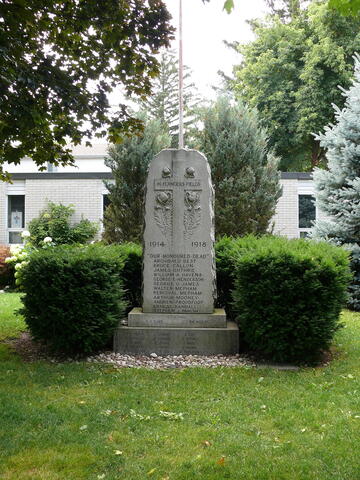
Cénotpahe d'Hamilton Ouest
[front/devant]
IN FLANDERS FIELDS
1914-1918
“OUR HONOURED DEAD”
ARCHIBALD BEST
BRUCE CALLON
JAMES GUTHRIE
WILLIAM A. HAVENS
GEORGE E. HENDERSON
GEORGE O. JAMES
WALTER MEPHAM
PERCIVAL MEPHAM
ARTHUR MOONEY
ANDREW PROUDFOOT
ERNEST RANDALL
STEPHEN J. PARISH
LEST WE FORGET
1914 C.O. CLARK WM. HOSKING 1918
1939 1945
- W. CAMERON
- G. KERSLAKE
- I. MCILROY
- R. NEEDHAM
- W. STEPHENSON
- J. STEWART
- H. STEWART
- PAUL STUART
- E. VENUS
- C.W. COX
- A. COX
- H. SPRING
- F. WARD
- D. BROWN
- D. STAPLETON
[storyboard/scénarimage]
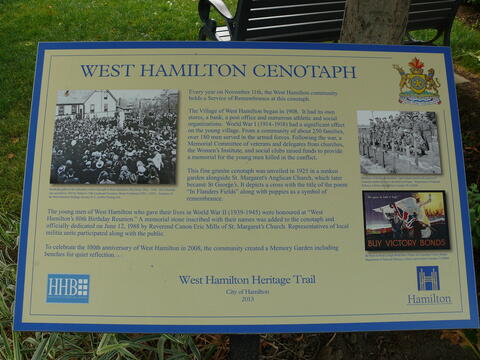
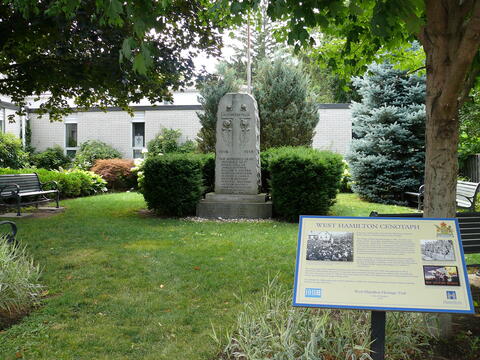
WEST HAMILTON CENOTAPH
Every year on November 11th, the West Hamilton community holds a Service of Remembrance at this cenotaph.
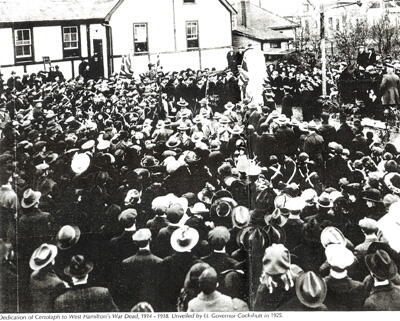
The Village of West Hamilton began in 1908. It had its own stores, a bank, a post office and numerous athletic and social organizations. World War I (1914-1918) had a significant effect on the young village. From a community of about 250 families, over 180 men served in the armed forces. Following the war, a Memorial Committee of veterans and delegates from churches, the Women's Institute, and social clubs raised funds to provide a memorial for the young men killed in the conflict.
This fine granite cenotaph was unveiled in 1925 in a sunken garden alongside St. Margaret's Anglican Church, which later became St. George's. It depicts a cross with the title of the poem "In Flanders Fields" along with poppies as a symbol of remembrance.
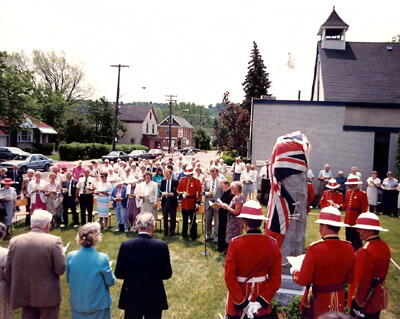
The young men of West Hamilton who gave their lives in World War II (1939-1945) were honoured at "West Hamilton's 80th Birthday Reunion." A memorial stone inscribed with their names was added to the cenotaph and officially dedicated on June 12, 1988 by Reverend Canon Eric Mills of St. Margaret's Church. Representatives of local militia units participated along with the public.
To celebrate the 100th anniversary of West Hamilton in 2008, the community created a Memorial Garden including benches for quiet reflection.
West Hamilton Heritage Trail
City of Hamilton
2013
[tablet/plaque]
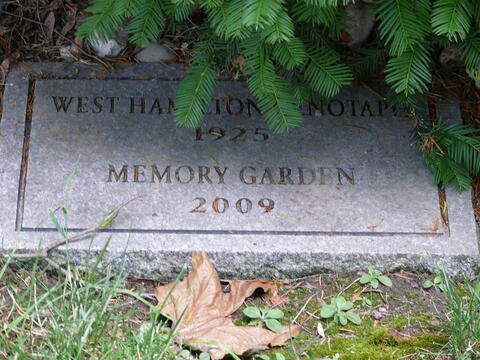
WEST HAMILTON CENOTAPH
1925
MEMORIAL GARDEN
2009
Ce mémorial est dédié aux habitants de West Hamilton qui ont combattu pendant les Première et Seconde Guerres mondiales. Il a été érigé par la communauté. Les coquelicots sculptés sur le monument sont particulièrement frappants; les gousses surplombant la croix représentent la vie éternelle pour ceux qui ont fait le sacrifice de leur vie.
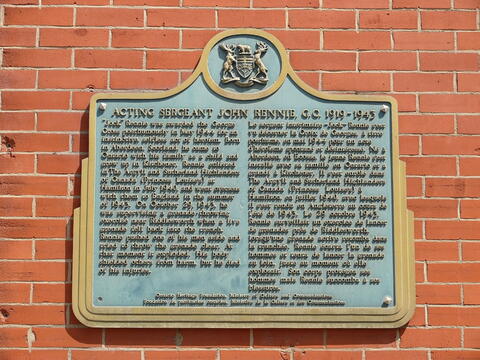
Plaque commémorative du sergent intérimaire John Rennie, G.C.
ACTING SERGEANT JOHN RENNIE, G.C. 1919-1943
- "Jock" Rennie was awarded the George
Cross posthumously in May 1944 for an
instinctive, selfless act of heroism. Born
in Aberdeen, Scotland, he came to
Ontario with his family as a child and
grew up in Kitchener. Rennie enlisted
in the Argyll and Sutherland Highlanders
of Canada (Princess Louise's) at
Hamilton in July 1940, and went overseas
with them to England in the summer
of 1943. On October 29, 1943, he
was supervising a grenade-throwing
exercise near Riddlesworth when a live
grenade fell back into the trench.
Rennie pushed one of his men aside and
tried to throw the grenade clear. At
that moment it exploded. His body
shielded others from harm, but he died
of his injuries. - Le sergent intérimaire « Jock » rennie s'est
vu décerner la Croix de Georges, à titre
posthume, en mai 1944 pour un acte
d'héroïsme spontané et désintéressé. Né à
Aberdeen, en Écosse, le jeune rennie s'est
installé avec sa famille en Ontario et a
grandi à Kitchener. Il s'est enrôlé dans
the Argyll and Sutherland Highlanders
of Canada (Princess Louise's) à
Hamilton, en juillet 1940, avec lesquels
il s'est rendu en Angleterre au cours de
l'été de 1943. Le 29 Octobre 1943
Rennie surveillait un exercice de lancer
de grenades près de Riddlesworth,
lorsqu'une grenade active retomba dans
la tranchée. Rennie écarta l'un de ses
hommes et tenta de lancer la grenade
au loin, juste au moment où elle
explosait. Son corps protégea ses
hommes mais rennie succomba à ses
blessures.
Ontario Heritage Foundation, Ministry of Culture and Communications
Fondation du patrimoine ontarien, Ministère de la Culture et des Communications
Cette plaque est dédié au sergent intérimaire John Rennie, G.C.
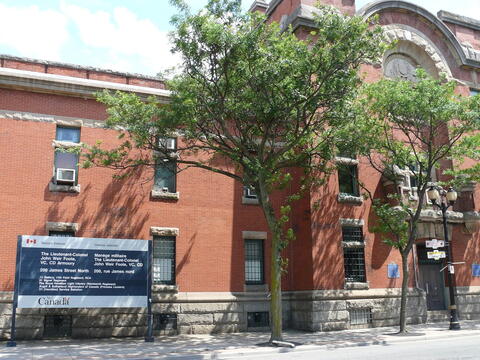
Manège militaire du lieutenant-colonel John Weir Foote, VC, CD
[sign/enseigne]
- The Lieutenant-Colonel
John Weir Foote,
VC, CD Armoury - 200 James Street North
- Manège militaire
The Lieutenant-Colonel
John Weir Foote, VC, CD - 200, rue James nord
11 Battery, 11th Field Regiment, RCA
31 Signal Regiment
The Royal Hamilton Light Infantry (Wentworth Regiment)
Argyll & Sutherland Highanders of Canada (Princess Louise's)
31 (Hamilton Service Battalion
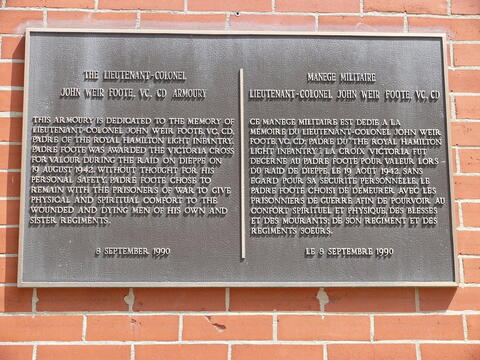
[plaque]
- THE LIEUTENANT-COLONEL
- JOHN WEIR FOOTE, VC, CD ARMOURY
- THIS ARMOURY IS DEDICATED TO THE MEMORY OF
- LIEUTENANT-COLONEL JOHN WEIR FOOTE, VC. CD.
- PADRE OF THE ROYAL HAMILTON LIGHT INFRANTRY,
- PADRE FOOTE WAS AWARDED THE VICTORIA CROSS
- FOR VALOUR DURING THE RAID ON DIEPPE ON
- 19 AUGUST 1942 WITHOUT THOUGHT FOR HIS
- PERSONAL SAFETY, PADRE FOOTE CHOSE TO
- REMAIN WITH THE PRISONERS OF WAR TO GIVE
- PHYSICAL AND SPIRITUAL COMFORT TO THE
- WOUNDED AND LIVING MEN OF HIS OWN AND
- SISTER REGIMENTS.
- 8 SEPTEMBER 1990
- MANEGE MILITAIRE
- LIEUTENANT-COLONEL JOHN WEIR FOOTE, VC. CD
- CE MANEGE MILITAIRE EST DEDIE A LA
- MEMOIRE DU LIEUTENANT-COLONEL JOHN WEIR
- FOOTE, VC, CD; PADRE DU "THE ROYAL HAMILTON
- LIGHT INFANTRY". LA CROIX VICTORIA FUT
- DECERNÉE AU PADRE FOOTE POUR VALEUR LORS
- DU RAID DE DIEPPE. LE 19 AOUT 1942 SANS
- EGARD POUR SA SECURITÉ PERSONNELLE, LE
- PADRE FOOTE A CHOISI DE DEMEURER AVEC LES
- PRISONNIERS DE GUERRE AFIN DE POURVOIR AU
- CONFORT SPIRITUEL ET PHYSIQUE DES BLESSES
- ET DES MOURANTS, DE SON REGIMENT ET DES
- REGIMENTS SOEURS
- LE 8 SEMPTEMBRE 1990
John Weir Foote naît à Madoc, en Ontario, le 5 mai 1904. Ministre presbytérien, il s'enrôle dans le Service de l’aumônerie canadien au début de la Seconde Guerre mondiale.
Le 19 août 1942, le Capitaine honoraire Foote est attaché au Royal Hamilton Light Infantry, l'un des bataillons de la 2e Division d’infanterie canadienne qui participent au raid contre le port de Dieppe ce jour-là. Après avoir débarqué, l’aumônier Foote aide le médecin militaire du RHLI à soigner les blessés au poste de secours régimentaire. Il quitte souvent la sécurité relative du poste et se rend à la plage où, à découvert, il prodigue les premiers soins aux nombreux blessés et leur administre des injections de morphine pour calmer leurs souffrances. Plus tard, il transporte des blessés du poste de secours régimentaire jusqu'à la péniche de débarquement qui doit servir à évacuer les survivants de la force d’intervention. L’aumônier Foote décline l’offre d’embarquer, préférant continuer à servir ceux qui sont encore là et partager leur sort de prisonniers de guerre.
À la fin de la guerre, l’aumônier Foote reçoit la Croix de Victoria pour sa conduite à Dieppe, la seule à avoir été décernée à un aumônier canadien. Il s'éteint à Hamilton, en Ontario, le 2 mai 1988.
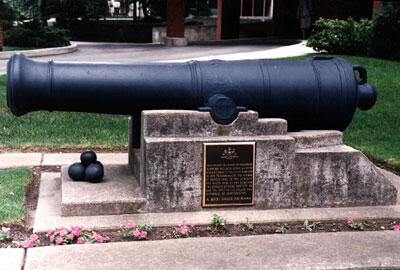
Cannon commémoratif d'Hamilton
THIS RUSSIAN GUN TAKEN AT SEBASTOPOL
IN 1855, WAS PRESENTED BY HER MAJESTY
QUEEN VICTORIA TO THE CITY OF HAMILTON
IN 1860 TO COMMEMORATE THE TRIUMPH
OF BRITISH ARMS IN THE CRIMEA. IT
WAS PLACED HERE BY THE HAMILTON
AND DISTRICT OFFICERS' INSTITUTE ON
MAY 24, 1967 TO CELEBRATE THE
CENTENNIAL OF CONFEDERATION.
A MARI USQUE AD MARE
Ce mémorial été inauguré de nouveau au HMCS Star le 28 octobre, 2005.
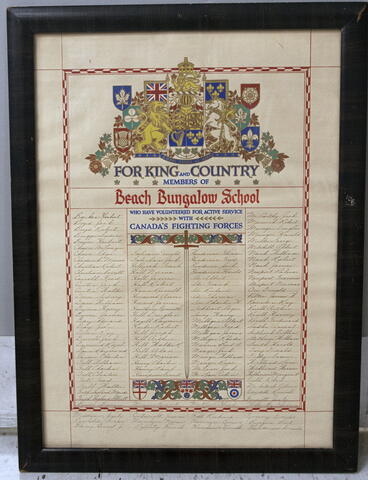
Tableau d’honneur de la Seconde Guerre mondiale de la Beach Bungalow School
Tableau d’honneur de la Seconde Guerre mondiale de la Beach Bungalow School se trouvait dans l’école située au 467, boulevard Beach jusqu’à ce qu’il soit acquis par les archives de l’éducation du conseil scolaire du district de Hamilton-Wentworth dans les années 1990.
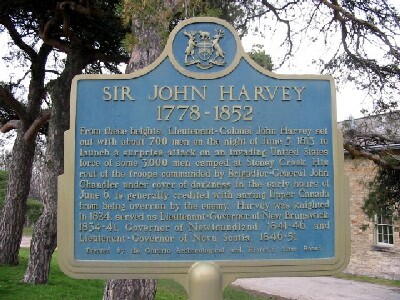
Plaque de sir John Harvey
SIR JOHN HARVEY
1778-1852
From these heights, Lieutenant-Colonel John Harvey set
out with about 700 men on the night of June 5, 1813, to
launch a surprise attack on an invading United States
force of some 3,000 men camped at Stoney Creek. His
rout of the troops commanded by Brigadier-General John
Chandler under cover of darkness in the early hours of
June 6 is generally credited with saving Upper Canada
from being overrun by the enemy. Harvey was knighted
in 1824, served as Lieutenant-Governor of New Brunswick,
1834-41, Governor of Newfoundland, 1841-46, and
Lieutenant-Governor of Nova Scotia, 1846-51.
Erected by the Ontario Archaeological and Historic Sites Board
Cette plaque dédiée à sir John Harvey (1778-1852) a été posée en 1958.
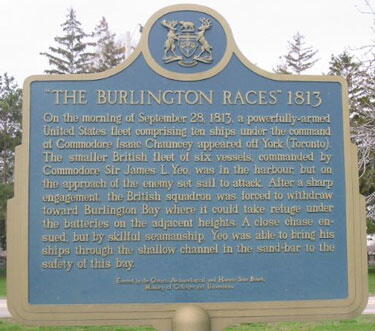
Plaque commémorative de La course de Burlington
"THE BURLINGTON RACES" 1813
On the morning of September 28, 1813, a powerfully armed
United States fleet comprising ten ships under the command
of Commodore Isaac Chauncey appeared off York (Toronto).
The smaller British fleet of six vessels, commanded by
Commodore Sir James L. Yeo, was in the harbour, but on
the approach of the enemy set sail to attack. After a sharp
engagement, the British squadron was forced to withdraw
toward Burlington Bay where it could take refuge under
the batteries on the adjacent heights. A close chase en-
sued, but by skillful seamanship, Yeo was able to bring his
ships through the shallow channel in the sand-bar to the
safety of this bay.
Erected by the Ontario Archaeological and Historic Sites Board
Ministry of Colleges and Universities
Cette plaque "THE BURLINGTON RACES" 1813 a été posée en 1961.
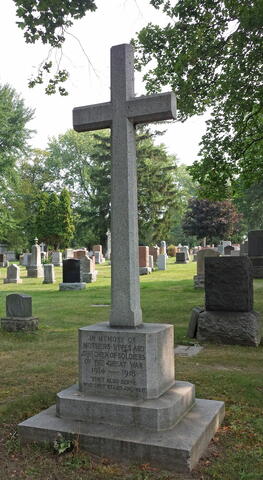
Monument aux mères, aux épouses et aux enfants
IN MEMORY OF
MOTHERS WIVES AND
CHILDREN OF SOLDIERS
OF THE GREAT WAR
1914 - 1918
'THEY ALSO SERVE
WHO ONLY STAND AND WAIT'
Ce monument a été érigé après la Première Guerre mondiale en l’honneur des mères, des épouses et des enfants de ceux qui ont combattu. Deux croix commémoratives ont été inaugurées le 23 août 1923 dans le cadre des cérémonies du Jour du Souvenir. Plus de 8 000 soldats ont défilé dans les rues de la ville et dans le parc Harvey où avait lieu le service. Des milliers de résidants s’étaient massés le long des rues pour assister au défilé et on estime que 20 000 personnes étaient présentes dans le parc même. Les musiciens, réunis dans le parc, ont joué des hymnes comme « Abide with Me », « Unto the Hills » et « Onward, Christian Soldiers ». Deux croix ont été dévoilées pendant le service.
La Croix du Sacrifice a été offerte par l’Imperial War Graves Commission en l’honneur des morts de la guerre. La deuxième croix a été financée par le Canadian Patriotic Fund pour honorer la mémoire des 214 épouses, mères et enfants ayant perdu des êtres chers lors des combats outre-mer. À la fin des cérémonies officielles, les camions pleins de fleurs qui avaient suivi le défilé ont été déchargés et une foule de gens ont déposé des fleurs sur les monuments et les tombes du cimetière.
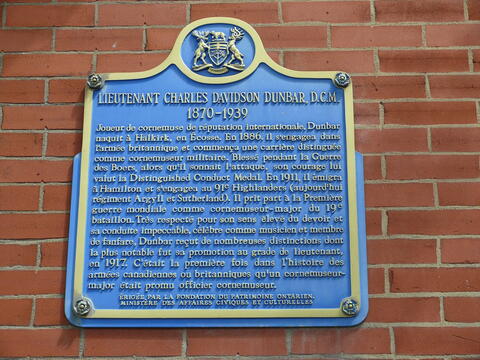
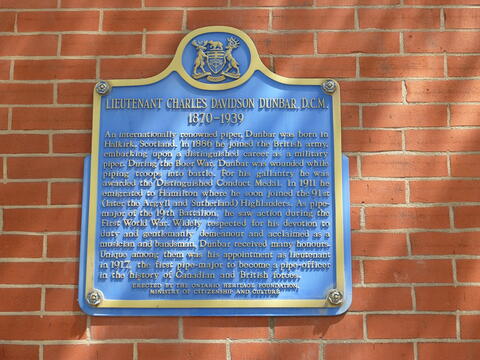
Plaque comméorative du lieutenant Charles Davidson Dunbar
[plaque]
LIEUTENANT CHARLES DAVIDSON DUNBAR, D.C.M.
1870-1939
An internationally renowned piper, Dunbar was born in
Halkirk, Scotland. In 1886 he joined the British Army,
embarking upon a distinguished career as a military
piper. During the Boer War, Dunbar was wounded while
piping troops into battle. For his gallantry he was
awarded the Distinguished Conduct Medal. In 1911 he
emigrated to Hamilton where he soon joined the 91st
(later the Argyll and Sutherland) Highlanders. As pipe-
major of the 19th Battalion, he saw action during the
First World War. Widely respected for his devotion to
duty and gentlemanly demeanour and acclaimed as a
musician and bandsman, Dunbar received many honours.
Unique among them was his appointment as lieutenant
in 1917, the first pipe-major to become a pipe-officer
in the history of Canadian and British forces.
ERECTED BY THE ONTARIO HERITAGE FOUNDATION,
MINISTRY OF CITIZENSHIP AND CULTURE
[plaque]
LIEUTENANT CHARLES DAVIDSON DUNBAR, D.C.M.
1870-1939
Joueur de cornemuse de réputation internationale, Dunbar
naquit à Halkirk, en Écosse. En 1886, il s'engagea dans
l'armée britannique et commença une carrière distinguée
comme cornemuseur militaire. Blessé pendant la Guerre
des Boers, alors qu'il sonnait l'attaque, son courage luit
valut la Distinguished Conduct Medal. En 1911, il émigra
à Hamilton et s'engagea au 91e Highlanders (aujourd'hui
régiment Argyll et Sutherland). Il prit part à la Première
guerre mondiale comme cornemuseur-major du 19e
battalion. Très respecté pour son sens élevé du devoir et
sa conduite impeccable, célèbre comme musicien et membre
de fanfare, Dunbar reçut de nombreuses distinctions dont
la plus notable fut sa promotion au grade de lieutenant,
en 1917. C'était la première fois dans l'histoire des
armées canadiennes ou britanniques qu'un cornemeur-
major était promu officer cornemuseur.
ÉRIGÉE PAR LA FONDATION DU PATRIMOINE ONTARIEN,
MINISTÈRE DES AFFAIRES CIVIQUES ET CULTURELLES
Cette plaque dédiée au lieutenant Charles Davidson a été posée en 1983.