
A Veteran guest speaker can help students learn about military service, Remembrance Day and Canadian history through personal stories. Preparing thoughtful questions in advance will help students get the most from the visit and encourage meaningful discussion.
Work together as a class to brainstorm, organize and select questions to ask your guest speaker. Students can also think about how they will recognize and thank the Veteran for sharing their experiences.
This publication is available upon request in alternate formats.
PDF Version
What makes a good question?
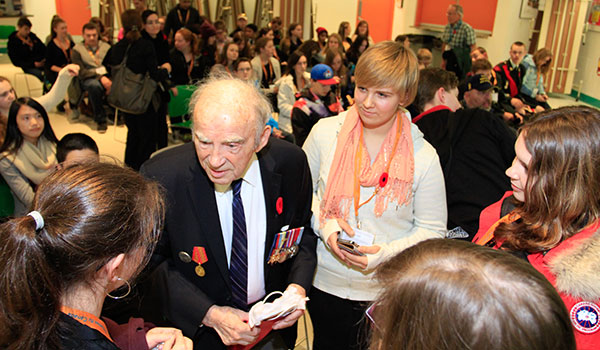
Good questions help us learn something new. They are:
- Clear and easy to understand
- Related to the speaker’s experiences
- Respectful and considerate
- Open-ended whenever possible
For example, instead of asking: Did you like serving in the military?
Try asking: What was your favourite part of serving in the military?
Open-ended questions often lead to more detailed and interesting answers.
Brainstorm and organize
Ask students to work individually, in pairs or in small groups to create questions. Once everyone has had time to think, organize the questions into categories such as:
Military service
- What was your job?
- What training did you do to prepare?
- What skills did you learn?
- What made you decide to serve?
Remembrance and recognition
- Why is Remembrance Day important to you?
- What does remembrance mean to you?
- Why is it important to learn about Veterans?
- How can young Canadians recognize Veterans?
Life in the military
- What was a typical day like?
- What was the most challenging part of your work?
- What was your favourite part about serving?
- Did you make good friends?
Looking back
- What are you most proud of?
- What lessons did you learn from your service?
- What advice would you give young people today?
- What would you like students to know about Veterans?
Choosing questions
As a class, review the questions and select a list to ask during the visit.
Note: Some questions may be too personal. Questions about whether someone was injured, witnessed people being hurt, or had to hurt others may make a guest speaker uncomfortable. If students are unsure whether a question is appropriate, they should ask their teacher first.
Respectful behaviour during the visit
Before your guest speaker arrives, discuss ways students can help make the visit a positive experience for everyone.
Create a class list of expectations, such as:
- Listen carefully while the speaker is talking.
- Raise your hand before asking a question.
- Wait for the speaker to finish before speaking.
- Stay focused and avoid side conversations.
- Show appreciation for the speaker’s time and experiences.
Explain that good listening is an important way to show respect and learn from someone else’s experiences.
Thanking a Veteran
Before the visit, ask students to think about how they will recognize and thank the guest speaker for sharing their experiences.
Here are a few ideas:
- Saying thank you at the end of the visit
- Creating a class thank-you card
- Making Veteran recognition cards
- Preparing a small piece of artwork
- Writing a short message about what they hope to learn
Students should prepare their thank-you cards, artwork or messages before the visit so they are ready to present them to the guest speaker on the day of their visit. If your school is holding a Remembrance Day ceremony, consider inviting the Veteran to attend. If the Veteran is joining your class virtually, students can still share their messages of thanks by holding them up on camera or mailing them following the presentation.
After the visit
Discuss what students learned from the speaker’s stories.
Ask:
- What surprised you?
- What was the most interesting story you heard?
- What did you learn about Veterans?
- How did the visit help you better understand Remembrance Day