
Objectives
- Gain knowledge of experiences of the Newfoundland Blue Puttees on the front lines.
- Using the Fact Sheet, the computer to view the Image Gallery on the Newfoundland Regiment and the poem about the Danger Tree by Loyola Hearn, youth will create a presentation summarizing the character of the Blue Puttees and the experiences of the Newfoundlanders at Beaumont-Hamel to share with their classmates.
Tasks
Resources to read
- Fact sheet – The Newfoundland Regiment and the Battle of Beaumont-Hamel
- Only One Tree poem by Loyola Hearn
- As a group, discuss the poem, and what a tragic experience that would have been. Imagine the soldiers who survived, and how they would be feeling?
View image gallery
After reading the fact sheet and the poem, look through the image gallery below to visually get an understanding of the experiences of the Newfoundlanders.
After reviewing the photos and reading the poem, as a group, develop a poster or slide show of the photos to share with your classmates, and possibly a word cloud to help describe the experiences of the Newfoundlanders at the Battle of the Somme. Study the pictures in the image gallery, discuss the information sheet about the Blue Puttees. Consider their age, and how they might have felt waiting in the St. John’s trench before going over the top. What do you think it might have been like to live in trenches on the front lines for days and weeks? What do you think you would do or how you would feel if you were ordered to cross a landscape in the face of machine gun fire and exploding shells?
Prepare your presentation
After reviewing the photos, the poem and the fact sheet, as a group, develop a poster or slide show about the Blue Puttees. You could possibly create a word cloud to help describe the experiences and feelings of the Newfoundlanders at Beaumont-Hamel. Brainstorm some words to describe the soldiers character (courage, bravery), and descriptive words of their experience at war, landscape, daily life, battle and their emotions and your words of remembrance.
Share your slide show and word cloud with your classmates. You may wish to share all or part of the poem in your presentation.

No. 4 Platoon, Section 16.
Photo: Provincial Archives of Newfoundland and Labrador (PANL B-5-147), St. John’s, Newfoundland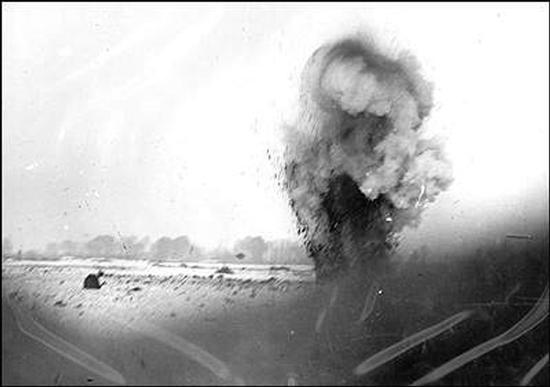
An enemy shell bursting at Beaumont Hamel, 1916.
Photo: The Provincial Archives of Newfoundland and Labrador (PANL B-2-42), St. John’s, Newfoundland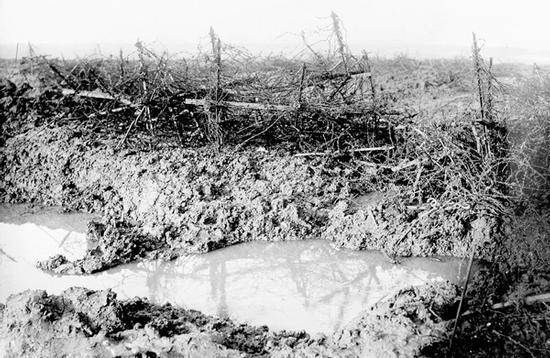
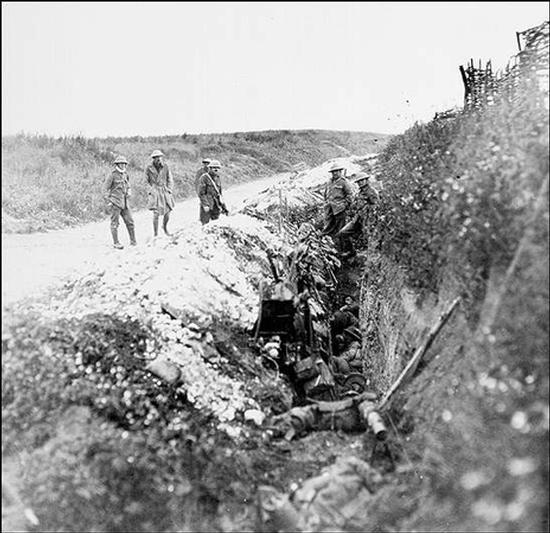
Newfoundland soldiers in the St. John’s Road support trench (named after their capital City) before the start of the attack in 1916. This trench had been dug mostly by the Newfoundlanders soon after their arrival in France in May 1916.
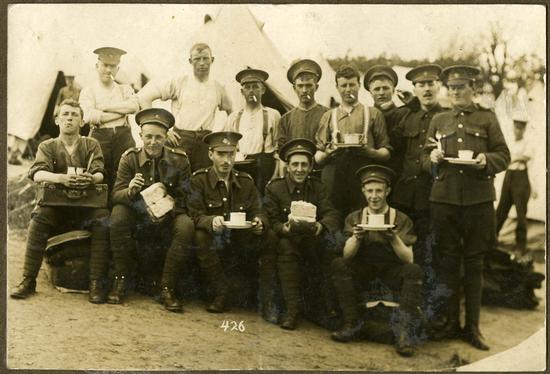
Soldiers of the Newfoundland Regiment prepare for a meal, at a training Camp in Scotland, 1915.
Photo: The Rooms Provincial Archives Division, VA40-21.4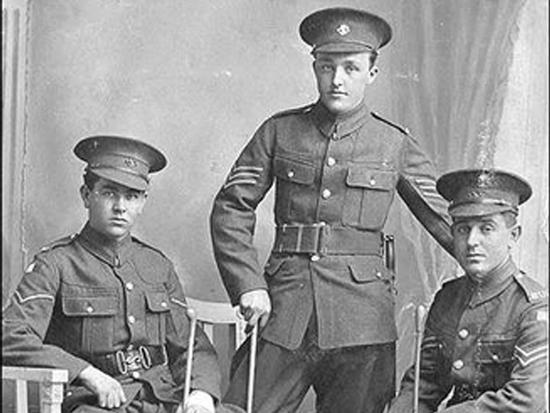
Soldiers of the Newfoundland Regiment.
Photo: The Provincial Archives of Newfoundland and Labrador (PANL VA-40-15), St. John’s, Newfoundland
Men washing at Newfoundland Regiment Camp, Scotland, 1915.
Photo: The Rooms Provincial Archives Division, VA 40-21.3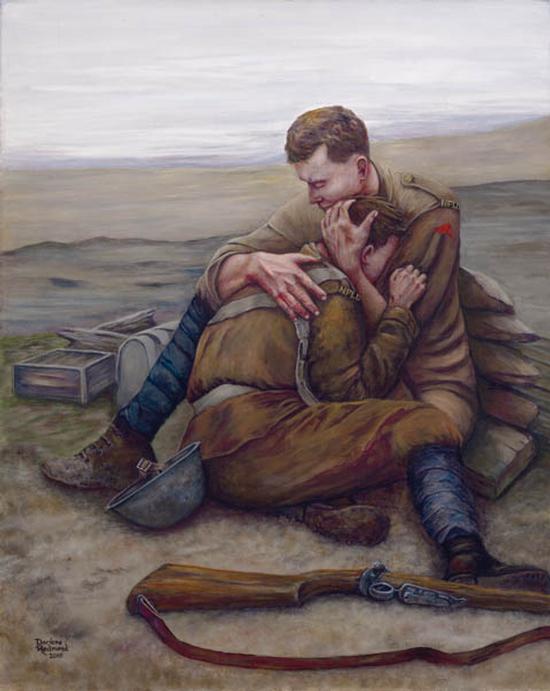
Newfoundland Regiment soldiers, comforting one another and dealing with fear and grief on the front lines. Blue Puttees are shown on their legs.
Image: “God Guard Thee” – Painting by Darlene Redmond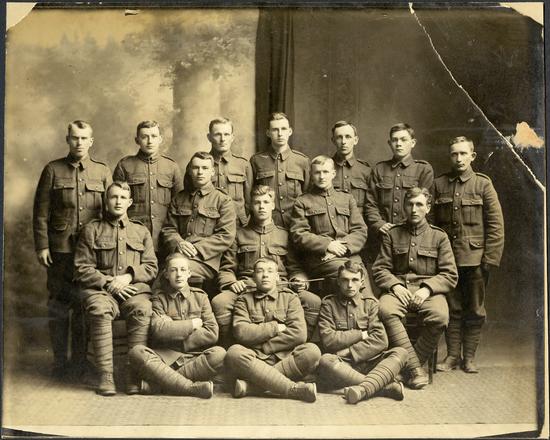
The puttee, is the name of the cloth covering the lower part of the leg. They are wound tightly and spirally round the leg. They served to provide both support and protection. At the outbreak of the First World War, the Newfoundlanders had no military stores so their uniforms had to be made from scratch. In the absence of khaki cloth, their puttees were made from blue cloth. The Newfoundland Regiment was nicknamed "The Blue Puttees". Here are members of Platoon 1, First Newfoundland Regiment.
Photo: The Rooms Provincial Archives Division, B3-169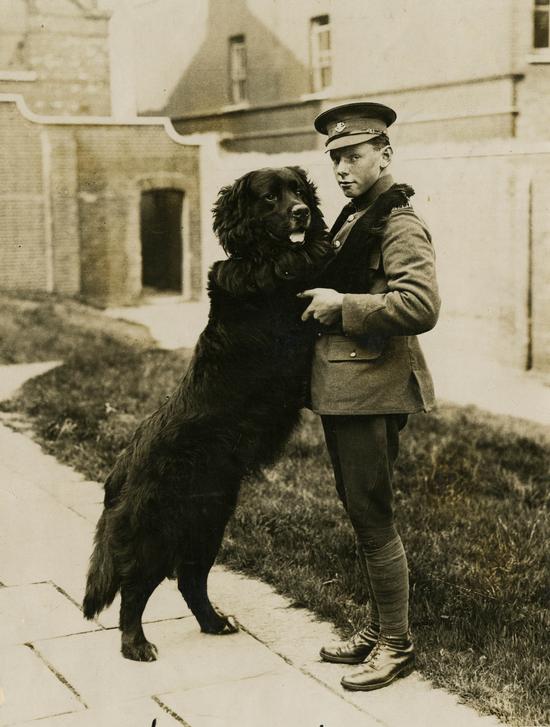
The Newfoundland Regiment saw tough fighting at Beaumont-Hamel. Losses were high and the spirits of the men who survived were low. Some Canadian soldiers wanted to cheer the Newfoundlanders up and offered them a canine friend. He was a large Newfoundland dog named Sable Chief. Here is Sable Chief, Regimental Mascot With Private Hazen Fraser his handler.
Photo: The Rooms Provincial Archives Division, A19-26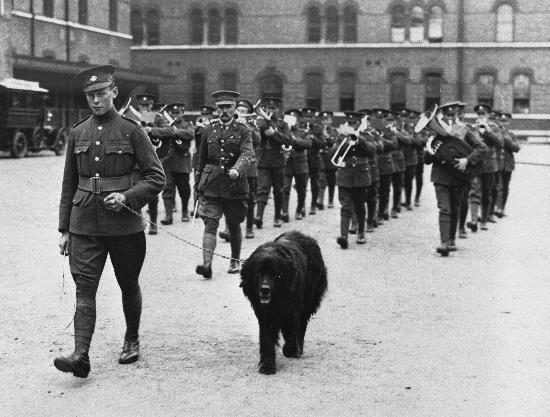
Sable Chief became an important part of the regimental family, and marched with the Royal Newfoundland Regiment band. Not only did he keep in step with the marching but it is said that he would even respectfully stand still at the playing of the Newfoundland anthem.
Photo: The Rooms Provincial Archives Division, NA 1535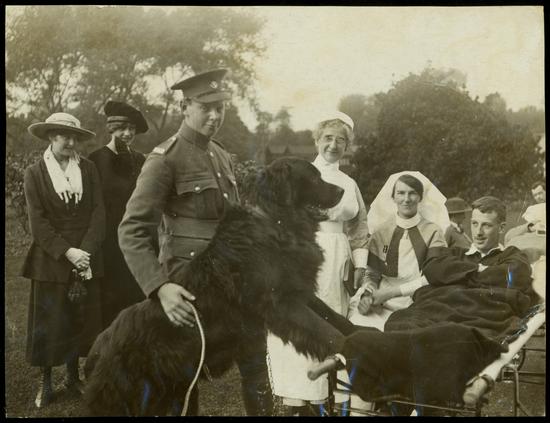
Sable Chief, as the regimental mascot also visited wounded troops. Here he is with his handler Private Hazen Fraser, a wounded soldier and nursing sisters in London, 1917. He was a large dog of more than 150 pounds and his size attracted a lot of positive attention! The furry friend really boosted the spirit of the regiment.
Photo: The Rooms Provincial Archives Division, B 18-90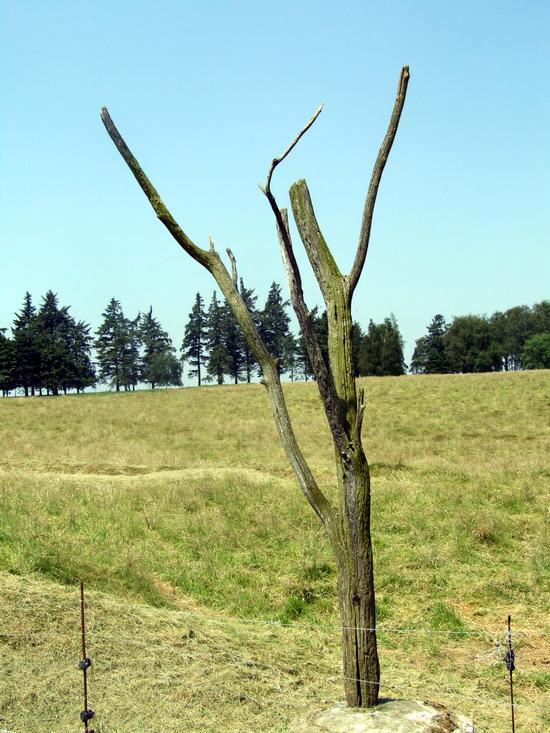
The Danger Tree This is a petrified tree on an embankment that represents the so-called ‘Danger Tree’ where many of the Newfoundlanders had gravitated towards when their advance on the German’s was stopped by a storm of bullets and shrapnel. The tree had been an easily identifiable spot where the troops gathered during the First World War battle. The raging war around it eventually reduced the tree to a sparse tree trunk. The gnarled tree has come to serve as a potent reminder of the great destruction on that day. This symbolic landmark has been preserved at the Beaumont-Hamel Newfoundland Memorial.
Photo: Veterans Affairs CanadaStation 1: Image gallery – Blue Puttees