
Objectives
- Learn about the effect that Battle of Beaumont-Hamel had on individual lives on the home front and the way people reached out to Newfoundlanders on the front lines.
- Using the Fact Sheet, the Socks poem, Thanks for the Socks letters, and a computer to view the image gallery, develop a presentation to educate your peers.
Tasks
Resources to read
Discuss as a group.
While the men were serving overseas in the First World War, the women of Newfoundland also contributed to the war effort and started the Women’s Patriotic Association. They knit thousands of wool socks, gloves and scarves for soldiers serving overseas. The women wanted to make sure the soldiers were getting some comforts from home. After reading, discuss the poem as a group. What are your impressions? How does the poem make you feel? What is symbolic about the colours of the yarn? How do you think the women on the home front felt?
Read “Thanks for the socks” letters
Discuss the Thanks for the socks” letters. How would it feel for soldiers to receive socks? Sometimes, women wrote short notes that they put into the toes of the socks before sending such as “into this sock I weave a prayer.” Occasionally, soldiers would write back and some even developed romantic relationships when they returned home! For the men in the cold trenches, the gifts from home reminded them that they were still remembered at home.
View image gallery
Next, look through the image gallery below to see images of the Women’s Patriotic Association. You may wish to visit the following external website to learn more: Newfoundland and Labrador in the First World War.
Prepare your presentation
After reviewing the photos, the letters, the poem and the Fact Sheet, as a group, develop a poster or slide show about the women on the home front who knit and sent comforting woolen treats to their loved ones overseas. You could possibly create a word cloud to help describe the experiences and feelings of the Newfoundlanders at Beaumont-Hamel, and those who remained on the home front.
Find some words describing the soldiers and the women (courage, bravery, love), and descriptive words of their war experience, emotions and remembrance. Share your slide show and word cloud with your classmates.
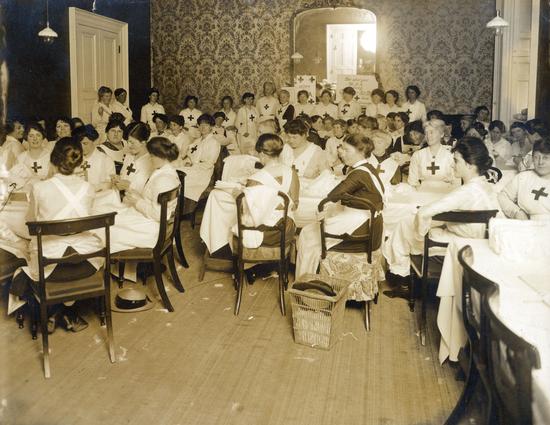
During the First World War, women across Newfoundland volunteered their time to help knit much needed supplies for the soldiers overseas. More than 15,000 women formed the Women’s Patriotic Association (WPA). In this photo, members at work in the Ball Room, at Government House in St. John’s in 1915.
Photo: The Rooms Provincial Archives Division, B 5-173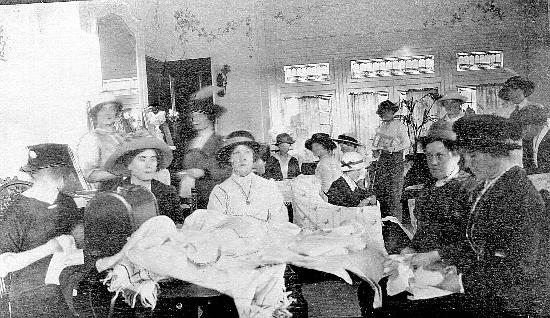
This is the St. John Ambulance division of the Women's Patriotic Association making supplies in 1915. They knit scarves, hats, mitts and sweaters, but the grey wool socks were the most popular with the soldiers overseas.
Photo: Archives and Special Collections (Mary Southcott Collection 190), Queen Elizabeth II Library, Memorial University of Newfoundland, St. John's, NL.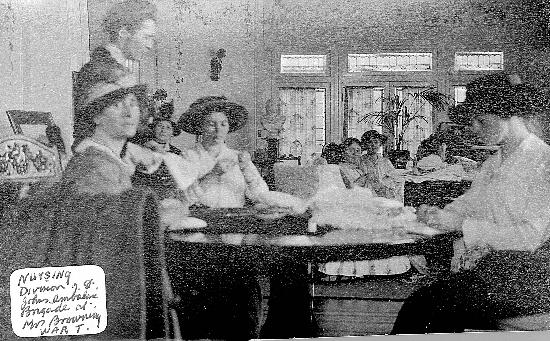
Here in 1915, is the St. John Ambulance Division of the WPA, making supplies. The WPA broke down class and religious barriers that had previously divided Newfoundland society. The volunteers in the WPA included the rich and the poor, and they came from urban and outport communities.
Photo: Archives and Special Collections (Mary Southcott Collection 190), Queen Elizabeth II Library, Memorial University of Newfoundland, St. John's, NL.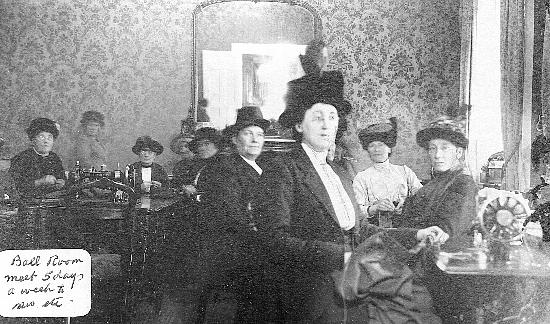
This is a photo of the women at the Ballroom Government House, in 1915. The caption on the back of the photo reads: ”The ballroom, Government House, St. John’s, NL, which is used by members of the Patriotic Association who meet five days a week to sew and knit for the men at the front.”
Photo: Archives and Special Collections (Mary Southcott Collection 190), Queen Elizabeth II Library, Memorial University of Newfoundland, St. John's, NL.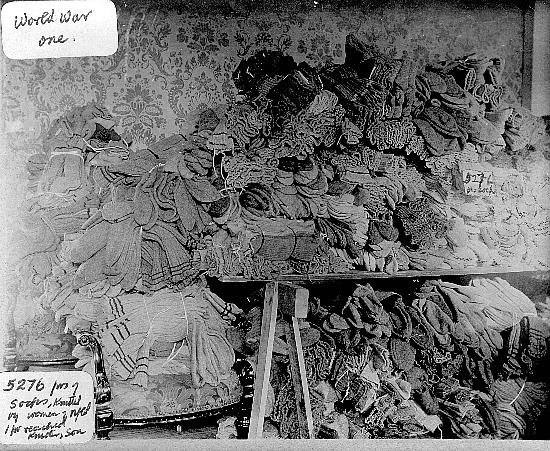
Here in this photo are 5,276 pairs of socks knitted by the women of Newfoundland. One pair apparently reached a knitter's son! In total between 1914 and 1916, the WPA produced approximately 62,000 pairs of socks, 6,000 pairs of cuffs (mittens with a trigger finger), and almost 2,500 scarves. They sent the first shipment of 40 barrels overseas on May 27, 1915. Many more followed!
Photo: Courtesy of Archives and Special Collections (Mary Southcott Collection 190), Queen Elizabeth II Library, Memorial University of Newfoundland, St. John's, NL.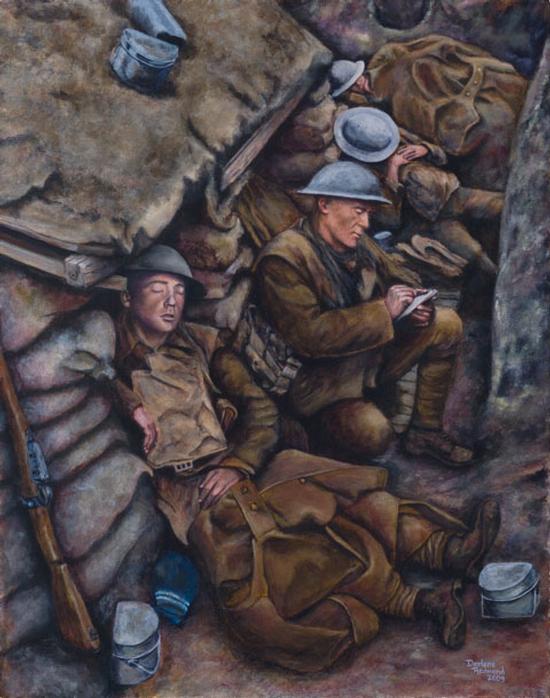
When Newfoundland soldiers received parcels such as the grey socks lovingly knit on the home front, they would often write a letter of thanks to their knitter. The gifts reminded them that those at home were thinking of them. This painting depicts a Newfoundland soldier writing a letter home while in the trenches.
Image: “I Remain Your Affectionate Son Joe” – Painting by Darlene Redmond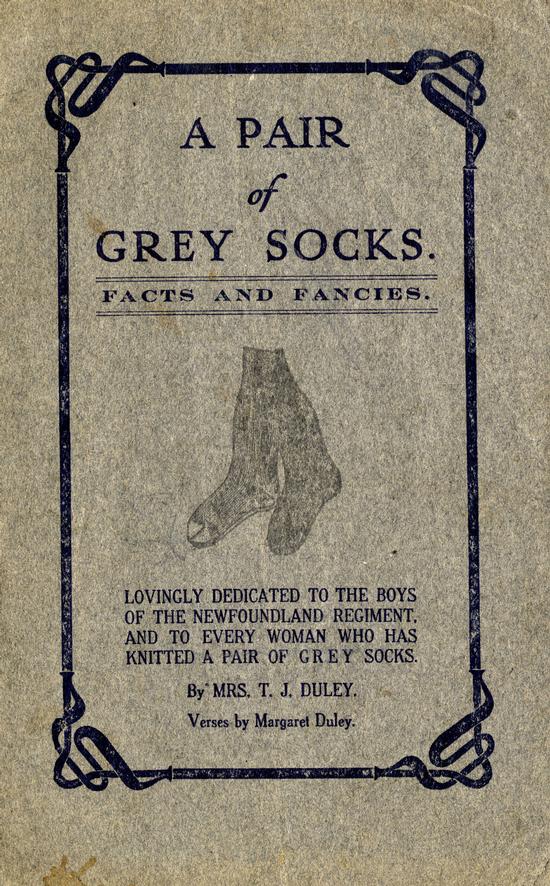
This is the book created in 1916 that the poem “A Pair of Grey Socks” appears in. The cover reads: "A Pair of Grey Socks. Facts and Fancies. Lovingly dedicated to the boys of the Newfoundland Regiment. And to every woman who has knitted a pair of grey socks.” The book was co-written by Tryphena Duley and her daughter Margaret Duley during the First World War. Margaret, who went on to become one of Newfoundland's best-known authors, wrote the poem in honour of the work of the women of Newfoundland. A pair of grey socks : facts and fancies Author: Tryphena. Duley and Margaret Duley 1894-1968. Publisher: St. John’s s.n. Creation Date: ca. 1916] Format: 16 pages.
Centre for Newfoundland Studies, Memorial University LibrariesStation 3: Image gallery - Socks