
Objectives
- Understand the devastating effect that July 1st had on Newfoundland and Labrador, and their attitudes of the people towards remembrance to this day.
- Demonstrate an understanding of the some of the important symbols of remembrance for Newfoundland and Labrador such as caribou monuments, forget-me-not flowers and Memorial Day.
Tasks
Read and discuss as a group
- The Newfoundland Regiment and the Battle of Beaumont-Hamel
- Lyrics of the song The Little Blue Forget-Me-Not and discuss the song as a group. What are your impressions? How do the lyrics of the song make you feel? What overall message do you think the poem is trying to communicate?
View image gallery
View the forget-me-not image gallery below. How has modern day Newfoundland and Labrador remembered the tragic battle July 1st battle for the past 100 years. What special things do they do to remember? What public landmarks help them remember? Why is it important to remember?
Prepare your presentation
After reviewing the photos, the poem and the fact sheet, as a group, develop a poster or slideshow about how Newfoundland and Labrador will not forget the Newfoundlanders who died on July 1st, 100 years ago. You could possibly create a word cloud to help describe the experiences and feelings of the Newfoundlanders after the war, and up to present day. You may wish to include the lyrics of The Little Blue Forget-Me-Not in your presentation. Share your slide show and word cloud with your classmates.
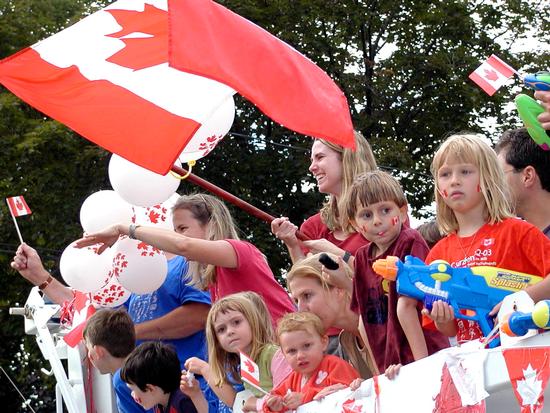
July 1st is Canada Day, and many Canadians participate in barbeques at fireworks displays to celebrate. However in Newfoundland, it is also a day of remembrance.
Photo: Public domain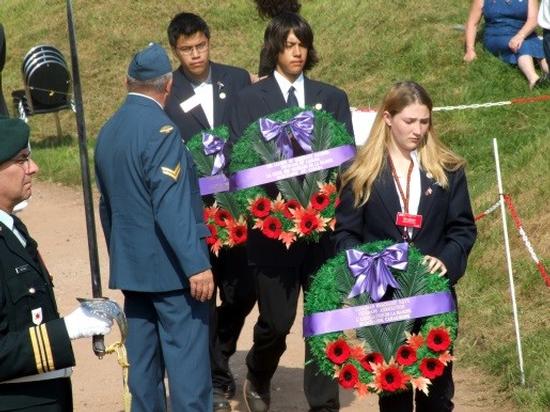
Memorial Day has been observed annually in Newfoundland since July 1, 1917 to recall the losses of approximately 700 soldiers of the Newfoundland Regiment from the Dominion of Newfoundland at Beaumont-Hamel during the Battle of the Somme of the First World War. Since Newfoundland became a part of Canada in 1949, ”Memorial Day” is observed concurrently with Canada's national holiday, Canada Day. However there are other ways Newfoundlanders remember as well.
Photo: Veterans Affairs Canada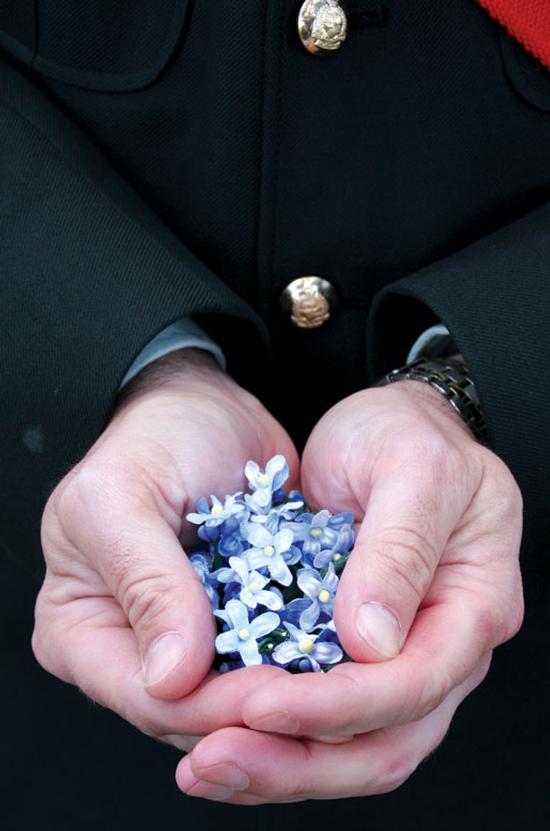
It was also decided one year after that first day of the Battle of the Somme that the tiny forget-me-not flower would be made the flower of Remembrance. It was to be worn on Memorial Day, on July 1st. Shown here is a Newfoundland soldier holding forget-me-not flowers.
Photo: Sharon Adams, Legion Magazine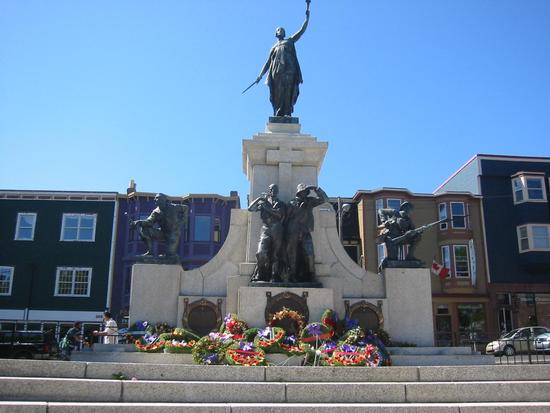
The province of Newfoundland and Labrador traditionally observes Memorial Day during the morning of July 1st at the National War Memorial and cenotaphs around the province, flying the Union Flag at half-mast. In the afternoon and evening they celebrate Canada Day.
Photo: Public domain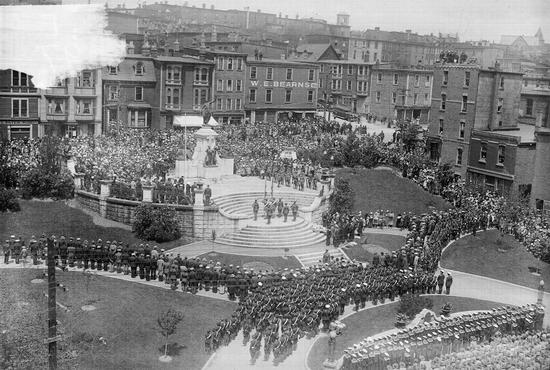
The tradition began on Memorial Day, July 1, 1924, when the National War Memorial in downtown St. John’s was unveiled by Field Marshal Douglas Haig, 1st Earl Haig. The term ”National” refers to this monument being built by the Dominion of Newfoundland as a nation, before it became part of Canada.
Photo: Public domain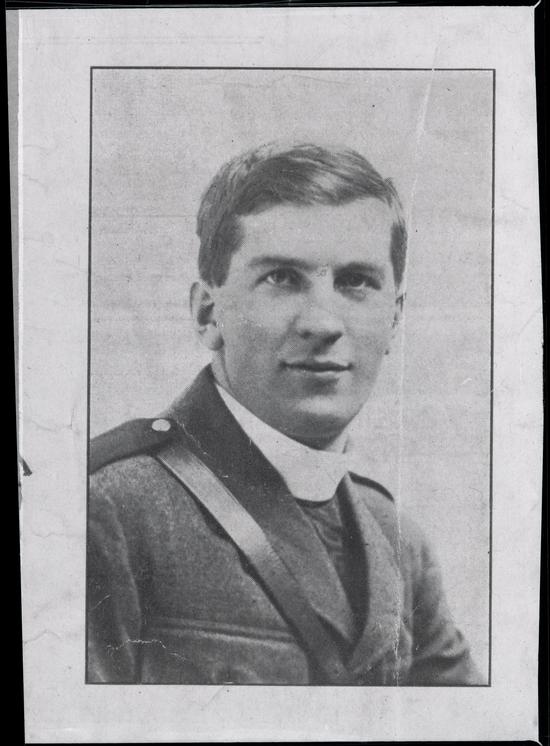
Construction of the memorial was supervised by Lieutenant-Colonel Father Thomas Nangle, the Padre of the Newfoundland Regiment during the First World War.
Photo: The Rooms Provincial Archives Division, NA 221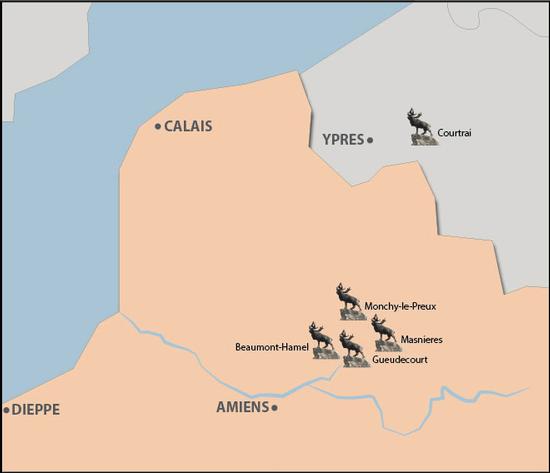
In 1921, Thomas Nangle also arranged with the Government of Newfoundland to purchase land in France and Belgium where their men died. There are now five Newfoundland memorials located in France and Belgium. At each location there is a bronze caribou, to remember the Newfoundlanders who served and died.
Photo: Veterans Affairs Canada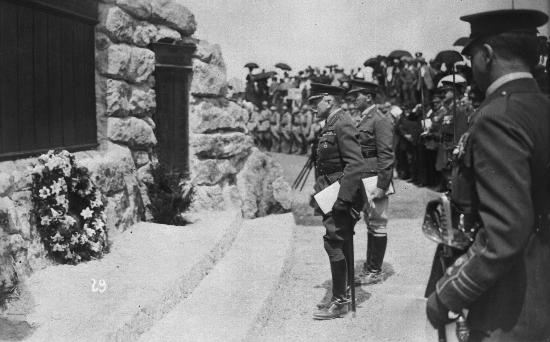
The largest of the overseas monuments is the Beaumont-Hamel monument in France. The memorial was unveiled at the official opening of the site by Field Marshal Haig on June 7, 1925. Here, Field Marshal, Earl Douglas Haig and Lieutenant-Colonel Thomas Nangle lay wreaths at the Caribou War Memorial to the Missing, at Beaumont-Hamel.

Memorial University of Newfoundland began as Memorial University College, which opened in September 1925 in St. John's. The college was established as a memorial to the Newfoundlanders who had lost their lives on active service during the First World War.
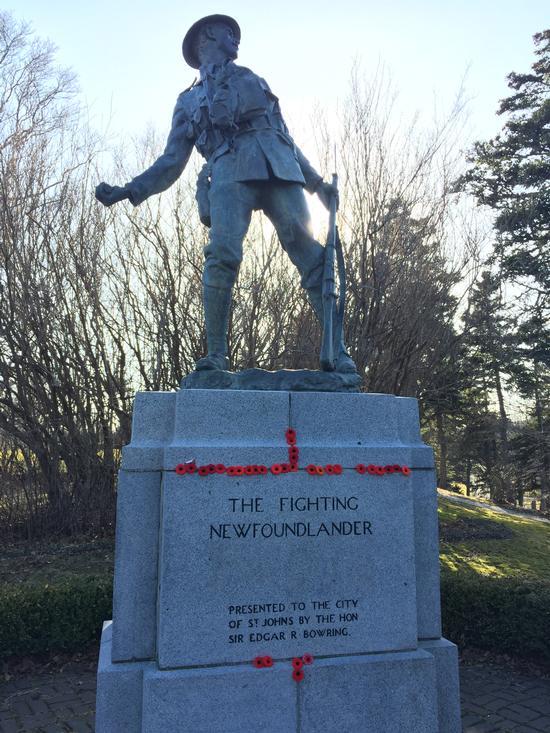
This is a picture of the statue of ”The Fighting Newfoundlander” located in Bowring Park, St. John’s Newfoundland. The statue is of a soldier throwing a grenade. It was unveiled on September 13, 1922. It is another reminder of the many Newfoundlanders who sacrificed their lives during the First World War, especially at Beaumont-Hamel on July 1, 1916.
Photo: Veterans Affairs Canada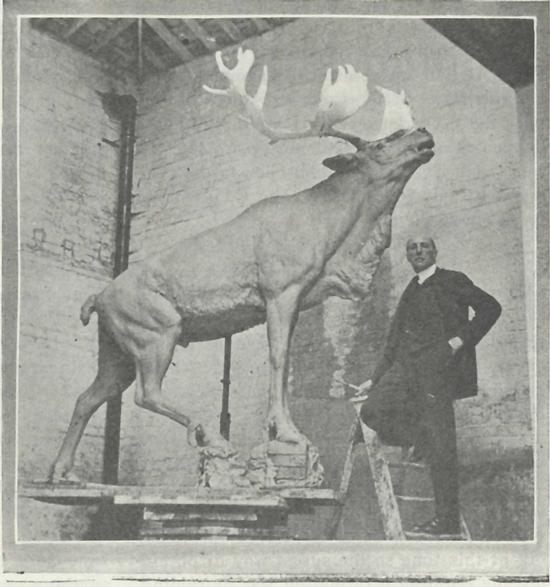
“The Fighting Newfoundlander” statue was sculpted by Captain Basil Gotto, the same artist who sculpted the 6 Caribou memorials that stand at five different battlefield sites in France, and at Bowring Park in Newfoundland.
Photo: From The Veteran 1.3 (1921): 34. Memorial University's Digital Archives Initiative (DAI)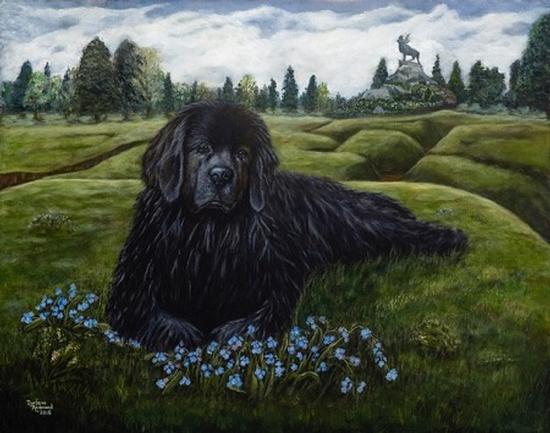
Newfoundlanders were still serving after the tragic loss at Beaumont-Hamel. They were sad to have lost so many of their good friends in that battle. To boost their spirits, a Canadian officer serving in England presented their regiment with a Newfoundland dog. They named him Sable Chief, and he was known to march along with the troops, and he stood at attention during the playing of the Newfoundland Anthem! He was a mascot to the troops and often visited wounded soldiers. Here is a painting of Sable Chief, lying on the battlefields of Beaumont-Hamel, with forget-me-not flowers in the front and the caribou monument in the back.
Image: "Forget-Me-Not" – Painting by Darlene Redmond Caption: Newfoundland Regiment mascot, "Sable Chief," surrounded by forget-me-not flowers, with Beaumont-Hamel Park in the background.Station 4: Image gallery – Forget-me-nots