

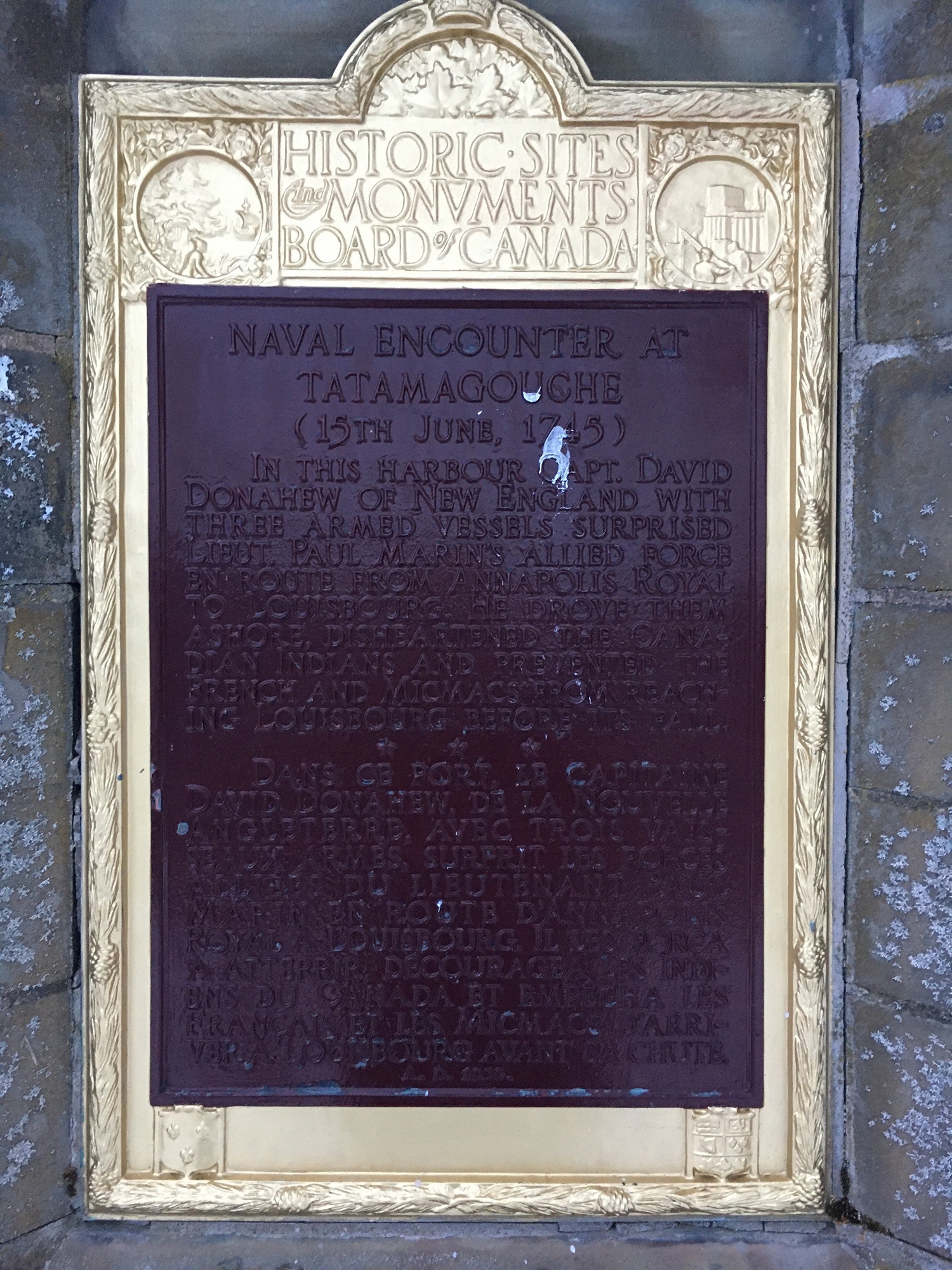
On June 15, 1745, three New England sloops intercepted a combined force of French, Huron and Mi’kmaq, who were attempting to leave Tatamagouche with supplies for Fortress Louisbourg. The ensuing British victory in what has become known as “The Battle of Tatamagouche” was yet another example of British naval supremacy in North America. This event demonstrated the inability of the French ships to supply their own forts in New France. In the end, for the French, this failure directly contributed to the fall of Louisbourg and the eventual defeat of their colonies in Quebec and Acadia.
Partly because of the strategic importance of the Tatamagouche area as an Acadian centre, the British decided to begin the Expulsion of the Acadians here. The officer chosen for this task, Abijah Willard, arrived in Tatamagouche with 100 soldiers, on August 14, 1755. Willard issued orders to the Acadians that all male inhabitants were to assemble at 9:00 a.m. the following day. When they had gathered at Willard’s Headquarters on August 15, he immediately imprisoned them. The British then burned the village, including the chapel. By the following morning, the village was left in ruins, and the men had been marched away, leaving the women and children behind. For the next sixteen years, the area remained unoccupied and the forests quickly began to encroach on the cultivated lands of the Acadians. The only activity during that time was the construction of Fort Francklin at Bayhead in 1768. The Fort however, was soon abandoned, as the British troops were needed elsewhere.
(Courtesy of the Village of Tatamagouche)