
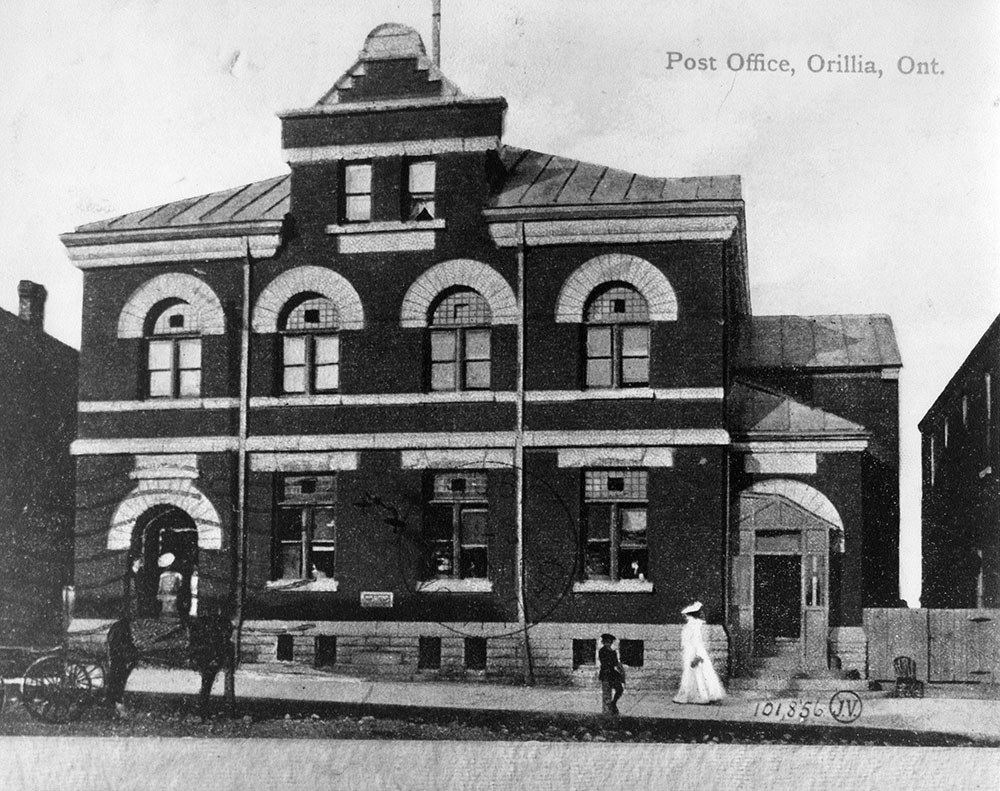
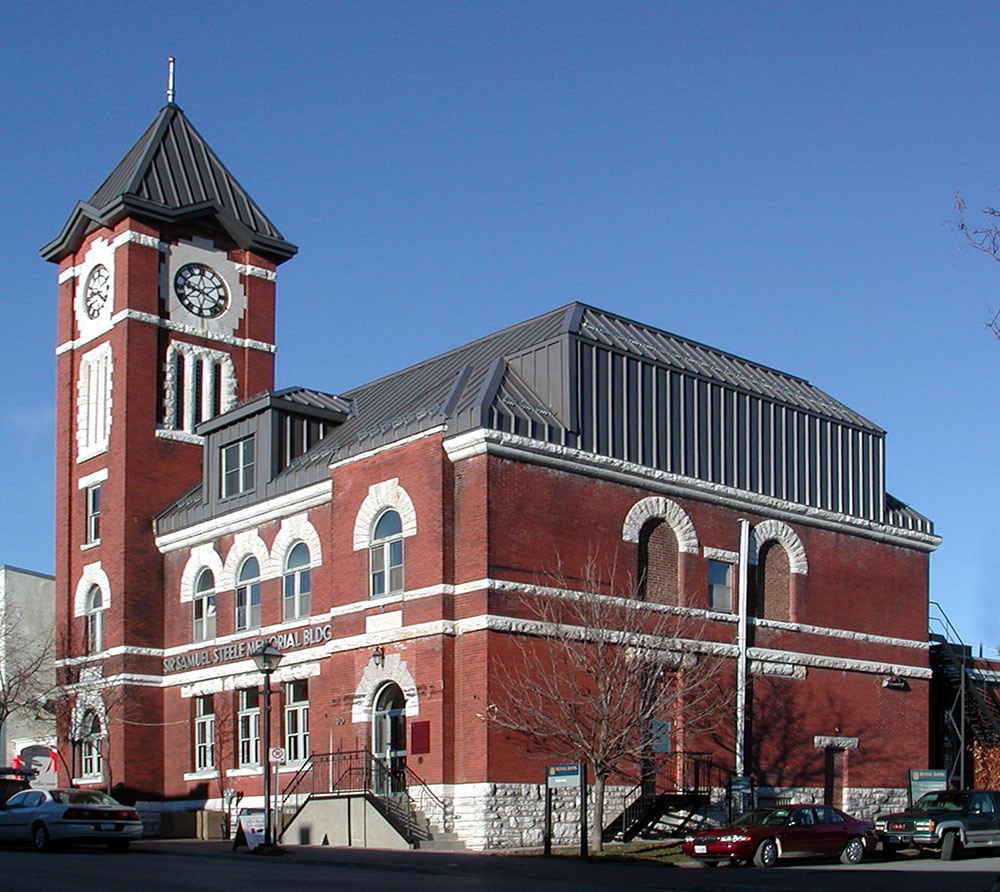
The Sir Sam Steele Memorial Building was originally a customs house and post office, built between 1892 and 1894. The architect of this neoclassical building was Thomas Fuller. In 1994, the building was named in honour of Major-General Sir Samuel Benfield Steele, KCMG, CB, MVO (5 January 1849 – 30 January 1919), a distinguished Canadian soldier and police official. He was born in Purbrook, Ontario, the son of a retired Royal Navy Captain.
The Fenian raids of 1866 drew Sam into the militia. He served with the 35th (Simcoe) Battalion of Infantry. In Clarksburg, he raised and trained a company for the 31st (Grey) Battalion of Infantry. In 1870, Steele volunteered for an expedition to maintain order at Red River, Manitoba. On May 1, 1870, he joined the 1st (Ontario) Battalion of Rifles at Barrie where he chose to serve as a private even though he was offered non-commissioned rank. Shortly after the expedition had settled, he was promoted corporal.
Steele was assigned to Toronto to reorganize the battery there. After a year he was posted back to Kingston as an instructor for the artillery school of the Canadian Permanent Force. He served with the North-West Mounted Police from 1873 until enlisting in the South African War. During the Klondike Gold Rush, Steele was sent north to police the mountain passes connecting the Alaskan seacoast and the Canadian gold fields. His exploits in the Klondike are legendary.
In January 1900, he was offered command of the Lord Strathcona's Horse. in January 1901, he earned a divisional command in the South African Constabulary. After the war, he remained in South Africa to command the Transvaal Section of the South African Mounted Constabulary.
After the war he spent eight months in England as Adjutant to Baden-Powell, then returned with his family to Canada, where in 1907 he was appointed commanding officer of Military District No.13 (Alberta and the District of Mackenzie). In 1910, he was transferred to command the Military District No. 10 in Winnipeg. He worked there until enlisting in the First World War at the age of 66. In 1914, he became Inspector General for Western Canada, responsible for the training of western troops for the Second Contingent of the Canadian Expeditionary Force. He commanded the 2nd Canadian Division and accompanied it to England, but did not go to the front. He remained as commander of the Shorncliffe Area and retired on July 15, 1918.