British Columbia

Province Code
BC
City/Municipality
Vancouver
Memorial Number
59026-024
Type
Location
Stanley Park
in Canada
Yes
GPS Coordinates
49.3006974, -123.116807
Inscription

[plaque/plaque]

WITH THIS PLAQUE
PIONEERS OF THE CANADIAN
MERCHANT SERVICE GUILD
HONOUR SEAFARERS AND THOSE
WHO CREATED AND DEVELOPED
PORT OF VANCOUVER
1972

Image
Photo Credit
Julie Clements
Caption
front
1 of 4 images
Image
Caption
side
1 of 4 images
Image
Caption
surroundings
1 of 4 images
Image
Caption
plaque
1 of 4 images
Province
!4v1622553124301!6m8!1m7!1sCAoSLEFGMVFpcE5vMTdwdFcwUlRCTHNUSXpua0dnVVByZUZ5ZHhvb2liaGJETzlH!2m2!1d49.30069744973505!2d-123.1168069763978!3f318.41282610110693!4f5.959161399703419!5f1.145636511964204
Body Content

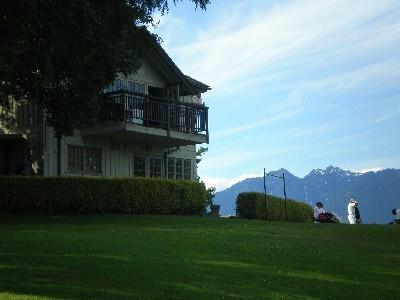
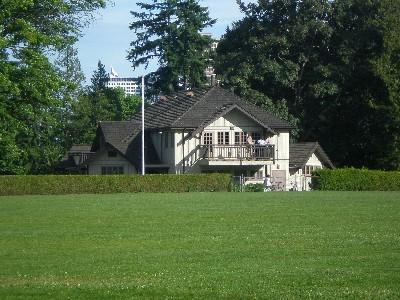
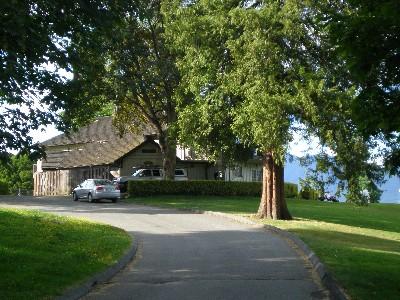
The construction of the Lighthouse is associated with improving safety and providing maritime aids to shopping at Vancouver harbour. The lighthouse is also related to the pre-war phase of development of Stanley Park. It was named in honour of Chief Engineer Francis Brock from the surveying vessel HM Plumper.

City
Vancouver
Country
Type Description
Lighthouse
Memorial CF Legacy ID
7781
City/Municipality
Vancouver
Memorial Number
59026-023
Type
Location
Stanley Park
in Canada
Yes
GPS Coordinates
49.3005422, -123.1175104
Inscription

(needs further research/recherche incomplète)

Province
!4v1622552956341!6m8!1m7!1seYNNmjEmo8lXCCy5BRLdkw!2m2!1d49.3003014931417!2d-123.1177046543996!3f82.06768788094047!4f5.508441625137905!5f0.40550519125652273
Body Content

This area was named in 1859 by Captain Richards of HM surveying vessel Plumper after Francis Brockton, Chief Engineer.

City
Vancouver
Country
Type Description
Park
Memorial CF Legacy ID
7780
City/Municipality
Vancouver
Memorial Number
59026-022
Type
Location
Stanley Park
in Canada
Yes
GPS Coordinates
49.2981491, -123.1174833
Inscription

[plaque/plaque]

NINE O'CLOCK GUN
THIS GUN IS A NAVAL TYPE TWELVE POUND MUZZLE-
LOADER. CAST IN 1816 AT WOOLWICH, ENGLAND
IT WAS BROUGHT TO VANCOUVER ABOUT 1894. THE
CRESTS OF KING GEORGE III AND OF THE EARL OF
MULGRAVE, MASTER GENERAL OF ORDNANCE ARE
ON THE BARREL
GUN RESTORATION AND PAVILION WERE CENTENNIAL GIFTS
IN 1986 TO THE CITY OF VANCOUVER FROM
EBCO INDUSTRIES LTD. CHESTER F. MILLAR
FIRST GENERATION HUDSON'S BAY COMPANY
CAPITAL CORPORATION

Image
Photo Credit
Julie Clements
Caption
side
1 of 4 images
Image
Caption
plaque
1 of 4 images
Image
Caption
back
1 of 4 images
Image
Caption
surroundings
1 of 4 images
Province
!4v1622552487645!6m8!1m7!1sdRMki8STsGrCk_9AVMpbJQ!2m2!1d49.29814906721991!2d-123.1174832752718!3f207.97716432337194!4f0.20456226054703563!5f0.7426350590267363
Body Content

This gun is a naval type twelve pound muzzle-loader. It sounds every evening at exactly 2100hrs. It was restored and a pavilion created in 1986.

City
Vancouver
Country
Type Description
Gun
Memorial CF Legacy ID
7779
City/Municipality
Vancouver
Memorial Number
59026-021
Type
Location
Stanley Park, just west of the Nine O'Clock Gun
in Canada
Yes
GPS Coordinates
49.2980412, -123.1179229
Inscription

[front/devant]

H.M.S. EGERIA

[plaque/plaque]

THIS CONCRETE SLAB WAS SET
BY THE ROYAL ENGINEERS IN
1863 AND WAS USED AS A SURVEY
POINT IN 1898 BY THE ROYAL
NAVY SURVEY SHIP H.M.S. EGERIA

1898

Image
Photo Credit
Julie Clements
Caption
front
1 of 4 images
Image
Caption
plaque
1 of 4 images
Image
Caption
front
1 of 4 images
Image
Caption
surroundings
1 of 4 images
Province
!4v1622552124899!6m8!1m7!1sLt9vGc88eH4JyqAca0umew!2m2!1d49.29804124017522!2d-123.1179229431143!3f319.1596847142155!4f6.546427489437335!5f1.2609501880975733
Body Content

This memorial is an inscribed concrete slab, which was set by the Royal Engineers in 1865 and used as a survey point in 1898 by the Royal Navy survey ship, HMS Egeria. It is located just west of the Nine O'Clock Gun, in Stanley Park. HMS Egeria was a 4-gun screw sloop launched at Pembroke in 1873. In 1875 Egeria, commanded by Commander Ralph Lancelot Turton, proceeded to Perak, as one of a squadron of six ships under Captain Alexander Buller with his senior officer’s pennant in Modeste, to take part in an expedition against the murderers of Mr. J. W. Birch, the British resident in Perak. While the troops and a naval brigade advanced on the upper reaches of the Perak River simultaneously from two points, Egeria blockaded the Perak Littoral, and sent her boats up the Kurow River. These boats destroyed or carried off some guns, arms, and ammunition which might have been useful to the enemy. Severe punishment was inflicted on the natives, but the actual murderers were not brought to account for some time afterwards.

City
Vancouver
Country
Type Description
Plaque
Memorial CF Legacy ID
7778
City/Municipality
Vancouver
Memorial Number
59026-020
Type
Address
1200 Stanley Park Drive
Location
HMCS Discovery
in Canada
Yes
GPS Coordinates
49.2978041, -123.1234695
Inscription

[left plaque/plaque de gauche]

HER MAJESTY'S CANADIAN SHIP DISCOVERY
WAS COMMISSIONED ON NOVEMBER 1 1941.
THOUSANDS OF MEN AND WOMEN HAVE BEEN
RECRUITED AND TRAINED AT THESE NAVAL
RESERVE FACILITIES OF DEADMAN'S ISLAND FOR
SERVICE TO CANADA IN PEACE AND WAR.
WORLD WAR II 1939 - 1945
KOREAN CONFLICT 1950 - 1953
OPERATION FRICTION 1991.

[right plaque/plaque de droite]

LE NAVIRE CANADIEN DE SA MAJESTE DISCOVERY
A ETE MIS EN SERVICE ACTIF LE 1 NOVEMBRE 1941.
DES MILLIERS D'HOMMES ET DE FEMMES ONT ETE
ENROLES ET ENTRAINES DANS LES INSTAILATIONS
DE LA RESERVE NAVALE DE L'ILE DE DEADMAN
POUR SERVIR LE CANADA EN TEMPS DE GUERRE ET
EN TEMPS DE PAIX.
SECONDE GUERRE 1939-1945
GUERRE DE COREE 1950-1953
OPERATION FRICTION 1991

[sign/enseigne]

H.M.C.S. N.C.S.M.
DISCOVERY
NAVAL RESERVE DIVISION
DIVISION DE LA RÉSERVE NAVALE

[plaque/plaque]

CITY OF VANCOUVER
DEADMAN'S ISLAND
The name of this six acre island comes
from its use as a burial ground by the Salish
Indians. Early settlers used it as a cemetery and
as a quarantine area during the 1893 smallpox
epidemic. In 1944 it became a naval station,
H.M.C.S. Discovery - named after one
of Captain Vancouver's ships.
1886 - 1986

Image
Photo Credit
Julie Clements
Caption
building
1 of 4 images
Image
Caption
front
1 of 4 images
Image
Caption
front
1 of 4 images
Image
Caption
sign
1 of 4 images
War or Conflict Term
Province
!4v1622551407560!6m8!1m7!1sAAsO3g2PRPpxPcKwZZNZGg!2m2!1d49.29773105967339!2d-123.1236391554935!3f183.59025619878832!4f-8.225408465669787!5f0.539485936701219
Body Content

See inscription.

City
Vancouver
Country
Type Description
Building
Memorial CF Legacy ID
7777
City/Municipality
Vancouver
Memorial Number
59026-019
Type
Address
200 West Hastings Street
Location
Bounded by W Hastings, Cambie, W Pender, and Hamilton streets
in Canada
Yes
GPS Coordinates
49.2825862, -123.1097552
Inscription

(needs further research/recherche incomplète)

Image
1 of 4 images
Image
1 of 4 images
Image
1 of 4 images
Image
Photo Credit
Library & Archives Canada 3334917
Caption
Victory Square showing Cenotaph, Dominion and Province Bldgs
1 of 4 images
War or Conflict Term
Province
!4v1622550938151!6m8!1m7!1swqSHXAWkRgKJYVxBNVmmYw!2m2!1d49.28258623911707!2d-123.109755225122!3f238.94566902041367!4f3.5610097094396025!5f1.0130512898960262
Body Content

Victory Square was at one time the grounds of the city's provincial courthouse, which was torn down in 1911-13. The location had significance when it was chosen, as it stands at the intersection of the old Granville townsite (aka Gastown) and the CPR townsite, which was the downtown-designated land grant obtained by the CPR as part of the deal to locate the terminus and thereby found the city. The Victory Square Cenotaph is located in this park (see memorial 59026-002).

City
Vancouver
Country
Type Description
Park
Memorial CF Legacy ID
7775
City/Municipality
Vancouver
Memorial Number
59026-018
Type
Location
Burrand Street Bridge
in Canada
Yes
GPS Coordinates
49.2767615, -123.1330845
Inscription

(needs further research/recherche incomplète)

War or Conflict Term
Province
!4v1622489567155!6m8!1m7!1sY7P-kLay7DvSRYMO7s8isg!2m2!1d49.27676146485616!2d-123.1330844815445!3f234.64688200079792!4f13.327883620940795!5f0.7820865974627469
Body Content

This bridge was built in 1932 to connect downtown Vancouver to Kitsilano. The engineer, John Grant, had the idea to install huge lamps at both ends of the span as a tribute to Canadian First World War prisoners of war, who huddled around open fires in their prison camps.

City
Vancouver
Country
Type Description
Lamps
Memorial CF Legacy ID
7773
City/Municipality
Vancouver
Memorial Number
59026-017
Type
Address
2690 Larch Street
in Canada
Yes
GPS Coordinates
49.2611549, -123.1624043
Inscription

needs further research/recherche incomplète

War or Conflict Term
Province
!4v1718045045495!6m8!1m7!1sfvy8Q0hjdDcdwkq1dpD7DQ!2m2!1d49.26115491129247!2d-123.1624043238452!3f15.448144915936908!4f-8.169209160546487!5f1.8077793223059038
Body Content

One of Vancouver's oldest Community Centres, the Kitsilano War Memorial Community Centre was founded in 1950 as part of a grassroots movement to provide indoor public recreation services while commemorating local citizens lost in the Second World War. Kitsilano War Memorial Community Centre is jointly operated by the Kitsilano War Memorial Centre Association and the Vancouver Park Board.

City
Vancouver
Country
Type Description
Building - centre
Memorial CF Legacy ID
7772
City/Municipality
Vancouver
Memorial Number
59026-016
Type
Address
Burrard Street and W 15th Avenue
in Canada
Yes
GPS Coordinates
49.2580818, -123.1459623
Image
Photo Credit
Canadian Memorial United Church and Centre for Peace
Caption
Canadian Memorial United Church
1 of 3 images
Image
Photo Credit
Canadian Memorial United Church and Centre for Peace
Caption
Canadian Memorial United Church
1 of 3 images
Image
Photo Credit
Canadian Memorial United Church and Centre for Peace
Caption
Canadian Memorial United Church
1 of 3 images
Province
!4v1622487793072!6m8!1m7!1sBhTo-GoGMRoV-vQ0me-CTw!2m2!1d49.25808175008721!2d-123.1459623271083!3f226.2479404422196!4f8.907012790348716!5f1.4499580245881227
Body Content

Canadian Memorial United Church is unique, not just for its pure Gothic style, or the extraordinary manner in which funds were raised throughout Canada for its construction, but also for its portrayal of Canadian unity and its Christian symbolism. This church in no way glorifies war, but is, above all, a peace memorial.

Canadian Memorial Chapel was born in the hearts of private soldiers in the First World War who, guided by a sergeant, formed a working party to bury six of Canada's war dead. On a November night of 1915, in the Ypres Salient, France, one of the soldiers said to Reverend Lieutenant-Colonel (Lt.-Col.) George Fallis, CBE ED, BD, DD: "Padre, after the war is over some chaplain should build a memorial in Canada in memory of fellows like these who have given their all." From that moment on, he would never lay away their beloved dead without the idea of a memorial chapel in his mind.

On his return to Canada he was advised by Reverend S.D. Chown, DD, General Superintendent of the Methodist Church to go to Vancouver, choose a site in Shaughnessy Heights facing the eternal hills and erect the chapel of his dreams. Chapels he visited in Italy, France, Belgium, England and Scotland, and chapels of the colleges of both Oxford and Cambridge were his inspiring guides. He arrived in Vancouver in May 1920, to a willing congregation and plans were quickly laid.

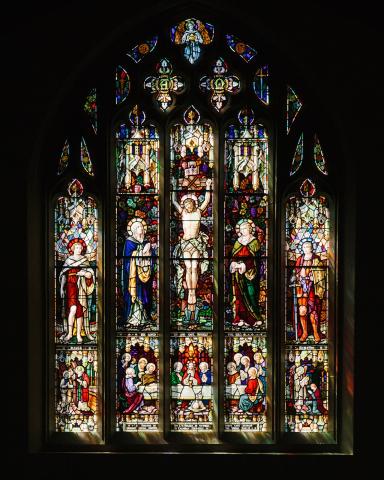
The first project was Memorial Hall and the second project was Memorial Chapel. All plans for the chapel were sent to Professor C.H.C. Wright, Head of the Department of Architecture in the University of Toronto, for judging. He awarded the project to Messrs. Twizell & Twizell. The plans had ten windows for the chapel, one for each Province and the Yukon Territory; also a Chancel Window symbolizing sacrifice; and an All Canada Window depicting the history and life of Canada.

Lt.-Col. Fallis was inspired by the chapels he visited during the First World War. He read the Bible day after day searching for stories to use as the religious motifs on the windows. When he found a story that emphasized world, brotherhood or soldier he made a note and ended up with 70 illustrations. He carefully eliminated one after another and when he was finished there were exactly ten. Studying them, he found there was a sequence to the stories:

Ontario: "The Nativity"—symbolizing, A Call to Peace.
Quebec: "The Call of the Disciples"—symbolizing, Enlistment.
Prince Edward Island: "David and his Valiant Soldiers"—symbolizing, The Sacrifices the Soldiers Made.
British Columbia: "The Story of the Centurion"—symbolizing, The Faith of the Soldier.
Yukon: "Jonathan and David"—symbolizing, The Love the Soldiers bore each other.
Manitoba: "Jacob Mourning for Joseph"—symbolizing, The Mourning of the Home Folk for Their Lost Loved Ones.
Saskatchewan: "Peter's Vision"—symbolizing, Universal Brotherhood.
Alberta: "The Vision of Democracy"—symbolizing, A Warless World.
New Brunswick: "The Sermon on the Mount"—symbolizing, Blessed are the Peacemakers.
Nova Scotia: "The Empty Tomb of the Risen Lord"—symbolizing, The Immortality of those who made the Supreme Sacrifice.

Lt.-Col. Fallis' friend Chris Spencer, CBE , advised him that in order for there to be national significance to the chapel, he should go across Canada and interview lieutenant governors, premiers, statesmen and leaders of each province, asking them to underwrite the windows. The goal was to involve Canadians from coast to coast with the idea of making this a truly national church. The first visit was to Victoria and after securing subscription for the British Columbia Window, Honourable Walter Nichol said: "Now that you have finished British Columbia, I should advise you to go to Prince Edward Island and if you get the support of the far West and the far East, I am sure the provinces in between will respond."

Each window portrays a biblical scene with the provincial coat-of-arms underneath, flanked on either side by historical scenes of the province it represents. A passage of scripture appropriate to the biblical theme is shown at the bottom and separate plates list the names of respective contributors. The windows were designed by Robert McCausland Company of Toronto and were dedicated at an evening service in December 1928. Provincial Windows were not without colonial, racial, gender and cultural assumptions of that time. In 2004, there was deconstruction on some of the values and ideas on these windows.

In the end, Lt.-Col. Fallis interviewed 161 leading men across Canada and practically every man thought of Canadian Memorial Chapel as a beautiful dream that should be made a reality.

Madame Ernestine Schumann-Heink was a Bohemian-born Austrian-American opera singer. During the First World War, she had a brother in command of an Austrian warship, her son August Heink in the German Navy, her stepson Walter Schumann and sons Henry Heink and George Washington Schumann all in the American Navy and her two sisters lived in Germany. She devoted herself to helping wounded soldiers, appearing before troops across the United States and raising funds for Red Cross, YMCA and Jewish War Relief. At sixty years of age she made her farewell tour, drawing sold out houses from New York to San Francisco. The Vancouver press printed the story of Madame Schumann-Heink's service to the United States and the success of her farewell tour, including the information that she was to sing in Seattle the following evening. It was eleven o'clock and the finance committee of Canadian Memorial Chapel had wrestled for hours trying to work out ways and means to raise more funds. Lt.-Col. Fallis told the story of Madame Schumann-Heink and her great interest in soldiers. Treasurer Norman Cull exclaimed, "You're going to Seattle on the midnight train to enlist her services in a great memorial concert here. I move we adjourn. Go and pack your bag." Within an hour he was on his way to Seattle.

Madame Schumann-Heink was at a hotel whose manager was a personal friend of Lt.-Col. Fallis and met him in the lobby. She had given instructions that she was to see no one until after the concert that night. The two men sat down and talked Madame Schumann-Heink for half an hour. Finally the manager said: "Just write her a short note. Tell her you are a padre who had four years overseas and that you would like to see her, and I think because you served with the soldiers she will give you a warm welcome."Lt.-Col. Fallis wrote the letter and placed it in her message box, sitting for hours waiting and watching. At five o'clock the letter was on its way to the great woman's suite. In less than half an hour a clerk handed him a letter from Madame Schumann-Heink herself. She wrote: "I love soldiers. Come and sit with me backstage during my concert tonight. I have a violin soloist assisting in the program and we can chat while he plays."

At 8:30 pm Lt.-Col. Fallis tapped on her door backstage. She said firmly, "Come in." She rose, held out her arms, gave a big hug and a kiss and exclaimed, "I love soldiers!" He told her the story of Canadian Memorial Chapel and asked her to come to Vancouver and give a concert in aid of the memorial fund. She rose, again embraced him and said, "I'll come as soon as I finish my tour, and you shan't pay a single penny."

The concert night was one never to be forgotten. Five thousand two hundred people crowded into Patrick Brothers' huge arena. All about the platform from which she sang were injured Veterans. Many were brought from the hospital in David Spencer's delivery wagons. Men who had not been out of Shaughnessy Military Hospital for years were carefully carried to the wagons that took the place of ambulances. Twenty-two stretcher cases lying on their backs, attended by nurses, looked up adoringly at her. Between renditions bouquets were presented and the great diva graciously accepted them, then moved quickly down the steps, literally tore them in parts and placed them at the feet of the Veterans on stretchers. When a blinded soldier presented her with roses from the Canadian Institute for the Blind, she bowed reverently for a pause so long that it brought an absolute hush over the vast audience. Then taking the sightless soldier by the arm she led him gently to his seat. As she came back to the dais there was scarcely a dry eye in the house. She was greeted with double and triple encores. When the concert ended, Madame Schumann-Heink held up her hand and a great silence fell over all. Then with a distinct German accent she said, "I thank you. This night is the crown of my life."

The first sod at Canadian Memorial Chapel was turned in July 1927 by Sir George Foster, KC, MG, President of the League of Nations Society of Canada. The Honourable Walter C. Nichol, Lieutenant Governor of British Columbia, laid the cornerstone on September 17, 1927, and the address was given by Major-General W.W. Foster, CM, DSO. Canadian Memorial Chapel was dedicated on November 9, 1928. The ceremony was conducted by Reverend (Major) Charles Williams, DD, assisted by Reverend F.E. Runnalls, BA, BD, Chairman and Secretary of Vancouver Presbytery. Regular services began on November 11, 1928, exactly ten years after the 1918 Armistice. As the first hymn was being sung the chief usher handed Lt.-Col. Fallis a cable. It was a message of congratulations from His Majesty King George V.

The memorial windows in the Narthex represent distinct branches of service in the war efforts during the First World War: The Soldier, The Sailor and The AirmanThe Nurse, and The Transfigured Soldier. Over time they evolved as symbols acknowledging the sacrifice of those who served in the Second World War and the Korean War.

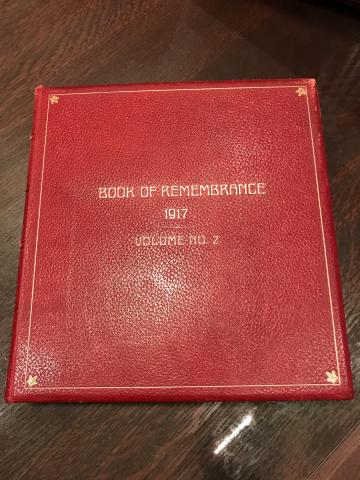
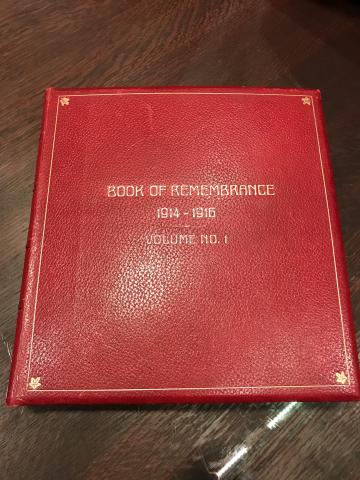
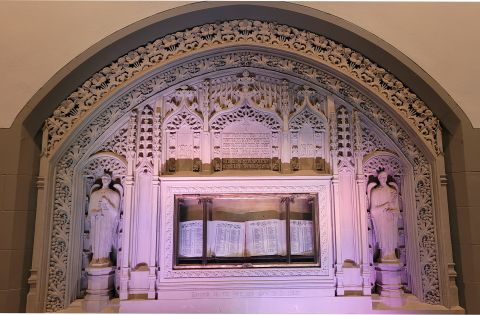
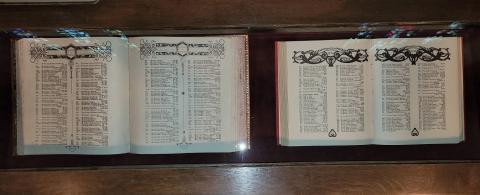
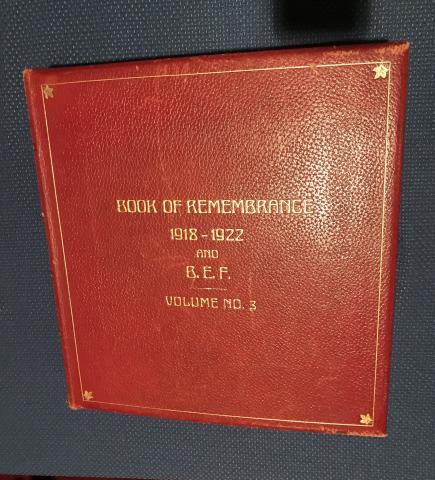
Other memorials in the church include: Books of Remembrance and Memorial TabletMemorial OrganSecond World War Plaque, and Founder's Portrait.

City
Vancouver
Country
Type Description
Building - church
Memorial CF Legacy ID
6668
City/Municipality
Vancouver
Memorial Number
59026-015
Type
Address
620 Beatty Street
Location
Beatty Street Drill Hall, on east wall
in Canada
Yes
GPS Coordinates
49.2795671, -123.1109997
Inscription

SACRED
TO THE MEMORY OF
OFFICERS, NCOs AND MEN
OF
28 CDN ARMD REGT BCR DCOR
WHO FELL IN ACTION
1939 - 1945

Image
Photo Credit
E.T. Barnes
Caption
front view
Province
!4v1622486000848!6m8!1m7!1sQm1cughJQpAnLl-1pUD5rg!2m2!1d49.27956714680599!2d-123.1109997342313!3f134.5643347123928!4f14.865154812616424!5f0.7820865974627469
Body Content

This memorial is dedicated to the men of the 28th Canadian Armoured Regiment who died while serving in the Second World War. It was erected by their fellow officers and men.

City
Vancouver
Country
Type Description
Wooden Celtic cross
Memorial CF Legacy ID
6523