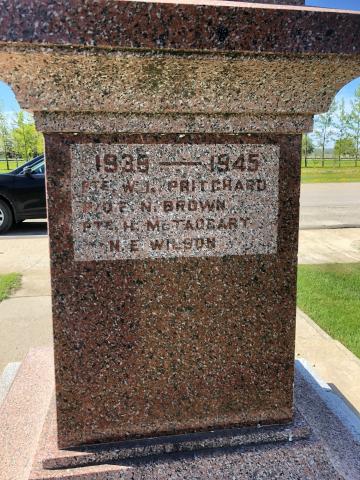
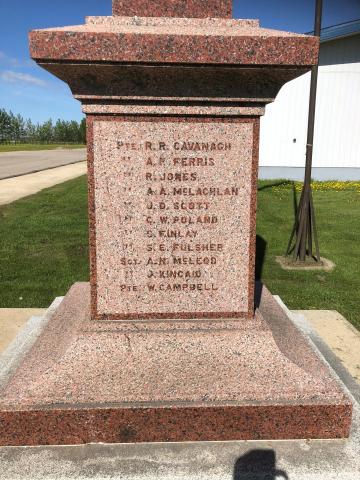
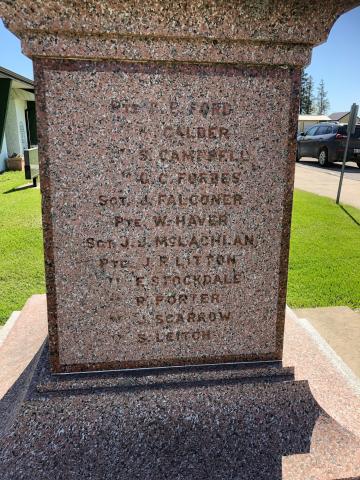
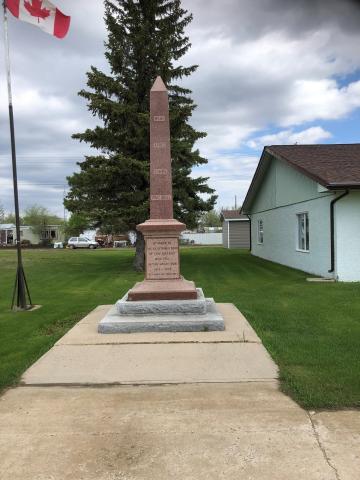
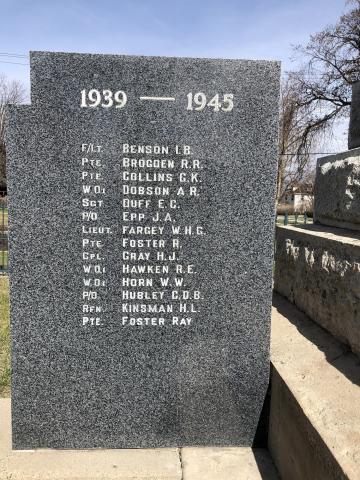
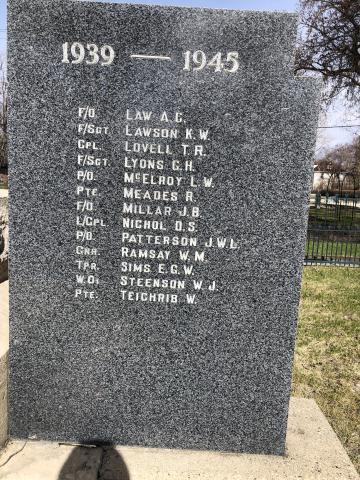
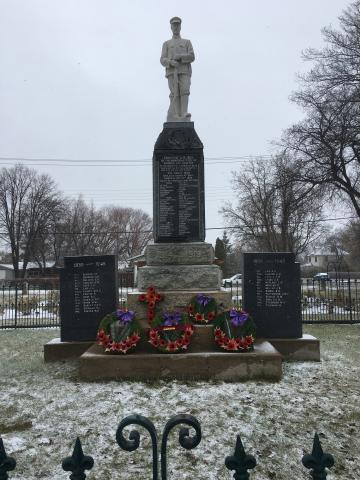
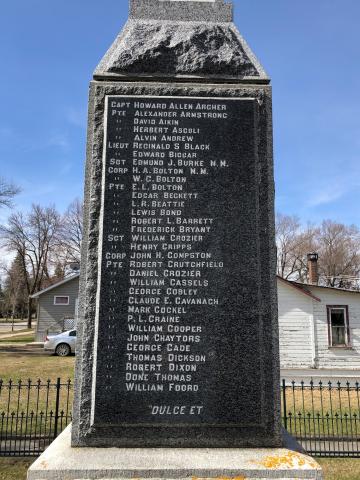
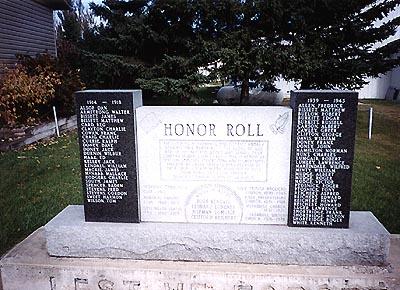
The Carman-Dufferin District Second World War Honour Roll was erected in the Memorial Room after the war.
Carman-Dufferin District Second World War Honour Roll
My VAC Account
My VAC Account
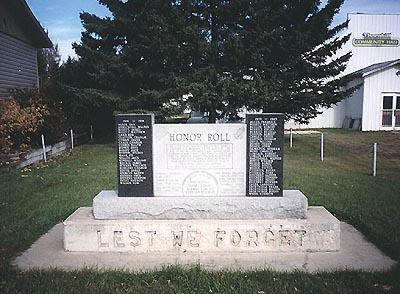
The Carman-Dufferin District Second World War Honour Roll was erected in the Memorial Room after the war.
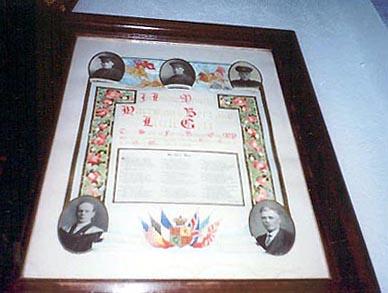
The Carman-Dufferin District First World War Honour Roll was erected in the Memorial Room after the war.
World War I
V. Bjornson
J. Burford
H.H. Hilliard
T.I. Thordarson
World War II
F.J. Abel
L.M Allardyce
W.L. Arksey
L.A. Bjarnason
G.V. Gibson
J.A. Gray
B. Halldorson
C.G. Hatch
V.E. Isfeld
P.M. Matthews
R.J. McDonald
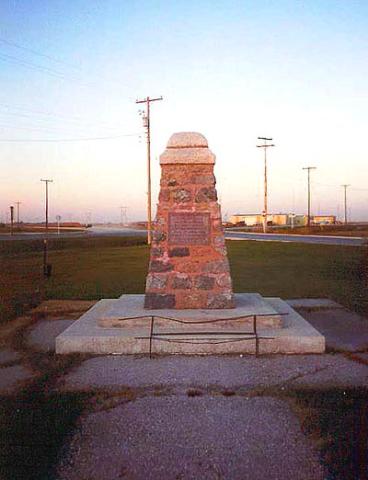
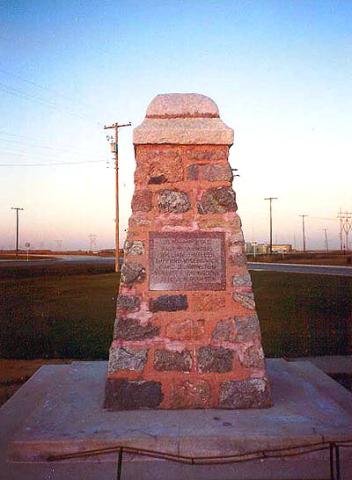
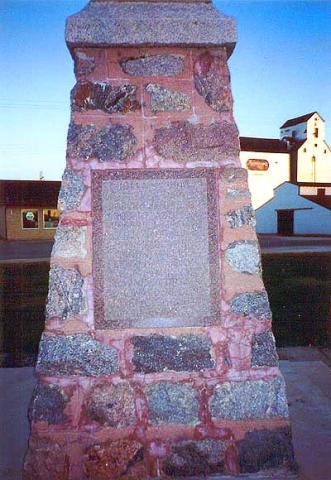
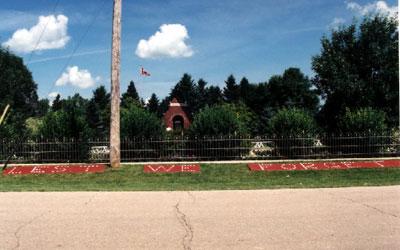
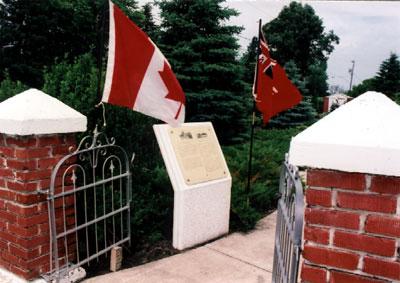
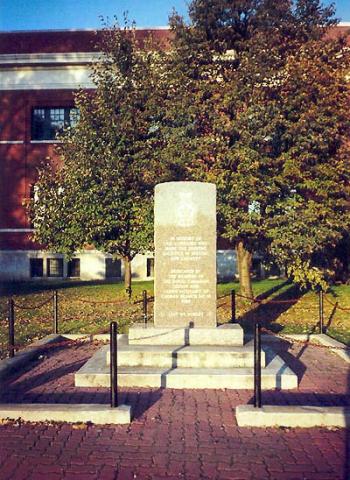
This memorial, erected by the Royal Canadian Legion Branch No. 162, is dedicated to the war dead of the First and Second World Wars. Constructed and unveiled on Sunday, September 28, 1949, in memory of fifteen men who paid the supreme sacrifice in the First and Second World Wars. A Decoration Day service takes place at the site every June, and Remembrance Day service every year on November 11.
[front/devant]
SOMME
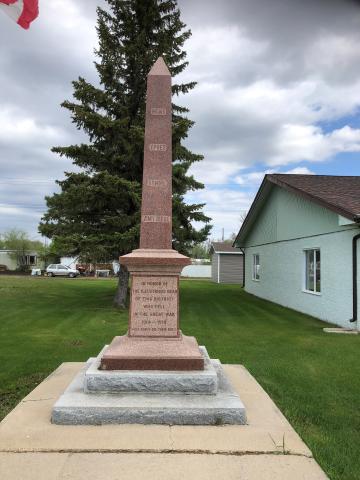
ERECTED BY THE CITIZENS OF HOLLAND AND DISTRICT
TO THE MEMORY OF
THOSE WHO FELL
IN THE GREAT WAR
1914 — 1918
1939 — 1945
[right side/côté droit]
VIMY
[back/arrière]
PASSCHENDALE
TO YOU FROM FALLING HANDS WE THROW THE TORCH
BE YOURS TO HOLD IT HIGH
[left side/côté gauche]
YPRES
PARSONS J.
OLIVER S.
MENZIES J.
JEFFREY A.
CAMPBELL J.
FERRIS H.
RUSH C.
BARKER J.
ALLARD P.
VAN-DE-VANET C.
ERICKSON G.
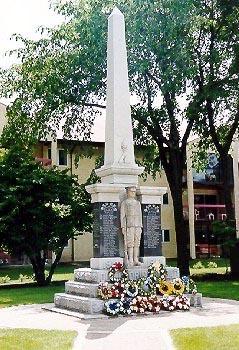
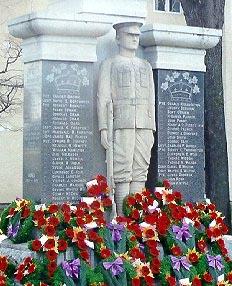
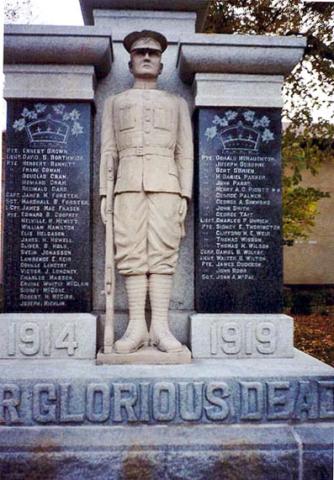
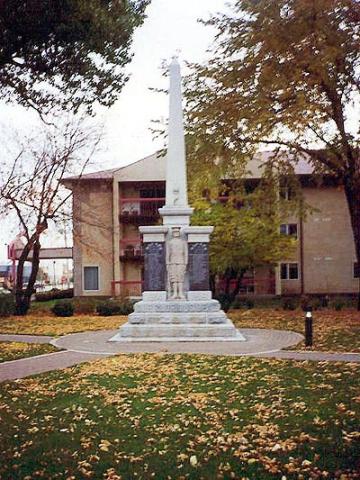
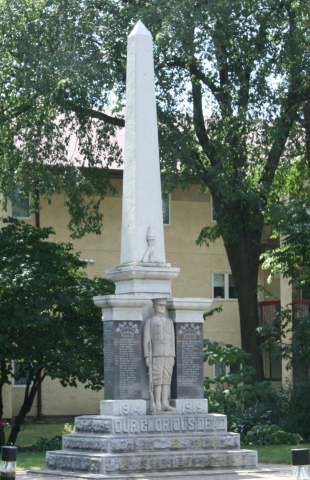
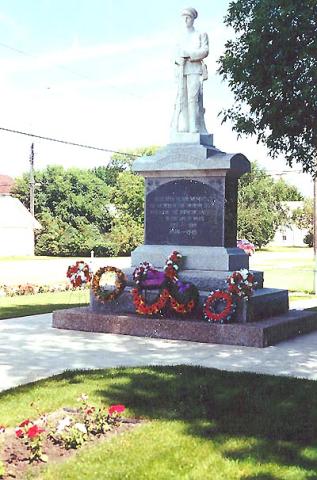
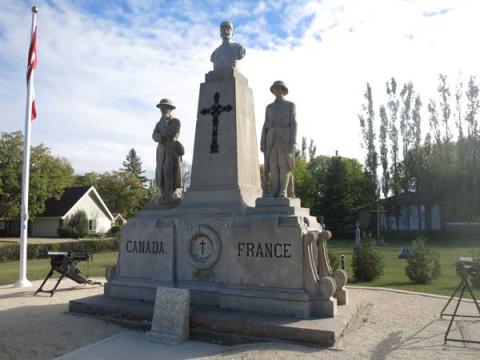
The Holland Cenotaph was erected in July of 1925 to commemorate soldiers from the Holland area killed during the First World War. It was unveiled on 4 August 1925. The base is made of black granite which sits on cement and another layer of cement is between the base and statue. The statue is a soldier carved from Italian marble and stands on top, gazing slightly to the left. He stands slightly at ease, with hands clasped over the barrel of his rifle. His uniform, cap and accoutrements like the canteen are all expertly carved. A tree stump carved behind the soldier is symbolic of a young life cut short.
Second World War casualties were inscribed after that war.
[front/devant]
ERECTED BY THE CITIZENS OF GLADSTONE DISTRICT
TO THE MEMORY
OF THOSE WHO FELL
IN THE GREAT WAR
1914 — 1918
AND WORLD WAR
1939 — 1945
[right side/côté droit]
1939 — 1945
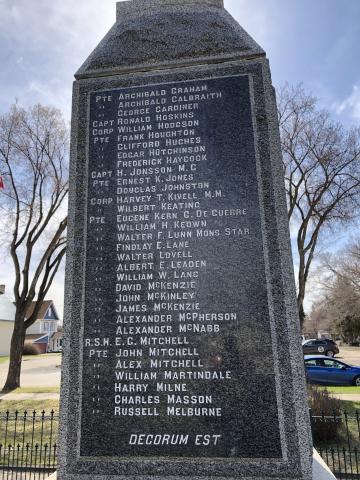
ANDERSEN N. LEWIS B.
BASKERVILLE E.
LEIB E. WATSON S.
CAKE B.
[back/arrière]
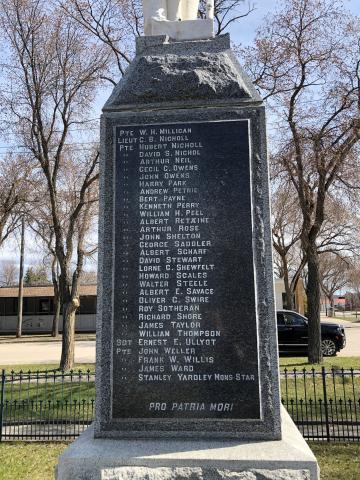
NURSING SISTER AGNES MCPHERSON
[left side/côté gauche]
KOREAN CAMPAIGN
1950 — 1953
BRUCE W. E.
The Gladstone Cenotaph was constructed in 1923 in memory of the 51 fallen soldiers and one Nursing Sister in the First World War. The sandstone and concrete monument was built by the Neepawa firm of Guinn and Simpson and the Carrara marble figure of a soldier was carved in Italy by Professor Sergio Natterchi. The uniformed soldier stands at ease, staring off in the distance, his hands rest over the barrel of his rifle and his left leg rests against a trench mortar. On the front of the pedestal is a carving of a bison.
Young girls with pretty baskets were out bright and early on 11 November 1922 to sell flowers made by the Women's Institute ladies in aid of the memorial fund. In the afternoon, the Women's Institute held a tea and pantry sale in the Collins and Diamond’s store, also for the fund. The cenotaph was unveiled on July 1, 1923. Dignitaries at the event included Lieutenant Governor James Albert Manning Aikins, Lieutenant Colonel Gilbert Godson-Godson and Archbishop Samuel Pritchard Matheson
Twenty-six additional names were added after the Second World War and one name after the Korean War.
LEST WE FORGET
MEMORIAL
ROOM
The main floor of Memorial Hall has been a vital part of the community for many years. When the building was finished in 1920, a Memorial Room was designed in the front northwest corner. It was maintained and decorated by the Blain Haverson Chapter of the Imperial Order Daughter of the Empire until 1926 when the Carman Royal Canadian Legion was formed and took over looking after the room. Other than updated paint and refinished original maple floors, this room has been left structurally untouched.
The Memorial Room contains the First World War Honour Roll, details of all the soldiers of the district who went overseas, and relics and trophies of the war. After the Second World War, an Honour Roll was placed in the room and a display case with artifacts from the First and Second World Wars.
Needs further research
Veterans Park was created in 1930. During 2019 - 2020, a new fence was constructed on the north side of the park to serve as a frame for a number of new plaques that were designed and created by Heather Imrie. The plaques contain information about wars and peacekeeping missions that the Canadian Forces have participated in since the Boer War to present day.
The first hall in Clearwater was above Burgess Store and both were destroyed in a fire in 1941. A Hall Committee was formed to look at a building a new hall and in 1947 a building was purchased from Souris Air Base. It was dismantled, hauled to Clearwater and rebuilt at its present location. Foreman W. Blackburn and volunteers had the hall rebuilt in June. It was dedicated on June 26, 1949, as a memorial to all who served in both world wars.
In 1947, a group of Rathwell citizens held dances in the Ryley Farm Barn to raise money to build a new hall, but funds from this venture were used to pay off the shareholders of the old Community Hall. Then the whole area became involved and an appointed committee of five agreed to be responsible for all administrative work in connection with the actual building of a Memorial Hall, which would honor those who had served in the First and Second World Wars.
The district was divided into five groups, each in turn accepted the responsibility to raise funds. A contractor was hired and local citizens helped demolish the old hall and build the new Memorial Hall. Work started in the early summer of 1947 and by fall the hall was officially opened.
With community support, the committee received interest free loans on two occasions in order to complete the building and pledged to continue in office until the loans were repaid. Standing faithfully behind them were the dedicated five groups who continued their efforts to raise the necessary funds. With a community spirit such as this, success was bound to follow and in due course the loans were repaid. Since that time many other committees have served, kept the hall in good repair, made improvements and additions in order to make it a living memorial to those who served.
The hall was destroyed by fire in 1981 and rebuilt the following year. Rathwell Memorial Hall will remain a legacy to those who come from those who come no more.