This Honour Roll was created for the dedication of the Masonic Temple opening in 1950 to commemorate those brethren of Lodge A.F. and A.M. No. 123 G.R.C. who died during the First World War.
It is not known where the Honour Roll is now.
Sign in to My VAC Account
Sign in to My VAC AccountTO THE GLORY OF GOD
AND THE UNDYING MEMORY OF
THE BRETHREN OF
THE BELLEVILLE LODGE A.F. & A.M. NO 123 G.R.C.
WHO, AT THE CALL OF KING AND COUNTRY LEFT ALL
THAT WAS DEAR, ENDURED HARDNESS, FACED DANGER
AND FINALLY PASSED OUT OF THE SIGHT OF MEN BY
THE PATH OF DUTY AND SELF SACRIFICE, GIVING UP
THEIR LIVES THAT OTHERS MIGHT LIVE IN FREEDOM
WOR. BRO. WILLIAM H. HUDSON
BRO. BERTHAM K. ALLEN
BRO. CLIFFORD R. BURROWS
BRO. THOMAS H. FENNELL
BRO. WILLIAM SHAW
LET THOSE WHO COME AFTER SEE TO IT THAT THEIR
NAMES BE NOT FORGOTTEN.
THE GREAT WAR 1914 — 1918
This Honour Roll was created for the dedication of the Masonic Temple opening in 1950 to commemorate those brethren of Lodge A.F. and A.M. No. 123 G.R.C. who died during the First World War.
It is not known where the Honour Roll is now.
[front/devant]
1914 - 1919
THEIR NAME LIVETH FOR EVERMORE
ERECTED BY MRS. R.J. GRAHAM ESTATE, WOMEN'S PATRIOTIC SOCIETY OF BELLEVILLE AND PRIVATE CITIZENS IN GRATEFUL REMEMBRANCE OF THE HEROIC SACRIFICE BY THE MEN OF BELLEVILLE WHOSE NAMES APPEAR HEREON WHO GAVE THEIR LIVES FOR OUR EMPIRE IN THE GREAT WAR.
1914 - 1919
[right side/côté droit]
1939 - 1945
DEDICATION
CROSS OF SACRIFICE
FLOODLIGHTING OF CENOTAPH
MAY 7TH
BELLEVILLE CENTENNIAL 1978
VETERANS OF BELLEVILLE COUNCIL
ROYAL CANADIAN AIR FORCE ASSOCIATION 418 WING
ARMY, NAVY, AIR FORCE AND LADIES AUXILIARY DUKE OF EDINBURGH UNIT 201
ROYAL CANADIAN LEGION AND LADIES AUXILIARY BRANCH 99
[back/arrière]
1914-1918
THEIR NAME LIVETH FOR EVERMORE
ERECTED A.D. 1932
[left side/côté gauche]
1939 - 1945
KOREA
1950 - 1953
IN MEMORY OF THOSE WHO SERVED AND DIED IN KOREA
MAY THEIR NAMES LIVE IN GLORY FOREVER AND THEIR SOULS IN HEAVEN ABOVE
LEST WE FORGET
[slab/dalle]
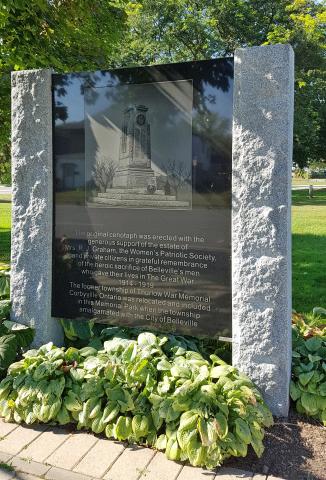
The original cenotaph was erected with the
generous support of the estate of
Mrs. R.J. Graham, the Women's Patriotic Society,
and the citizens in grateful remembrance
of the heroic sacrifice of Belleville's men
who gave their lives in The Great War
1914 - 1919
The former township of Thurlow War Memorial
Corbyville Ontario was relocated and included
in this Memorial Park when the township
amalgamaated with the City of Belleville
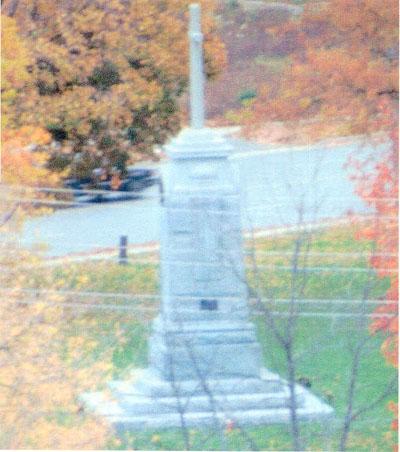
This cenotaph was erected in 1932 by the estate of Mrs. R.J. Graham, the Women's Patriotic Society of Belleville and the citizens of Belleville in memory of the local men killed during the First World War. It was designed by Campbell Monument Company of Belleville. The names of the locals lost from the Second World War and a plaque in memory of the Korean War were added later.
In 2001, the Belleville Veterans Council and the City of Belleville replaced this cenotaph and refurbished Memorial Park.
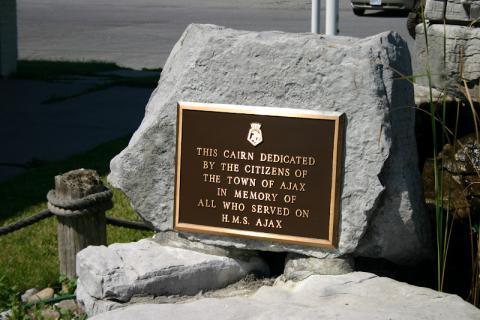
THIS CAIRN DEDICATED
BY THE CITIZENS OF
THE TOWN OF AJAX
IN MEMORY OF
ALL WHO SERVED ON
H.M.S. AJAX
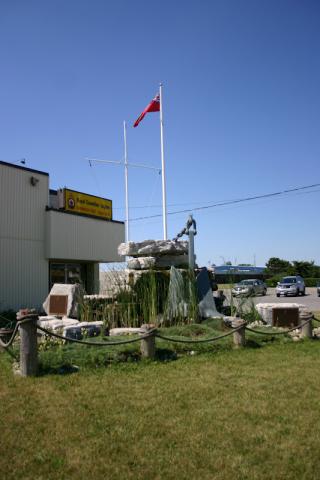
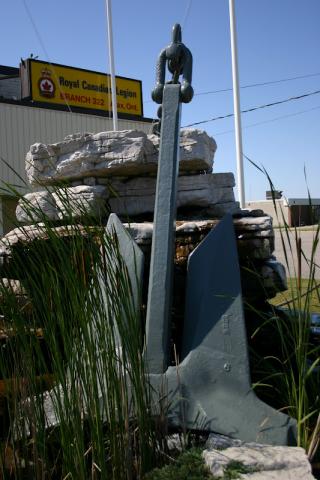
This memorial was dedicated by the citizens of the Town of Ajax in memory of all who served on HMS Ajax.
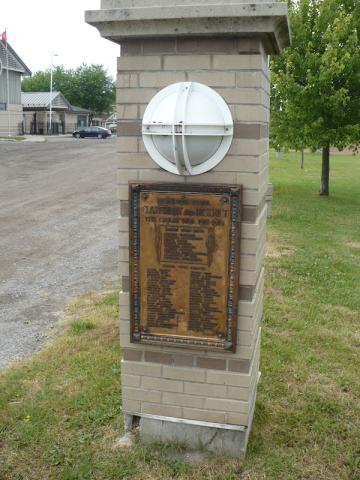
[left plaque/plaque gauche]
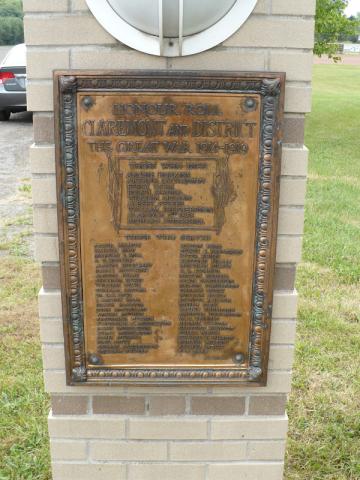
HONOUR ROLL
CLAREMONT AND DISTRICT
THE GREAT WAR 1914-1918
THOSE WHO DIED
WALTER ANDERSON
FREDERICK BROWN
ROSWELL CARSON
JOHN DAFOE
ROSS DERUSHA
ALBERT V. EMME
THOMAS FOSTER
HAROLD GRAHAM
GEORGE HANNETT
THOSE WHO SERVED
NURSES
MISS JEAN BENNETT MISS SOPHRONA GLEASON
MISS MEDA HOGUE
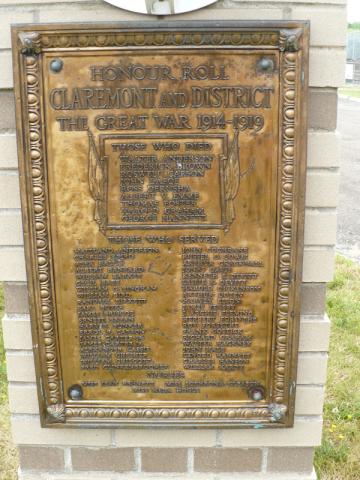
[right plaque/plaque droite]
HONOUR ROLL
CLAREMONT AND DISTRICT
THE GREAT WAR 1914-1918
THOSE WHO DIED
ARCHIE HOPKINS
ARTHUR LITTLEJOHN
PERCY LYRM
ROLPH MADILL
WILLIAM MCLEAN
ALBERT PETERS
WILLIAM SHEPERDSON
CLARENCE STOKES
RICHARD UNDERHILL
THOSE WHO SERVED
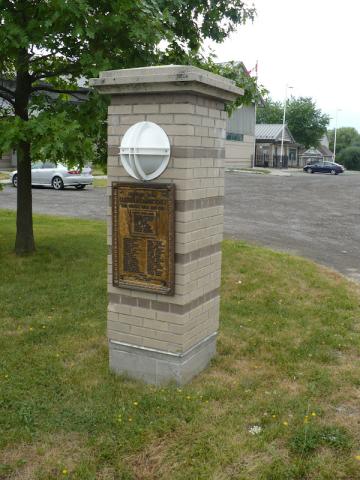
Great War Honour Roll
FRED BARNARD WAY
Fred Barnard Way was named in honour of D-Day Veteran Corporal Fred Barnard. Fred was born in Toronto, Ontario, on April 13, 1921. He enlisted in 1941 with the Queen’s Own Rifles of Canada. On D-Day, Fred and his brother Don were crouched down about six men apart from each other as they approached Juno Beach in the first wave of assault. As the front ramp dropped, Fred yelled, "Give ‘em hell, Don” and the brothers jumped into waist deep water. Those were the last words spoken between them. When Fred reached the shore, he came upon Don lying on the ground. He’d been killed by a single bullet to his chest.
Fred fought in the battle to take Carpiquet Airport and was involved in the Liberation of Caen. In Quesney Woods, Fred, at this time in charge of his platoon, was seriously wounded by shrapnel in his neck, shoulder and foot. After five months of convalescence in England, Fred boarded a ship and returned to Canada. In 2007, he was award the Legion d’Honneur by the President of France and in June 2019 the City of Uxbridge held a parade and event to recognize Fred’s contribution in the Second World War.
MEMORIAL PARK
In 1922, M.S. Chapman, William Gormley and J.R. Thexton of the Pickering Village Chamber of Commerce, purchased four and 3/8 acres of land from Thomas Walsh for $1,800 to use for a park. The citizens of Pickering Township donated money for its purchase in honour of the men who fought and died in the First World War.
Shortly after the park was purchased, the Memorial Park Gates and Cenotaph were erected.
The entrance gates at Memorial Park were installed in 1922 shortly after Memorial Park was purchased by the Pickering Village Chamber of Commerce. The iron gates were mounted on stone pillars that were built by Bert Mantle of Claremont.
On March 26, 2012, Memorial Park Gates and Cenotaph were designated under the Ontario Heritage Act as a property of Cultural Heritage Value or Interest.
In Loving Memory of
Rt. Lieut. Morley R. Shier
SON OF MR. & MRS. JAS. M. SHIER
Killed while serving in R.N.A.S. in North Sea
Sept. 6 1918
AGE 23 YEARS
He died for this country
The Morley Shier Plaque was erected by his family in the St. Paul's Presbyterian Church. In 2016, the Lucy Maud Montgomery Society purchased the church and the plaque remained.
LIEUTENANT COLONEL SAMUEL SIMPSON SHARPE MP, DSO
WYNN WALTERS, SCULPTOR
The heroic life, the tragic death, and the poignant legacy of Sam Sharpe.
Samuel Sharpe grew up in a prominent Uxbridge area family, and served as Uxbridge's lawyer for a number of years. He was elected a Member of Parliament in 1908. When the Great War broke out in 1914, he recruited a battalion of volunteers from Uxbridge and surrounding areas and led them to Europe.
His 116th (Ontario County) Battalion saw action at Vimy and Passchendaele among other battlefields, losing many men in the mud and barbed wire of Flanders. Sharpe led his men personally into battle, and received the DSO for bravery. He was re-elected in 1917 - the only MP ever elected from the battlefield.
By 1918, Sharpe suffered increasing melancholy and then a mental collapse, the result of losing so many of his men, including John Walton, a close personal friend. In that era, it was called "shell shock". Today we know it as PTSD, (post-traumatic stress disorder), and recognize it as a serious mental condition. Sharpe was invalided to England, and then to Canada. While on a train home, he suffered a collapse, and was hospitalized in Montreal. On May 25, 1918 he jumped to his death from a hospital window. He was 46. Some said he could not face the prospect of returning to Uxbridge and facing the families of those who had died, many of whom he had recruited personally. Of the 1,100 men he had recruited, only 160 were on active duty when they returned.
The statue ... and the message
Statues of military heroes usually portray them in a historic pose. Not so with Sam Sharpe. He is depicted as he ponders writing a letter, agonizing over how to tell Mary Walton that her husband had been killed. The letter in his hand begins: "Dear Mary..." For almost 100 years, history has forgotten Samuel Sharpe, his name buried with thousands who had succumbed to "shell shock". In those days, shell shock was considered cowardice, and Sharpe was considered a disgrace to the regiment.
The life and death of Sam Sharpe helps us to understand the impact of post-traumatic stress disorder, and to understand PTSD as a condition requiring treatment, rather than bringing shame. After 100 years, Sam Sharpe returns as a hero. The statue was unveiled on May 25, 2018 - the 100th anniversary of his death.
Lieutenant Colonel Samuel Sharpe was honoured on May 25, 2018, the 100th anniversary of his death, with the unveiling of a life-size statue. The statue was funded partly through community donations, the Rotary Club of Uxbridge and the Uxbridge-Scott Historical Society. Created by sculptor Wynn Walters, the statue of Sharpe is depicted as he ponders writing a letter, agonizing over how to tell Mary Walton that her husband had been killed. The letter in his hand begins: "Dear Mary..."
For almost 100 years, history has forgotten Samuel Sharpe, his name buried with thousands who had succumbed to "shell shock". In those days, shell shock was considered cowardice, and Sharpe was considered a disgrace to the regiment. The life and death of Sam Sharpe helps us to understand the impact of post-traumatic stress disorder, and to understand that it is as a condition requiring treatment, rather than bringing shame.
Samuel Sharpe grew up in a prominent Uxbridge area family, and served as Uxbridge's lawyer for a number of years. He was elected a Member of Parliament in 1908. When the Great War broke out in 1914, he recruited a battalion of volunteers from Uxbridge and surrounding areas and led them to Europe. His 116th (Ontario County) Battalion saw action at Vimy and Passchendaele among other battlefields. Many men were lost in the mud and barbed wire of Flanders. Sharpe led his men personally into battle, and received the Distinguished Service Order for bravery. He was re-elected in 1917 - the only Member of Parliament ever elected from the battlefield.
By 1918, Sharpe suffered increasing melancholy and then a mental collapse, the result of losing so many of his men, including John Walton, a close personal friend. In that era, it was called "shell shock". Today we know it as post-traumatic stress disorder, and recognize it as a serious mental condition. Sharpe was invalided to England, and then to Canada. While on a train home, he suffered a collapse, and was hospitalized in Montreal. On May 25, 1918, he jumped to his death from a hospital window. He was 46. Some said he could not face the prospect of returning to Uxbridge and facing the families of those who had died, many of whom he had recruited personally. Of the 1,100 men he had recruited, only 160 were on active duty when they returned.
The Town of Ajax was born during the Second World War. At the time, this area was a rural part of the township of Pickering, with nothing more than some farms and little industry. In 1941, Defense Industries Limited established a munitions plant here, and a town grew around the plant, which at its peak employed over 9,000 workers, and was an integral part of the war effort.
The town name is from the British cruiser HMS Ajax, which was a key player during the Battle of the River Plate, the first Allied Naval victory in the war. In December 1939, a flotilla of British warships, including HMS Ajax, HMS Exeter and HMS Achilles, commanded by Commodore Harry Harwood, engaged and crippled the German battleship Admiral Graf Spee near the Uruguayan port of Montevideo. The German ship fled to into the port, but rather than face the overwhelming British force, the Captain scuttled his ship. The Town of Ajax takes its name from this famous battle.