Ontario

Province Code
ON
City/Municipality
Lasalle
Memorial Number
35020-035
Type
Address
5005 Howard Avenue
Location
Heavenly Rest Cemetery
in Canada
Yes
GPS Coordinates
42.229402, -83.000443
Inscription

[front/devant]
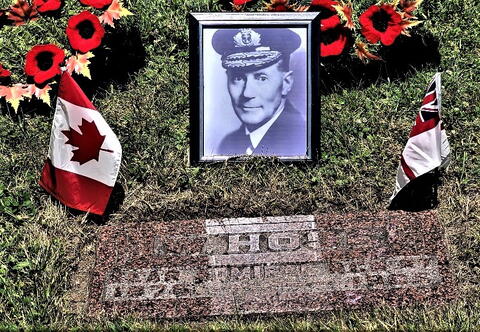
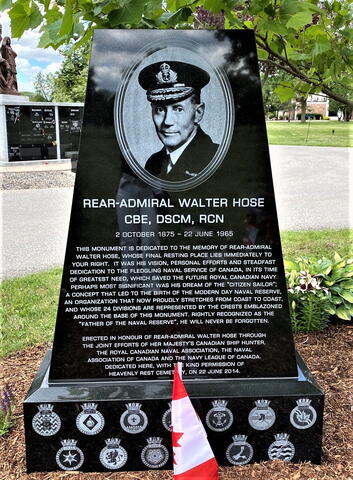
REAR-ADMIRAL WALTER HOSE
CBE, DSCM, RCN
2 OCTOBER 1875 – 22 JUNE 1965

THIS MONUMENT IS DEDICATED TO THE MEMORY OF REAR-ADMIRAL
WALTER HOSE, WHOSE FINAL RESTING PLACE LIES IMMEDIAETLY TO
YOUR RIGHT. IT WAS HIS VISION, PERSONAL EFFORTS AND STEADFAST
DEDICATION TO THE FLEDGLING NAVAL SERVICE OF CANADA, IN ITS TIME
OF GREATEST NEED, WHICH SAVED THE FUTURE ROYAL CANADIAN NAVY.
PERHAPS MOST SIGNIFICANT WAS HIS DREAM OF THE “CITIZEN SAILOR”,
A CONCEPT THAT LED TO THE BIRTH OF THE MODERN DAY NAVAL RESERVE,
AN ORGANIZATION THAT NOW PROUDLY STRETCHES FROM COAST TO COAST,
AND WHOSE 24 DIVISIONS ARE REPRESENTED BY THE CRESTS EMBLAZONED
AROUND THE BASE OF THIS MONUMENT, RIGHTLY RECOGNIZED AS THE
“FATHER OF THE NAVAL RESERVE”, HE WILL NEVER BE FORGOTTEN.

ERECTED IN HONOUR OF REAR-ADMIRAL WALTER HOSE THROUGH
THE JOINT EFFORTS OF HER MAJESTY’S CANADIAN SHIP HUNTER,
THE ROYAL CANADIAN NAVAL ASSOCIATION, THE NAVAL
ASSOCIATION OF CANADA AND THE NAVY LEAGUE OF CANADA.
DEDICATED HERE, WITH THE KIND PERMISSION OF
HEAVENLY REST CEMETERY, ON 22 JUNE 2014.

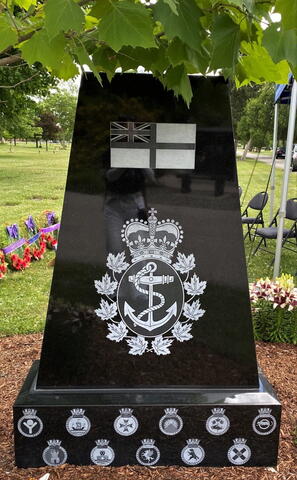
[back/arrière]
White Ensign and Royal Canadian Navy Badge

Image
Caption
Grave marker for Rear-Admiral Walter Hose, located about 20 feet from the monument.
1 of 4 images
Image
Caption
front inscription
1 of 4 images
Image
Caption
back inscription
1 of 4 images
Image
Caption
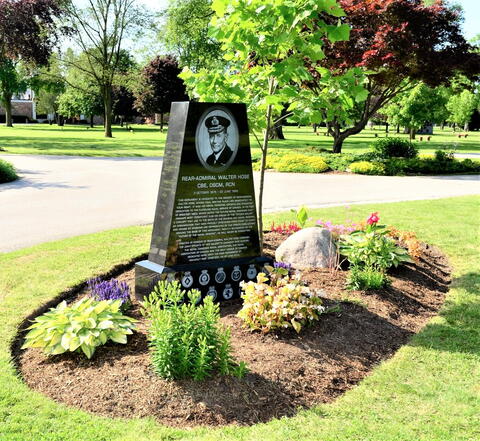
Rear-Admiral Walter Hose, CBE, DSCM, RCN Monument
1 of 4 images
Province
!4v1676317981786!6m8!1m7!1sU70SaVhWX1rxjgf4NS09Ig!2m2!1d42.23219035736219!2d-82.9976569528163!3f184.93780039149655!4f-2.8705168224424966!5f0.7820865974627469
Body Content

The Rear-Admiral Walter Hose, CBE, DSCM, RCN Monument was erected next to his gravesite and dedicated on 22 June 2014 – the 49th anniversary of his death.

Rear-Admiral (RAdm) Walter Hose, the quintessential sailor and gentleman, born at sea on the Indian Ocean, was a true man of the sea. He rose through the ranks to become the first Chief of the Naval Staff in the Royal Canadian Navy (RCN). Known as a tenacious and staunch supporter of the Navy, he is credited with not only saving the RCN, but also with founding the Naval Reserve. 

After RAdm Walter Hose won his final battle in office and managed to save the RCN from demise due to government cut-backs, he retired to Windsor, Ontario and became a fixture at HMCS Hunter, Naval Reserve Division and at a local High School Cadet Corps named in his honour.

Rear-Admiral Hose passed away on 22 June 1965. The Royal Canadian Navy bade farewell to one of its former great leaders. He was buried with full naval honours in Heavenly Rest Cemetery in Windsor. Admirals and Commodores representing the largest gathering of top-ranking naval personnel ever seen in Windsor, were in attendance. More than 150 naval officers and sailors, including naval drummers and a 24-man armed escort / firing party were flown in from Halifax. The casket draped in the Canadian flag and bearing his cap and sword was borne atop a ceremonial gun carriage along the main street of Windsor escorted by Admirals and Commodores, the 24-man escort, the HMCS Hunter naval band and HMCS Stadacona naval band drum line slow-marched past the Windsor/Essex County War Memorial and a 100-man Honour Guard from HMCS Hunter and RCSCC Agamemnon. At Rear-Admiral Hose’s request, the six pallbearers were Chief Petty Officers from HMCS Hunter.

From 1965 to 2009 Rear-Admiral Hose’s gravesite was largely forgotten until preparations were underway to celebrate the 100th Anniversary of the RCN in 2010. In 2009, the Command Team at Hunter and the Royal Canadian Naval Association Admiral Hose Branch Windsor looked to improve the Admiral’s non-descript gravesite. As a result, next to the gravesite, a new black granite memorial was erected in honour of Rear-Admiral Walter Hose through the efforts of HMCS Hunter, the Royal Canadian Naval Association Windsor Branch, the Navy League of Canada Windsor Branch and Heavenly Rest Cemetery.

To continue the memory of Rear-Admiral Hose, members of HMCS Hunter, the Royal Canadian Naval Association (RCNA), the Navy League, the Royal Canadian Legion and local Veterans’ Organization conduct a memorial service at his gravesite on June 22nd each year. In addition, since 1 January 2011, the RCNA Windsor hosts a New Years’ Day Levee Toast to Rear-Admiral Walter Hose at his gravesite, a tradition that continues to this day.

Rear-Admiral Walter Hose was recognized by Parks Canada and the Royal Canadian Navy in a Hometown Hero ceremony on 22 June 2019 at his gravesite in Heavenly Rest Ceremony. The event was attended by members of the Hose family, the Commander of the Royal Canadian Navy, the Command Chief Petty Officer, the Mayor of Windsor, local dignitaries, the Royal Canadian Navy Reserve Band, members of Naval Reserve Divisions - HMCS Hunter, HMCS Star, HMCS York, and members of local Veteran’s organizations including the Royal Canadian Naval Association Admiral Hose Branch Windsor, the Navy League, and the Royal Canadian Legion.
City
Lasalle
Country
Type Description
Obelisk
Photo Credit
The Royal Canadian Naval Association
Memorial CF Legacy ID
11351
City/Municipality
Amherstburg
Memorial Number
35020-034
Type
Address
268 Dalhousie Street
Location
King’s Navy Yard Park
in Canada
Yes
GPS Coordinates
42.1016468, -83.1126027
Inscription

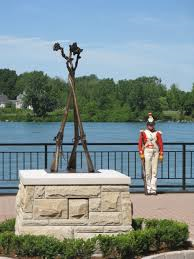
“Out of war between nations, peace was forged into three beautiful roses as a symbol of friendship.”

Image
Photo Credit
Victoria Edwards
Caption
King's Navy Yard Park International Peace statue
Province
!4v1622737485387!6m8!1m7!1sph_kdLjpk9w8uzCEd02srw!2m2!1d42.10164679878208!2d-83.1126027185334!3f254.9061227162965!4f1.2152612805396927!5f1.531139408395533"
Body Content

The Forged Peace Sculpture was added to King’s Navy Yard Park in 2012 to mark the bicentennial of the War of 1812. The dedication ceremony of the bi-national project was June 18, 2012. This date marks the first gunshot fired at River Canard at the start of the War of 1812. The sculpture depicts three intertwined muskets used by Canadian, American and First Nation People in the War of 1812 and features a rose blooming from the end of each gun barrel. Lena Lezanga, president of the Amherstburg Rotary Club, worked on the “Forged Peace Sculpture” and bicentennial twinning project with twin sister cities of Put-in-Bay Ohio, and Monroe Michigan. The sculpture, which stands approximately 12ft, was made of bronze cast at a Detroit foundry and bears an inscription noting the twinning and commitment to friendship and peace between the organizations and the three communities. The artist Joseph DeAngelis, a retired professor from School of Visual Arts in Windsor, donated the time. The cost of the local sculpture, shared between the Amherstburg Rotary Club and Chamber of Commerce, was $9,800 for casting and the bronze material.

City
Amherstburg
Country
Type Description
Statue
Memorial CF Legacy ID
9870
City/Municipality
Amherstburg
Memorial Number
35020-033
Type
Address
268 Dalhousie Street
Location
King’s Navy Yard Park
in Canada
Yes
GPS Coordinates
42.1016468, -83.1126027
Inscription

[plaque]
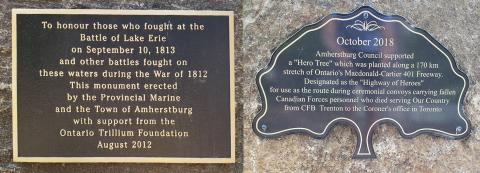
To honour those who fought at the
Battel of Lake Erie
on September 10, 1813
and other battles fought on
these waters during the War of 1812
This monument erected
by the Provincial Marine
and the Town of Amherstburg
with support from the
Ontario Trillium Foundation
August 2012

[plaque]
October 2018

Amherstburg Council supported
a "Hero Tree" which was planted along a 170 km
stretch of Ontario's Macdonald-Cartier 401 Freeway.

Designated as the "Highway of Heroes"
for use as the route during ceremonial convoys carrying fallen
Canadian Forces personnel who died serving Our Country
from CFB Trenton to the Coroner's office in Toronto.

Image
Photo Credit
Laura and Mark Williams
Caption
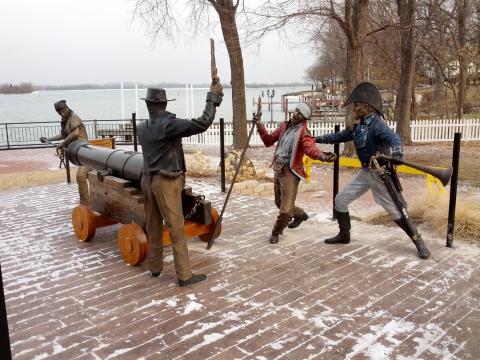
Prepare to Fire
1 of 6 images
Image
Photo Credit
Laura and Mark Williams
Caption
statues and cannon
1 of 6 images
Image
Photo Credit
Laura and Mark Williams
Caption
plaques
1 of 6 images
Image
Photo Credit
Laura and Mark Williams
Caption
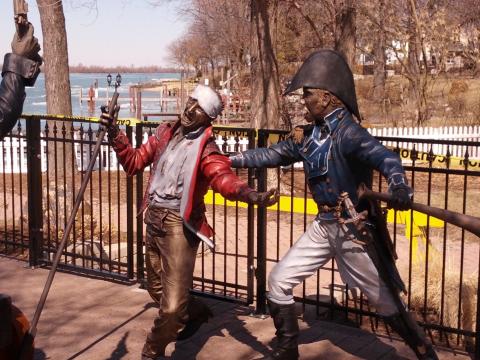
statues
1 of 6 images
Image
Photo Credit
Laura and Mark Williams
Caption
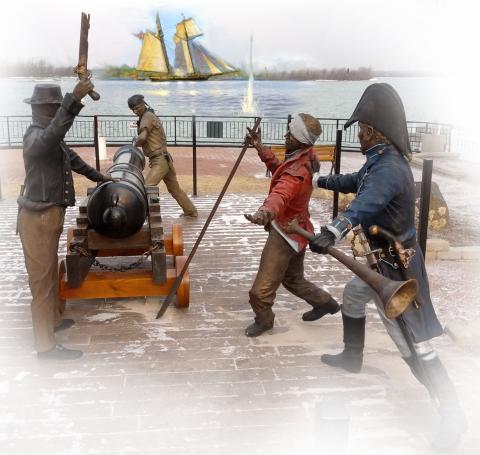
statues and cannon
1 of 6 images
Image
Photo Credit
Laura and Mark Williams
Caption
statues and cannon
1 of 6 images
Province
!4v1654691658341!6m8!1m7!1sph_kdLjpk9w8uzCEd02srw!2m2!1d42.10164701531248!2d-83.11259732830094!3f253.361348099904!4f-5.914761469849282!5f2.62490837671815
Body Content

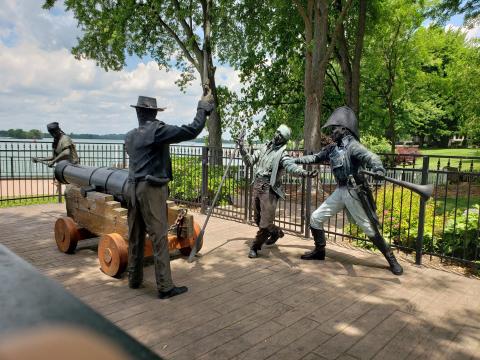
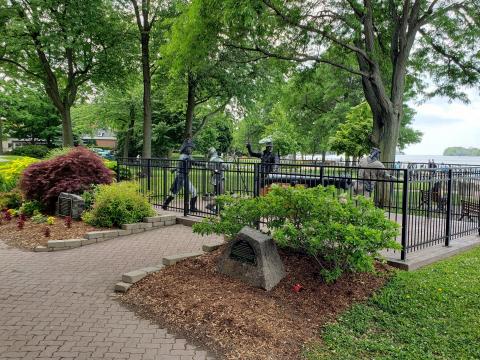
Prepare to Fire was unveiled on August 3, 2012, during the bicentennial Roots to Boots Festival. It was designed and created by Windsor, Ontario, sculptors Laura and Mark Williams to commemorate the Battle of Lake Erie in 1813.

The monument depicts bronze life-size figures of three British Royal Navy men and one foot soldier recruited to help fight the battle aboard ship in Lake Erie. During this time, man power was becoming harder to recruit and as were supplies to fight the battle, which was the case for the ‘flints’ required to fire their cannons onboard the ships. Depicted in the sculpture is a man with a musket in hand preparing to fire their ship cannon in battle. A Navy commander is holding a megaphone to holler out commands on board and at the same time helping a wounded soldier (recently shot). The winded soldier was positioned to align the canon for firing. 

During the process of creating this monument, Mark and Laura worked with reenactors from the Provincial Marine group for staging and artist reference. Mark designed the concept and created the armature in steel and hand sculpted the life size figures in clay. His understudy, Dick Wood, sculpted the Marina, packing the cannon with powder. Mark then oversaw and completed final details. The cannon used was cast at Ford Motor Company many years earlier and was mounted on a faux wood cement deck to represent the frigate in battle. 

Once the monument was completed in clay, they brought it to Fine Arts Foundry in Clarkton, Michigan to be molded and then cast in bronze. The first two figures were unveiled in 2012 at the Boots to Roots Festival and then the following year, the two remaining figures were installed with another smaller unveiling.

The Battle of Lake Erie was a naval battle fought between the United States Navy and the British Royal Navy on September 10, 1813,  in western Lake Erie during the War of 1812. At 11:45 am the British Fleet, under Commodore Robert Barclay aboard the Detroit, opened with long guns. American Commodore Oliver Hazard Perry aboard the Lawrence, supported by two schooners, attacked the Detroit and then the Queen Charlotte. Detroit was lost and all other vessels damaged, their sails entangled or out of action. The battle ended at 2:30 pm with all British ships captured and survivors taken as prisoners. British suffered 41 dead, 94 wounded and 306 captured. American casualties were 27 dead and 96 wounded.

City
Amherstburg
Country
Type Description
Monument
Memorial CF Legacy ID
9869
City/Municipality
Amherstburg
Memorial Number
35020-032
Type
Address
268 Dalhousie Street
Location
King’s Navy Yard Park
in Canada
Yes
GPS Coordinates
42.1016468, -83.1126027
Inscription

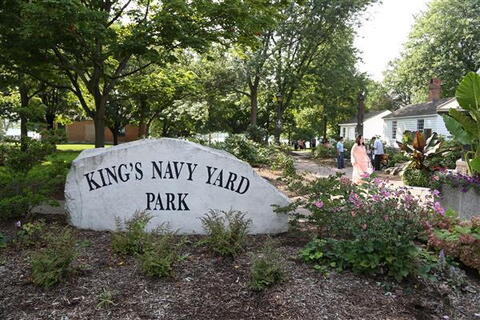
King's Navy Yard Park

Image
Caption
King's Navy Yard Park
1 of 4 images
Image
Caption
King's Navy Yard Park
1 of 4 images
Image
Caption
King's Navy Yard Park sign
1 of 4 images
Image
Caption
King's Navy Yard Park waterfront
1 of 4 images
Province
!4v1622734120713!6m8!1m7!1sph_kdLjpk9w8uzCEd02srw!2m2!1d42.10164679878208!2d-83.1126027185334!3f259.3516371387224!4f1.2999245453752337!5f1.6715533031636123"
Body Content

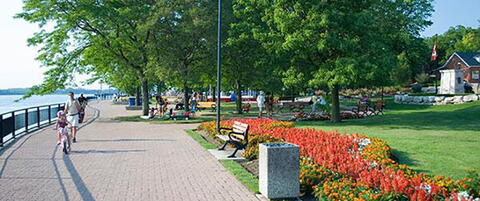
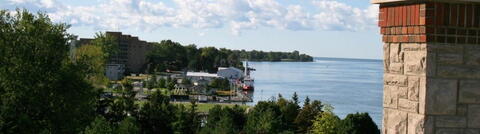
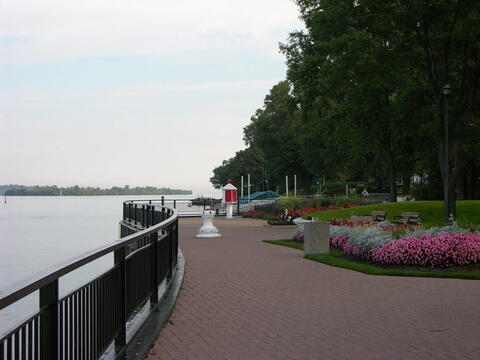
King's Navy Yard Park was designated as a Bi-Centennial International Peace Garden. A large stone marks the entrance of the park, which remains to remember the past of the Navy Yard. This 10.5 Acre park overlooks the waterfront and is lined with beautiful flower arrangements, as well as statues and plaques commemorating the short, but important history of the Naval Yard. Along the pathway are many manicured annual flower beds, a ships anchor, cannons, and a light house beacon. It has been acknowledged as part of the great Sauk Trail which ran from Illinois to Detroit. Once a shipyard for the Provincial Marine, today you can take a stroll along the water, watch the ocean and lake freighters pass by or snap a photo of the colourful Rhododendron’s and lovely gardens. The park hosts reenactments of the battle to keep the history of the War of 1812 alive.

City
Amherstburg
Country
Type Description
Garden
Memorial CF Legacy ID
9868
City/Municipality
Windsor
Memorial Number
35020-031
Type
Address
601 Lake Trail Drive
Location
St Vladimir Olga Ukrainian Catholic Church
in Canada
Yes
GPS Coordinates
42.240067, -82.994417
Inscription

[front/devant]

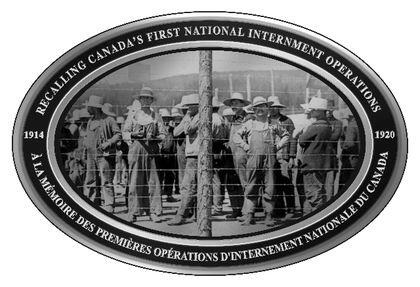
Recalling Canada's First National Internment Operations 1914-1920

A la mémoire des premières opérations d’internement nationale du Canada 1914-1920

Image
Province
!4v1622656366933!6m8!1m7!1s-fhxIu9niazjycTnK37CKg!2m2!1d42.24085121474714!2d-82.99508084680953!3f150.03862498323244!4f2.895232221332847!5f2.9560943394900616"
Body Content

This memorial recalls a historic injustice Canadians should pause to remember, as we recall the First World War and the valour of all those Canadian men, and some women, who served. It is a tribute to mark the memory of the thousands of "enemy aliens" who had their civil rights stripped, and were subsequently imprisoned during Canada's first national internment operations of 1914-1920, following the implementation of the War Measures Act. 2014 marks the 100th anniversary of the War Measures Act - adopted on August 22, 1914 during the First World War. It was used to imprison Ukrainian-Canadians, and other ethnic groups, including German, Hungarian, Serbian, Croatian, and Armenian communities, into one of Canada's 24 internment camps.

Dr. Lubomyr Luciuk, a professor at the Royal Military College of Canada and former chair of the Ukrainian Canadian Civil Liberties Association (UCCLA), had taken it upon himself to lead the way and organize the memorial. In the CTO ("One Hundred") project, 100 aluminum plaques were simultaneously unveiled at 100 different locations across the country at 11:00am local time on August 22, 2014. The first plaque was unveiled in Amherst, Nova Scotia, followed by a wave of plaque unveilings moved west, from province to province, culminating in Nanaimo, British Columbia. The plaques, which cost $1,000 to make, were funded by the generosity of the Endowment Council of the Canadian First World War Interment Recognition Fund.

Each plaque features a photo of internment prisoners confined behind a wire fence at the Castle Mountain Internment Camp in Banff, Alberta. The Castle Camp, which was built in 1915 at the base of Castle Mountain, was a Canadian internment camp which held immigrant prisoners of Ukrainian, Austrian, Hungarian, and German descent.

City
Windsor
Country
Type Description
Plaque, aluminum
Memorial CF Legacy ID
8747
City/Municipality
Amherstburg
Memorial Number
35020-030
Type
Address
130 Sandwich Street
Location
General Amherst High School
in Canada
Yes
GPS Coordinates
42.1064839, -83.1101878
Inscription

[front/devant]

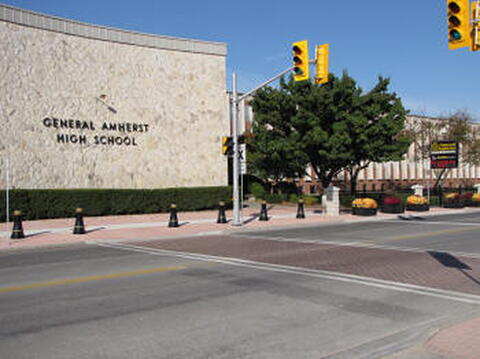
General Amherst High School

Image
Photo Credit
Richard Turcotte
Province
!4v1622733142944!6m8!1m7!1sKQiZPXouUiWBykKTyQXaAg!2m2!1d42.10648387871603!2d-83.11018776512093!3f252.13914296810464!4f-2.54297399888047!5f0.8142573470696306"
Body Content

This high school, General Amherst High School, is named after Jeffery Amherst, who was commander of the British Armed Forces in North America during the Seven Years War.

Jeffery Amherst was born in England in 1717 and joined the Grenadier Guards in 1735. Amherst saw action during the War of the Austrian Succession (1740-1748) and by the war’s end, was a Lieutenant-Colonel. With the outbreak of the Seven Years War in 1756, Amherst deployed to Europe but was sent to North America two years later in 1758. His fame came early as he successfully captured Louisbourg in June 1758 followed by the capture of Fort Ticonderoga on Lake Champlain, the following year. With the capture of Quebec City, by Wolf, in September 1759, Amherst advanced to Montreal the following year, capturing the city and thus ending French rule in North America. In recognition of this victory, Amherst was appointed Governor-General of British North America in September 1760, promoted to Major-General and appointed Knight of the Order of the Bath. He remained in North America where he led British operations in the West Indies. Returning to England, he was promoted Lieutenant-General in 1765. Amherst was raised to the peerage in 1776, as Baron Amherst of Holmesdale, was promoted to full general and appointed Commander-in-Chief of the Forces in 1778 but resigned in 1782. In 1788 he was created Baron Amherst of Montreal and called back to service in 1793. He was promoted to Field Marshall in 1796 but died a year later.

City
Amherstburg
Country
Type Description
Building; school
Memorial CF Legacy ID
8928
City/Municipality
Kingsville
Memorial Number
35020-029
Type
Address
150 Division Street South
Location
Royal Canadian Legion, Branch 188
in Canada
Yes
GPS Coordinates
42.0328691, -82.7399857
Inscription

[plaque/plaque]

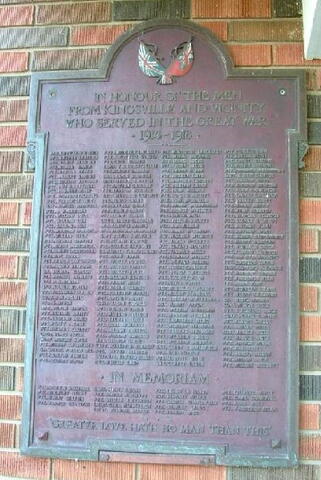
IN HONOUR OF THE MEN
FROM KINGSVILLE AND VICINITY
WHO SERVED IN THE GREAT WAR
1914 - 1918

(a list of names follows, but the wording is not clear in the photo/une liste de noms suit, mais le texte n’est pas clair sur la photo.)

IN MEMORIAM

(a list of names follows, but the wording is not clear in the photo/une liste de noms suit, mais le texte n’est pas clair sur la photo)

"GREATER LOVE HATH NO MAN THAN THIS"

Image
Photo Credit
Kim & Kevin Wilkinson
Caption
front
War or Conflict Term
Province
!4v1633696435156!6m8!1m7!1s16R30HzLPiLYzQcQzgKRHw!2m2!1d42.03286906984268!2d-82.7399857291275!3f99.98794956051299!4f2.165620498187195!5f3.325193203789971"
Body Content

Needs further research

City
Kingsville
Country
Type Description
Plaque
Memorial CF Legacy ID
7338
City/Municipality
Harrow
Memorial Number
35020-028
Type
Address
37 McAffee Street
Location
On the facade of the Royal Canadian Legion, Branch 338
in Canada
Yes
GPS Coordinates
42.0345813, -82.9177279
Inscription

needs further research/recherche incomplète

Image
Photo Credit
D. Rayner
Caption
front view
War or Conflict Term
Province
!4v1625846545778!6m8!1m7!1sNGZXf96skVkQv5infYRXtA!2m2!1d42.03458127093944!2d-82.91772792919421!3f295.69881646130716!4f2.500059475219828!5f2.299968626952992"
Body Content

The two plaques located on the front of the Royal Canadian Legion Branch 338 building list the names of local men who died in the First and Second World Wars. They were erected by Len Wride in the late 1940's.

City
Harrow
Country
Type Description
Two plaques
Memorial CF Legacy ID
5438
City/Municipality
Windsor
Memorial Number
35020-027
Type
Address
Riverside Drive and Pillette Road
Location
Rheaume Park
in Canada
Yes
GPS Coordinates
42.3287354, -82.9809647
Inscription

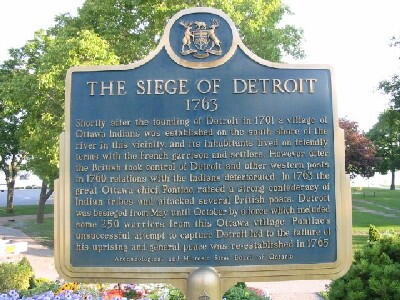
THE SIEGE OF DETROIT
1763
Shortly after the founding of Detroit in 1701 a village of
Ottawa Indians was established on the south shore of the
river in this vicinity, and its inhabitants lived on friendly
terms with the French garrison and settlers. However, after
the British took control of Detroit and other western posts
in 1760, relations with the Indians deteriorated. In 1763 the
great Ottawa chief, Pontiac, raised a strong confederacy of
Indian tribes and attacked several British posts. Detroit
was besieged from May until October by a force which included
some 250 warriors from this Ottawa village. Pontiac's
unsuccessful attempt to capture Detroit led to the failure of
his uprising and general peace was re-established in 1765.

Archaeological and Historic Sites Board of Ontario

Image
Photo Credit
Ontario Plaques
Caption
front
Province
!4v1622656650770!6m8!1m7!1sCAoSLEFGMVFpcE9rSDZKNURkdHJ6RU9ndmV6TDNERTQzeF92clZkWE56bzR4b2Vs!2m2!1d42.3287354310436!2d-82.98096473296197!3f345.59768667582114!4f0.08213535163368135!5f0.7820865974627469
Body Content

The Siege of Detroit Plaque was erected in 1963.

City
Windsor
Country
Type Description
Plaque
Memorial CF Legacy ID
4543
City/Municipality
Windsor
Memorial Number
35020-026
Type
Address
254 Pitt Street West
Location
On the grounds of the Hiram Walker Historical Museum.
in Canada
Yes
GPS Coordinates
42.3182623, -83.0425052
Inscription

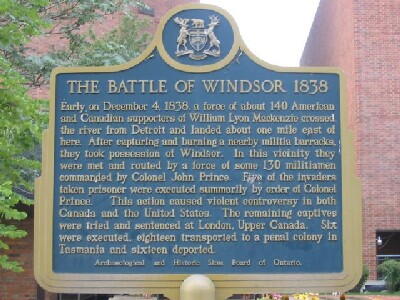
THE BATTLE OF WINDSOR 1838
Early on December 4, 1838, a force of about 140 American
and Canadian supporters of William Lyon Mackenzie crossed
the river from Detroit and landed about one mile east of
here. After capturing and burning a nearby militia barracks,
they took possession of Windsor. In this vicinity they
were met and routed by a force of some 130 militiamen
commanded by Colonel John Prince. Four of the invaders
taken prisoner were executed summarily by order of Colonel
Prince. This action caused violent controversy in both
Canada and the United States. The remaining captives
were tried and sentenced at London, Upper Canada. Six
were executed, eighteen transported to a penal colony in
Tasmania and sixteen deported.

Archaeological and Historic Sites Board of Ontario

Image
Photo Credit
(www.ontarioplaques.com)
Caption
front
Province
!4v1622656903989!6m8!1m7!1s3BCFNczj5vn_7bMKm62dTQ!2m2!1d42.31826230167156!2d-83.04250520442048!3f340.45626252464456!4f-4.048126464041857!5f3.325193203789971"
Body Content

This plaque was erected in 1966.

City
Windsor
Country
Type Description
Provincial Military Plaque
Memorial CF Legacy ID
4544