Other

City/Municipality
Toronto
Memorial Number
35090-102
Type
Address
2690 Eglinton Avenue West
Location
York Memorial Collegiate Institute
in Canada
Yes
GPS Coordinates
43.690376181085, -79.476149438745
Image
Photo Credit
www.tdsb.on.ca
Caption
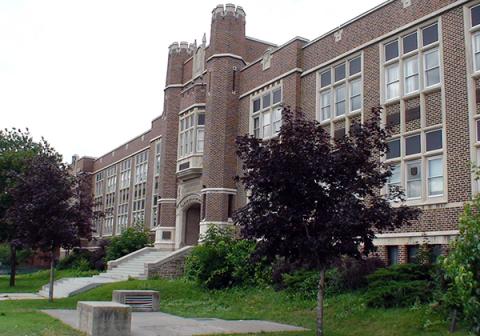
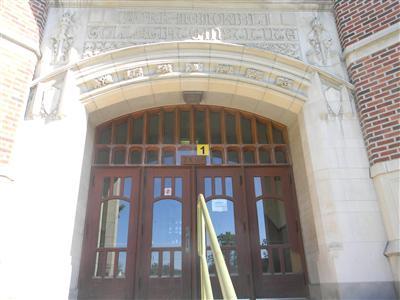
York Memorial Collegiate Institute
1 of 5 images
Image
Photo Credit
schoolweb.tdsb.on.ca
Caption
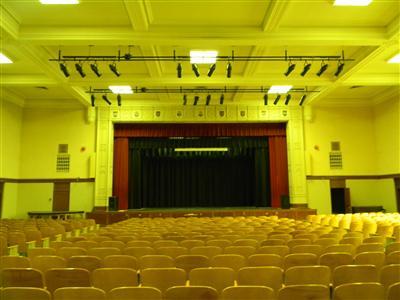
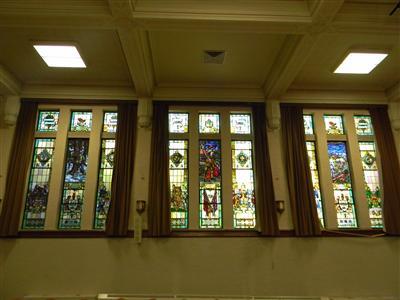
York Memorial Collegiate Institute Auditorium
1 of 5 images
Image
Photo Credit
schoolweb.tdsb.on.ca
Caption
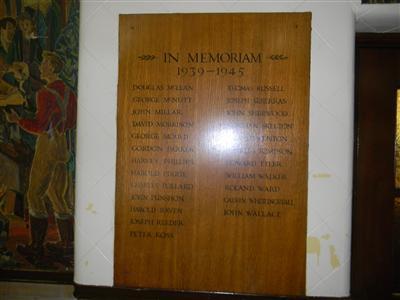
York Memorial Collegiate Institute Honour Roll
1 of 5 images
Image
Photo Credit
schoolweb.tdsb.on.ca
Caption
York Memorial Collegiate Institute Stained glass
1 of 5 images
Image
Photo Credit
schoolweb.tdsb.on.ca
Caption
York Memorial Collegiate entrance
1 of 5 images
Province
!4v1623250235861!6m8!1m7!1sPSBt3Dxrvx8HoVM-1k2Xhg!2m2!1d43.68982961900166!2d-79.47616762263225!3f2.073894810400846!4f10.001323389309434!5f0.7820865974627469"
Body Content

The whole school is a memorial to the York citizens who died in the Great War. Built of Don Valley brick and smooth faded stone. The towers on either side of the main entrance have a military appearance. The terraced steps lead to a broad landing, followed by 11 steps symbolizing the 11th hour; the 11th day; the11th month when peace was declared after World War I. Four solid oak and plate-glass entrance doors. The school name is carved in script over the main entrance. Other carved symbols include torches of remembrance, shields of honour, grapes, acorns, oak leaves, pine cones, and ferns. There are four World War II memorials to the dead in the main hall: two oak panels of names; two framed sets of individual photos. There is also a memorial to a student who died while still attending the school, and a photo and copy of the citation of a former York Memorial student awarded the Distinguished Flying Cross. Names of the dead are read at Remembrance Day services. Inside the auditorium are stained-glass windows, including one of the World War I battle of Ypres; the other of the death of Wolfe in the Battle of the Plains of Abraham, 1759. The inscription reads “For God and country.”
 

City
Toronto
Country
Type Description
Building
Photo Credit
Victoria Edwards
Memorial CF Legacy ID
10390
City/Municipality
Toronto
Memorial Number
35090-101
Type
Address
240 Roncesvalles Avenue
Location
Roncesvalles United Church
in Canada
Yes
GPS Coordinates
43.6455787, -79.4487535
Inscription

(list of names)

needs further research/recherche incomplète


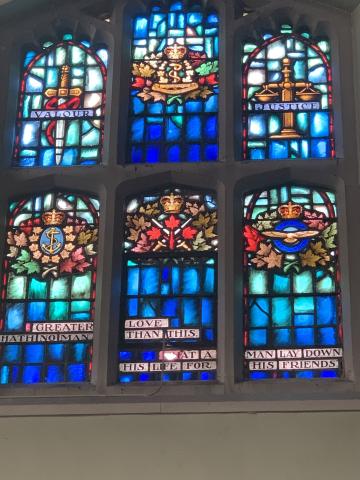
VALOUR     JUSTICE

"GREATER LOVE
HATH NO MAN THAT THIS
THAT A MAN LAY DOWN
HIS LIFE FOR HIS FRIENDS."


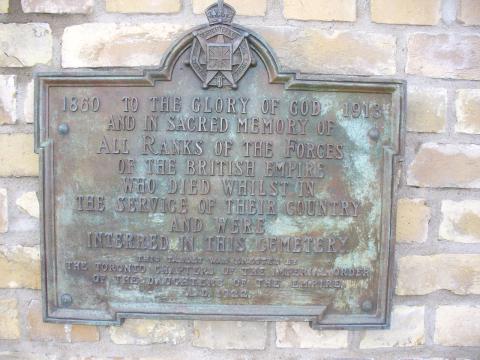
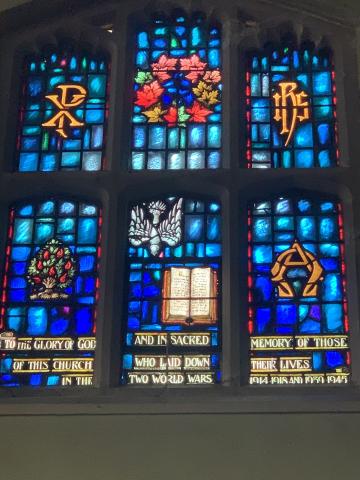
TO THE GLORY OF GOD AND IN SACRED MEMORY OF THOSE
OF THIS CHURCH WHO LAID DOWN THEIR LIVES
IN THE TWO WORLD WARDS 1914-1918 AND 1939-1945

Image
Caption
Symbols of Valour and Justice, crests of the Navy, Army, Airforce and Medical Service Corps.
1 of 4 images
Image
Caption
Greek letters X P, burning bush, letters I.H.S., descending dove, open Bible, Alpha and Omega.
1 of 4 images
Image
Caption
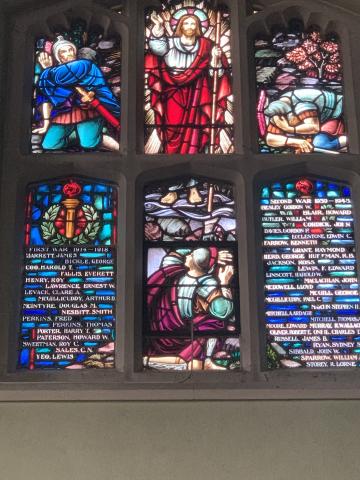
Risen Christ, Roman soldier, Torches of Peace.
1 of 4 images
Image
Caption
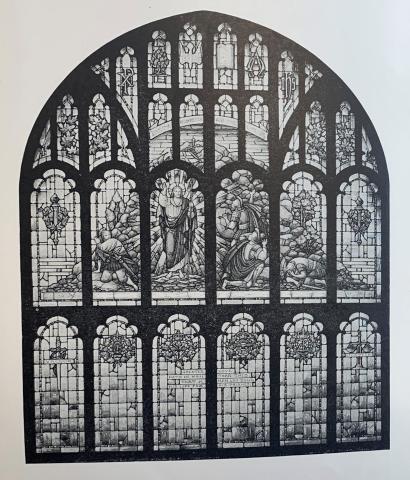
Original War Memorial Window as constructed in Howard Park United Church.
1 of 4 images
War or Conflict Term
Province
!4v1687518957587!6m8!1m7!1sfSKkkwFXYbJmeMVXa6S8yA!2m2!1d43.64557866662036!2d-79.44875345989183!3f254.09748550201613!4f10.788895392355755!5f0.7820865974627469
Body Content

A stained glass window honouring Howard Park United Church parishioners who gave their lives in both World Wars was donated by the War Memorial Committee and unveiled on November 6, 1960. The window was manufactured by Robert McCausland Stained Glass Co. Limited.

The theme of the window is The Resurrection, the triumph of life over death, truth over falsehood, love over hate. In the center is the Risen Christ standing in front of the tomb, symbolized by the mound of rocks in the background. On either side are Roman soldiers in dismay as they behold Christ. On the outside panels are Torches of Peace as found on the Canadian National Vimy Memorial. The names of those who made the supreme sacrifice in the war are inscribed under the torches. Above and on either side are garlands of maple leaves with the inscription in between - "I am the Resurrection and the Life".

At the top of the window, the two Greek letters X P, signify Christ. Next is the burning bush, which is the emblem of the former Presbyterian Church. The descending dove is the emblem of the Methodist Church, signifying the Holy Spirit. The open Bible is the symbol used by the Congregational Church. The Alpha and Omega, the beginning and the ending, signify God. The I.H.S. stands for the Latin words "Iesus Hormonorum Salvitor" which translates to Jesus the Saviour of Men.  

At the bottom on the outside panels are the symbols of Valour and Justice. In between, from left to right, are the crests of the Navy, Army, Airforce and Medical Service Corps.

In 1910, the Howard Park Methodist Church moved to a new, partially finished building located at the corner of Sunnyside Avenue and Marmaduke Avenue. In 1925, the church became Howard Park United Church. The congregation remained at this location until 1969, at which time Howard Park united with Emmanuel United Church to form Emmanuel-Howard Park United Church in the Emmanuel building at 240 Roncesvalles Avenue.

The War Memorial Window at Sunnyside Avenue and Marmaduke Avenue was moved to the new building in 1970 by Robert McCausland Limited, Toronto. Panes from the one large stained glass window were made into three smaller windows. In January 2016, the church was renamed Roncesvalles United Church. 

City
Toronto
Country
Type Description
Stained glass window
Photo Credit
Roncesvalles United Church
Memorial CF Legacy ID
10388
City/Municipality
Toronto
Memorial Number
35090-100
Type
Address
100 Garrison Road
Location
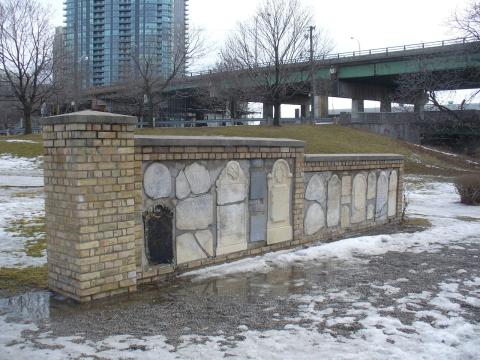
Strachan Avenue Military Burial Ground
in Canada
Yes
GPS Coordinates
43.6378791, -79.4082258
Inscription

[left wall/mur de gauche]

needs further research

(plaque)

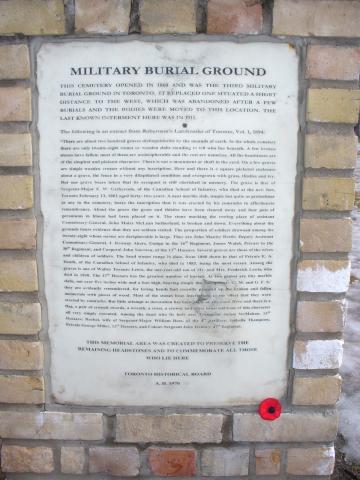
MILITARY BURIAL GROUND

THIS CEMETERY OPENED IN 1860 AND WAS THE THIRD MILITARY BURIAL GROUND IN TORONTO. IT REPLACED ONE SITUATED A SHORT DISTANCE TO THE WEST, WHICH WAS ABANDONED AFTER A FEW BURIALS AND THE BODIES WERE MOVED TO THIS LOCATION. THE LAST KNOWN INTERMENT HERE WAS IN 1911.

The following is an extract from Robertson's Landmarks of Toronto, Vol. 1, 1894:

There are about two hundred graves distinguishable by the mounds of earth. In the whole cemetery there are only twenty-eight stones or wooden slabs standing to tell who lies beneath. A few broken stories have fallen; most of them are indecipherable and the rest are nameless. All the headstones are of the simplest and plainest character. There is not a monument or shaft in the yard. On a few graves are simple wooden crosses without any inscription. Here and there is a square picketed enclosure about a grave, the fence in a very dilapidated condition and overgrown with grass, thistles and ivy. But one grave bears token that its occupant is still cherished in memory. The grave is that of Sergeant-Major F.W. Gathercole, of the Canadian School of Infantry, who died at the new fort, Toronto, February 13, 1883, aged forty-two years. A neat marble slab, simple but quite as pretentious as any in the cemetery, bears the inscription that it was erected by his comrades in affectionate remembrance. About the grave the grass and thistles have been cleared away, and four pots of geraniums in bloom had been placed on it. The stone marking the resting place of assistant Commissary-General, John Moirs McLean Sutherland, is broken and down. Everything about the grounds bears evidence that they are seldom visited. The proportion of soldiers drowned among the twenty-eight whose names are decipherable is large. They are John Manley Rattle, Deputy Assistant Commissary-General, J. Ramsey Akers, Ensign in the 16th Regiment, James Walsh, Private in the 30th Regiment, and Corporal John Smeeton, of the 13th Hussars. Several graves are those of the wives and children of soldiers. The head stones range in date, from 1860 down to that of Private E. A. Heath, of the Canadian School of Infantry, who died in 1885, being the most recent. Among the graves is one of Walter Toronto Lewis, the one year old son of Mr. and Mrs. Frederick Lewis, who died in 1868. The 13th Hussars has the greatest number of burials. At two graves are tiny marble slabs, not over five inches wide and a foot high, bearing simply the inscriptions: "G. M. and G. F. S.". They are evidently remembered, for loving hands had recently propped up the broken and fallen memorials with pieces of wood. Most of the stones bear inscriptions to the effect that they were erected by comrades. But little attempt at decoration has been made on the slabs. Here and there is a flag, a pair of crossed swords, a wreath, a cross, a crown, and other usual emblems of this character all very simply executed. Among the dead who lie here are: Trumpeter James McMahon, 13th Hassars; Rachel, wife of Sergeant-Major William Ross, of the 4th Artillery; Isabella Thompson, Private George Miller, 13th Hussars, and Colour-Sergeant John Hanney, 47th Regiment."

THIS MEMORIAL AREA WAS CREATED TO PRESERVE THE REMAINING HEADSTONES AND TO COMMEMORATE ALL THOSE WHO LIE HERE.

TORONTO HISTORICAL BOARD
A.D. 1970

[right wall/mur de droit]

needs further research

MILITARY
BURIAL-GROUND

Image
Caption
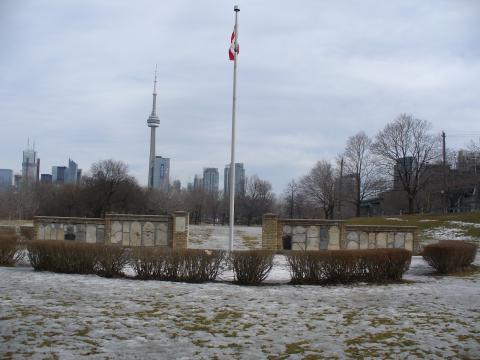
Garrison Common Memorial
1 of 5 images
Image
Caption
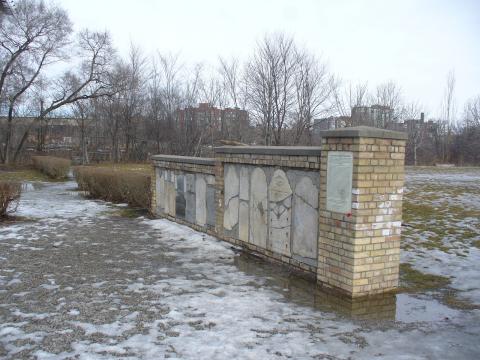
left wall - front
1 of 5 images
Image
Caption
left wall - back
1 of 5 images
Image
Caption
plaque
1 of 5 images
Image
Caption
plaque
1 of 5 images
Province
!4v1623255393660!6m8!1m7!1sv2IW5tm9-5a6h0zlSVcv8w!2m2!1d43.63787459692964!2d-79.40821362248715!3f299.74633620458!4f1.1535958380701175!5f3.325193203789971"
Body Content

A memorial wall of headstones to commemorate soldiers, their wives and children.

City
Toronto
Country
Type Description
Wall
Photo Credit
Tim Laye, Ontario War Memorials
Memorial CF Legacy ID
10371
City/Municipality
Toronto
Memorial Number
35090-099
Type
Address
361 Danforth Avenue
Location
St Barnabas, Chester Anglican Church
in Canada
Yes
GPS Coordinates
43.6774333, -79.3526801
Image
Photo Credit
St Barnabas Church
Caption
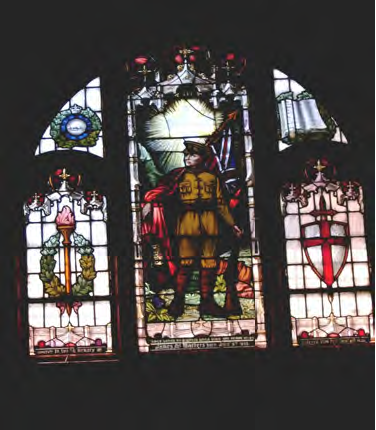
Sapper James McWatters Great War memorial windows
Province
!4v1623255817027!6m8!1m7!1s07XF5bR7sdXpWZiW4ivdxw!2m2!1d43.67740645021792!2d-79.35264711008529!3f150.2274932433388!4f14.64558542943034!5f0.7820865974627469"
Body Content

The Great War memorial window at St. Barnabas, Chester Anglican Church was created by Toronto's Luxfer studio. It was dedicated to parishioner Sapper James McWatters, Canadian Engineers who was the son of Sarah Jane Gordon McWatters and William McWatters. The window depicts a Great War Canadian soldier.

City
Toronto
Country
Type Description
Stained glass window
Memorial CF Legacy ID
10362
City/Municipality
Toronto
Memorial Number
35090-098
Type
Address
Needs Research
Location
Canadian Corps Association Legion
in Canada
Yes
GPS Coordinates
0, 0
Image
Photo Credit
Elizabeth Connors
Caption
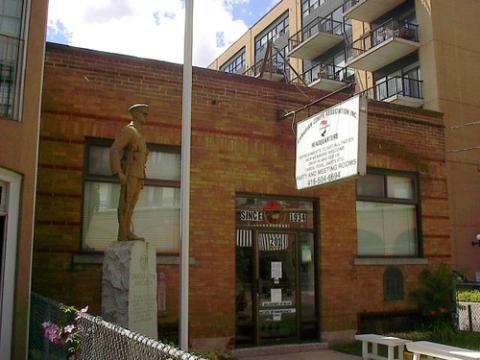
Canadian Corps Memorial in front of the Canadian Corps legion hall
Province
Body Content

J. Lisney Banks (Canadian 1850-1934) sculpted the Canadian Corps Memorial of bronze and granite for the Canadian Corps Association. The sculpture was erected at 201 Niagara St, in front of the Canadian Corps legion hall in the Bathurst and King St. West neighbourhood.

City
Toronto
Country
Type Description
Sculpture
Memorial CF Legacy ID
10361
City/Municipality
Toronto
Memorial Number
35090-097
Type
Address
375 Mt Pleasant Road
Location
Mount Pleasant Cemetery
in Canada
Yes
GPS Coordinates
43.6953388, -79.3852832
Inscription

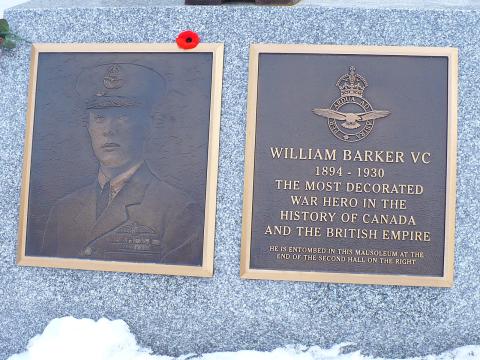
WILLIAM BARKER VC
1894 - 1930
THE MOST DECORATED
WAR HERO IN THE
HISTORY OF CANADA
AND THE BRITISH EMPIRE

HE IS ENTOMBED IN THIS MAUSOLEUM AT THE
END OF THE SECOND HALL ON THE RIGHT

Image
Caption
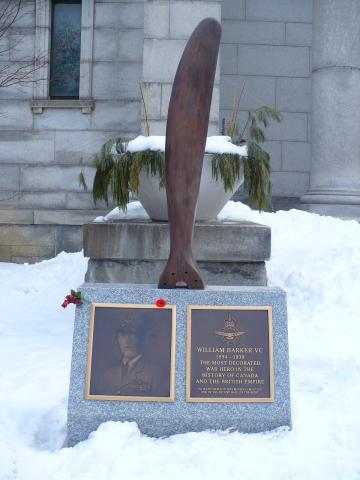
William Barker VC Memorial
1 of 2 images
Image
Caption
inscription
1 of 2 images
Province
!4v1623257429115!6m8!1m7!1sSKhKPKfw-l_YwqJ6pvlgOg!2m2!1d43.6953455289061!2d-79.38528895090286!3f256.7122558439363!4f3.157734811460557!5f1.8155780870459268"
Body Content

needs further research

William George Barker was born in Dauphin, Manitoba on 3 November 1894. During the First World War, Barker enlisted as an infantryman, but later transferred to the Royal Flying Corps (from 1 April 1918, the Royal Air Force).

A superb fighter pilot, he was responsible for the destruction of 50 enemy aircraft.

On 27 October 1918, while flying alone over the Forêt de Mormal in France on his way back to England, Major Barker engaged successive formations of German aircraft. After shooting down an enemy two-seater, he was attacked by a fighter and suffered a wound in his thigh. Barker then found himself surrounded by enemy fighters and was again severely wounded. Nevertheless, despite his wounds, he succeeded in bringing down three more German aircraft before crashing behind his own lines. For his conduct on this occasion, Major Barker was awarded the Victoria Cross.

Barker was killed in a flying accident at Rockcliffe airport, near Ottawa, on 12 March 1930. In addition to the Victoria Cross, for his wartime service Barker received the Distinguished Service Order with one bar, and the Military Cross with two bars.

City
Toronto
Country
Type Description
Slab, propeller
Photo Credit
Tim Laye, Ontario War Memorials
Memorial CF Legacy ID
10334
City/Municipality
Toronto
Memorial Number
35090-095
Type
Address
40 Orchard View Boulevard
Location
IODE Canada
in Canada
Yes
GPS Coordinates
43.7079959, -79.3998541
Inscription


IODE Canada

SECOND WAR MEMORIAL POSTGRADUATE SCHOLARSHIP

Recipients from 1945-2021


FIRST WAR MEMORIAL POSTGRADUATE SCHOLARSHIP

Recipients 1920 - 1940


Image
Photo Credit
IODE Canada
Caption
War Memorial Doctoral Scholarship
Province
!4v1637949530366!6m8!1m7!1sBOSGw46zgjxL7SO1QjO-aw!2m2!1d43.70799592772818!2d-79.39985411199291!3f339.4974232037123!4f-1.672563164980886!5f0.7820865974627469
Body Content

The National Chapter of Canada Imperial Order Daughters of the Empire initiated War Memorial Doctoral Scholarships in 1918 to commemorate Canadians who sacrificed their lives for peace and freedom. Initially, bursaries were granted to children of men and women who lost their lives or who were permanently disabled while fighting for Canada. After the First World War ended, the National Chapter of Canada initiated a living memorial to 60,000 Canadians whose lives were sacrificed. This War Memorial, approved at the 1918 Annual Meeting in Montreal, provided bursaries for university studies in Canada.

A campaign to raise $500,000 began and by 1920 the first bursaries were awarded. Each province was assigned one award of $250 a year for four years (later increased to $300). In 1929, the War Memorial Fund of the Imperial Order Daughters of the Empire was enacted by special act (Bill 8) of the Legislative Assembly of the Province of Ontario. Both principal and interest of the Fund provided these bursaries until 1937. No awards were offered during the war years and bursaries ended in 1965. Scholarships based on academic excellence continued to be offered.

The War Memorial Post Graduate Scholarships began in 1921 for one college graduate from each province to spend one year at a British University. The value of a scholarship was $1,400 until 1930 when it was raised to $1,600. Post Graduate Scholarship used only the Fund’s income. No awards were offered during the war years and in 1946, the members established a Second War Memorial to honour the memory of forty some thousand men and women who lost their lives in defense of freedom. The Post Graduate Scholarships from the two War Memorials Funds were originally offered in specific fields of study.

Since the first scholarships were awarded in 1921, Imperial Order Daughters of the Empire War Memorial Scholars have made important contributions to Canada.

Imperial Order Daughters of the Empire was founded in 1900 by Margaret Polson Murray of Montreal who recognized a need for loyal support for Canadians departing to fight with the Empire forces in South Africa. The first chapter was formed in Fredericton, New Brunswick on January 15, 1900.

The next month in Montreal, the name Federation of the Daughters of the Empire was chosen. Primary chapters were formed across Canada, as were children’s (later called junior) chapters. In 1901, the head office moved to Toronto, the federation was incorporated as Imperial Order Daughters of the Empire and Children of the Empire Junior Branch. The name Imperial Order Daughters of the Empire was officially adopted in the ‘70’s. 

City
Toronto
Country
Type Description
Scholarship
Memorial CF Legacy ID
10715
City/Municipality
Toronto
Memorial Number
35090-094
Type
Address
33 Willcocks Street
Location
University of Toronto, Department of Forestry at the John H. Daniels Faculty of Architecture, Landscape and Design
in Canada
Yes
GPS Coordinates
43.6615184, -79.4004233
Inscription

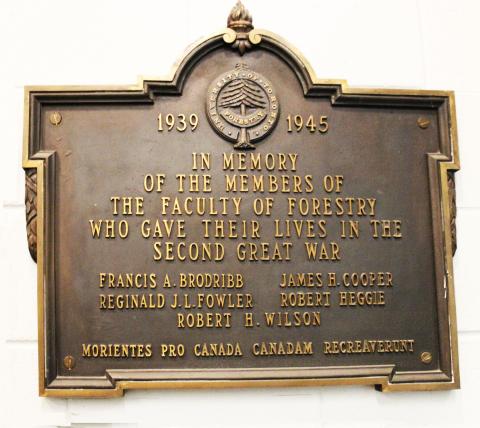
[plaque]
UNIVERSITY OF TORONTO
FORESTRY

1939 1945

IN MEMORY
OF THE MEMBERS OF
THE FACULTY OF FORESTRY
WHO GAVE THEIR LIVES IN THE
SECOND GREAT WAR

MORIENTES PRO CANADA CANADAM RECREAVERUNT

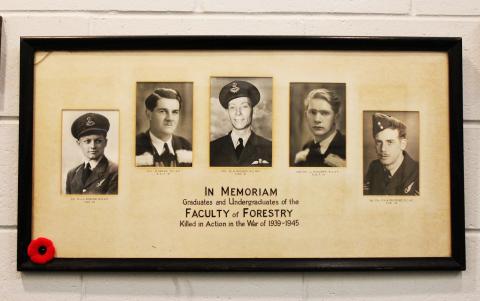
[framed composite photo]

F/O R.J.L. FOWLER, R.C.A.F.
Class ‘43

P/O R. HEGGIE, R.C.A.F.
B. Sc. F. ‘35

F/O R. H. WILSON, R.C.A.F.
Class ‘41

Sgt. Obs. J. H. COOPER, R.C.A.F.
B. Sc. F. ‘37

Sgt. Obs. F.A.B. BRODRIBB, R.C.A.F.
Class ‘43

IN MEMORIAM
Graduates and Undergraduates of the
FACULTY of FORESTRY
Killed in Action in the War of 1939-1945

Image
Photo Credit
Cody Gagnon, courtesy of Alumni Relations, University Advancement, University of Toronto
Caption
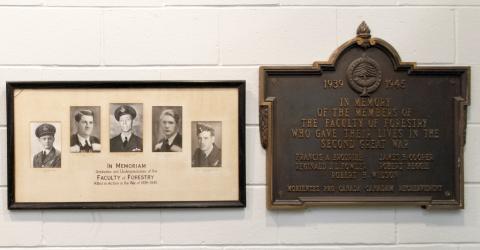
plaque and framed composite photo
1 of 4 images
Image
Photo Credit
Cody Gagnon, courtesy of Alumni Relations, University Advancement, University of Toronto
Caption
surroundings
1 of 4 images
Image
Photo Credit
Mana Sadeghipour, courtesy of Alumni Relations, University Advancement, University of Toronto
Caption
plaque
1 of 4 images
Image
Photo Credit
Mana Sadeghipour, courtesy of Alumni Relations, University Advancement, University of Toronto
Caption
framed composite photo
1 of 4 images
War or Conflict Term
Province
!4v1623766863920!6m8!1m7!1sSU6BrC8UQBNygoGz6-qyAg!2m2!1d43.66152016824179!2d-79.40041577459237!3f343.36446741551197!4f0.036129011818474055!5f0.4000000000000002
Body Content

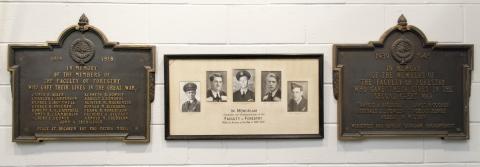
The Faculty of Forestry Second World War Plaque honours the Graduates and Undergraduates of the Faculty of Forestry who were killed in action. This plaque and framed composite photo, are part of a multi-component display in honour of the men from Forestry who died in the First and Second World Wars. Included with the display is a flag and the Faculty of Forestry First World War Plaque.

City
Toronto
Country
Type Description
Plaque - brass, photo
Memorial CF Legacy ID
10623
City/Municipality
Toronto
Memorial Number
35090-093
Type
Address
120 St George Street
Location
University of Toronto Archives
in Canada
Yes
GPS Coordinates
43.6642686, -79.3984859
Inscription

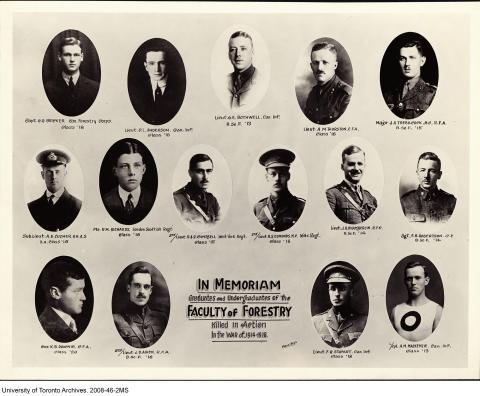
[framed print]

Capt. G.G. BRICKER Can. Forestry Corps.
Class '18

Lieut. C.L. ANDERSON, Can. Inf.
Class '18

Lieut. G.E. BOTHWELL, Can. Inf.
B.Sc.F. '13

Lieut. A.M. THURSTON, C.F.A.
Class '16

Major J.A. TREBILCOCK, M.C., R.F.A.
B.Sc.F. '15

Sub. Lieut. A.E. CUZNER, R.N.A.S.
B.A. Class '16

Pte. R.M. RICHARDS, London Scottish Regt.
Class '16

2nd/Lieut. R.A.R. CAMPBELL West York. Regt.
Class '15

2nd/Lieut. H.S. EDMONDS, M.C. Wilts. Regt.
Class '18

Lieut. J.R. CHAMBERLIN, R.F.C.
B.Sc.F. '14

Sgt. F.B. ROBERTSON, C.E.
B.Sc.F. '14

Gnr. K. B. DOWNIE, C.F.A.

Class '20

2nd/Lieut. J. D. AIKEN, R.F.A.

B.Sc.F. '16

Lieut. F. G. STUPART, Can. Inf.

Class '18

L/Cpl. A.M. MACKENZIE, Can. Inf.

Class '13

IN MEMORIAM
Graduates and Undergraduates of the
FACULTY of FORESTRY
Killed in Action
In the War of 1914-1918.

Park Bro's

Image
Photo Credit
University of Toronto Archives
Caption
Faculty of Forestry Graduates and Undergraduates killed in action.
War or Conflict Term
Province
!4v1635162769387!6m8!1m7!1sLIy6K6XWWAF2qR4fMyubjQ!2m2!1d43.66426863754096!2d-79.39848594700362!3f273.4793361224481!4f12.627899587632072!5f1.1120921434333884
Body Content

This print of Graduates and Undergraduates of the Faculty of Forestry that were killed during their service in the First World War, was given to the University of Toronto Archives by the Forestry department in 1972. The composite photo print portrays the men who are listed on the Faculty of Forestry First World War Plaque located at the University of Toronto, Department of Forestry at the John H. Daniels Faculty of Architecture, Landscape and Design.

Ronald MacKenzie Richards was the first student of the University to fall in the war. When the war was declared he was at home in England and enlisted in the London Scottish. He took part in the first battle of Ypres and was killed a few days later. (Source: University of Toronto Roll of Service 1914-1918).

City
Toronto
Country
Type Description
Print
Memorial CF Legacy ID
10622
City/Municipality
West Toronto
Memorial Number
35090-092
Type
Address
288 Humberside Avenue
Location
St. John's West Toronto Anglican Church
in Canada
Yes
GPS Coordinates
43.6603017, -79.4690084
Inscription

needs further research

Image
Caption
World Wars Tablet
War or Conflict Term
Province
!4v1622736237430!6m8!1m7!1srSwUUL12poeut9iEFpta2w!2m2!1d43.66031148255716!2d-79.46898131325766!3f336.0518429634248!4f10.225147773058154!5f0.7887658443118435"
Body Content

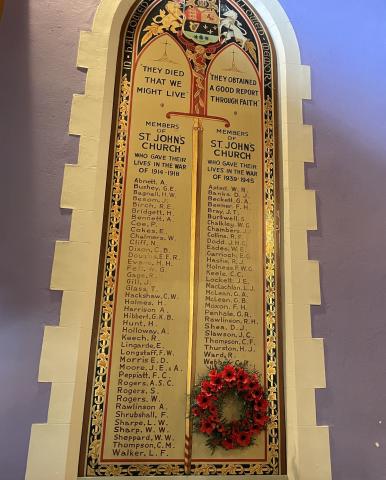
The World Wars Tablet was erected in 1963 to honour St. John's Anglican Church parishioners who gave their lives in the First and Second World Wars. A long sword is in the center of the tablet.

City
West Toronto
Country
Type Description
Tablet
Photo Credit
St. John's West Toronto Anglican Church
Memorial CF Legacy ID
10276