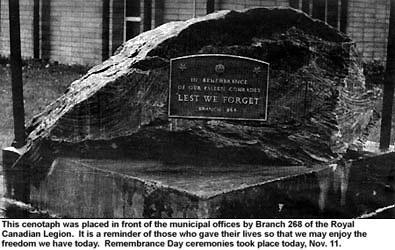
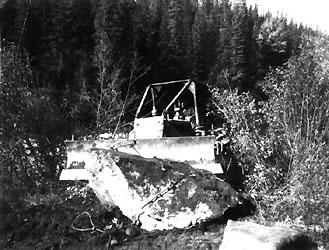
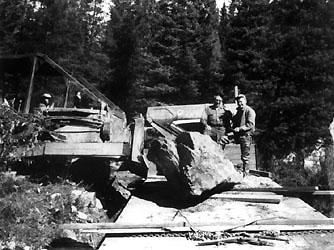
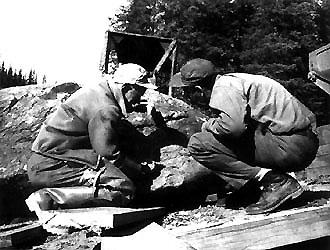
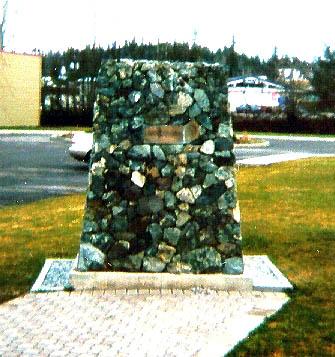
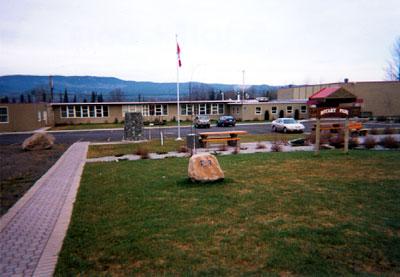
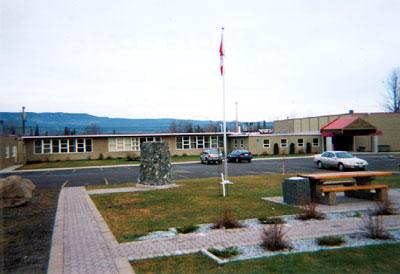
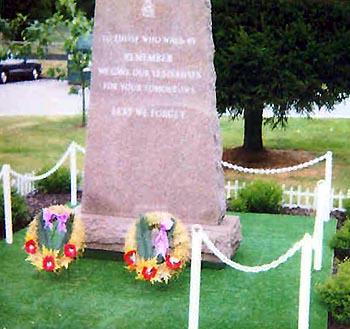
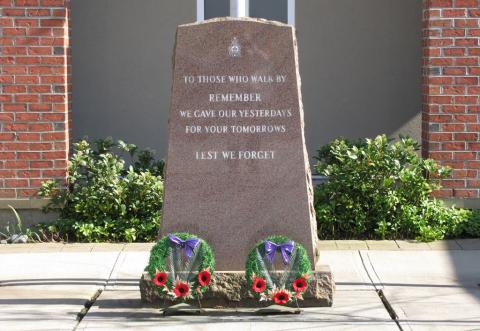
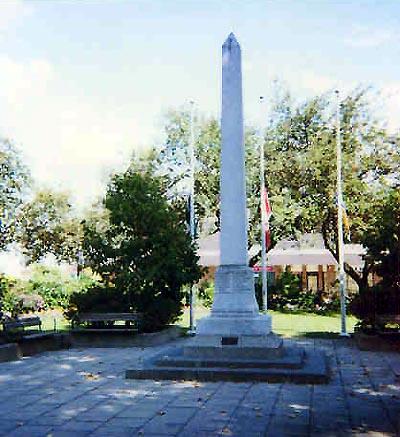
The Burns Lake Cenotaph was constructed in 1980 in memory of veterans of all the wars. In 1998 the monument was relocated to the Rotary Park, a Community beautification project.
Burns Lake Cenotaph
needs further research/recherche incomplète
My VAC Account
My VAC Accountneeds further research/recherche incomplète
The Burns Lake Cenotaph was constructed in 1980 in memory of veterans of all the wars. In 1998 the monument was relocated to the Rotary Park, a Community beautification project.
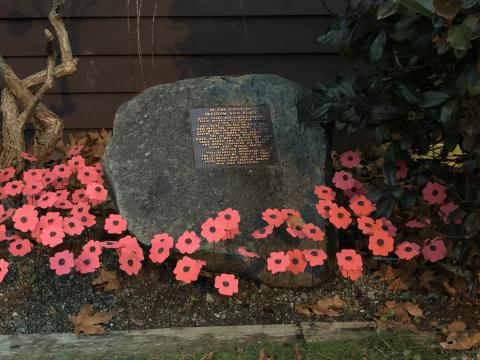
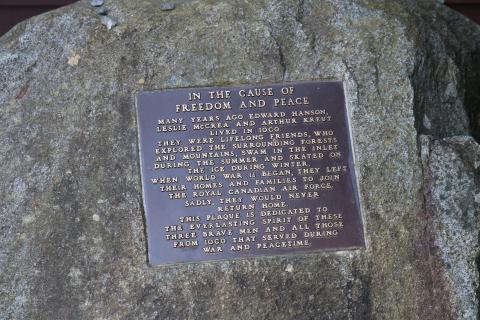
IN THE CAUSE OF FREEDOM AND PEACE
MANY YEARS AGO EDWARD HANSON,
LESLIE MCCREA AND ARTHUR KREUT
LIVED IN IOCO
THEY WERE LIFELONG FRIENDS, WHO
EXPLORED THE SURROUNDING FORESTS
AND MOUNTAINS, SWAM IN THE INLET
DURING THE SUMMER AND SKATED ON
THE ICE DURING WINTER.
WHEN WORLD WAR II BEGAN, THEY LEFT
THEIR HOMES AND FAMILIES TO JOIN
THE ROYAL CANADIAN AIR FORCE
SADLY, THEY WOULD NEVER
RETURN HOME.
THIS PLAQUE IS DEDICATED TO
THE EVERLASTING SPIRIT OF THESE
THREE BRAVE MEN AND ALL THOSE
FROM IOCO THAT SERVED DURING
WAR AND PEACETIME.
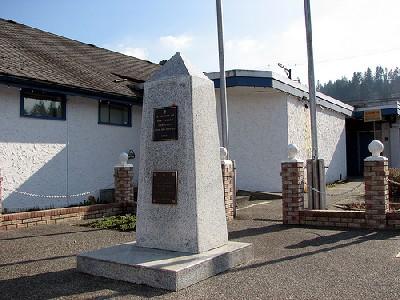
The Ioco War Memorial was dedicated by the City of Port Moody to all those from Ioco who served in war and peacetime, particularly Edward Hanson, Leslie McCrea, and Arthur Kreut, who were killed during the Second World War.
Guy Black, a local historian, asked the City of Port Moody to include this memorial as part of Port Moody's Historical Stone Marker and Storyboard Program, and he also wrote the inscription.
[plaque]
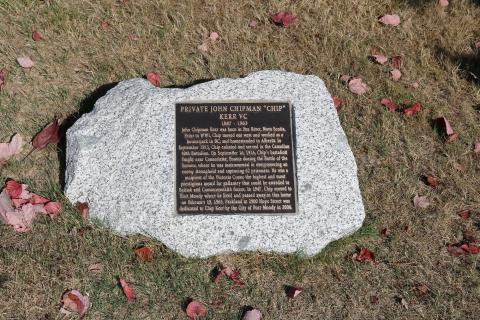
PRIVATE JOHN CHIPMAN "CHIP"
KERR VC
1887-1963
John Chipman Kerr was born in Fox River, Nova Scotia.
Prior to WWI, Chip moved out west and worked as a
lumberjack in BC, and homesteaded in Alberta. In
September 1915, Chip enlisted and served in the Canadian
49th Battalion. On September 16, 1916, Chip's battalion
fought near Courcelette, France during the Battle of the
Somme, where he was instrumental in overpowering an
enemy stronghold and capturing 62 prisoners. He was a
recipient of the Victoria Cross; the highest and most
prestigious award for gallantry that could be awarded to
British and Commonwealth forces. In 1947, Chip moved to
Port Moody where he lived and passed away int his home
on February 19, 1963. Parkland at 2900 Hope Street was
dedicated to Chip Kerr by the City of Port Moody in 2006.
The John Chipman Kerr Memorial was unveiled by the City of Port Moody in front of Private John Chipman Kerr VC's house "Sleepy Castle" on February 25, 2018. After having served during both the First and Second World Wars, Kerr moved to Port Moody in 1947 and would live in this house on Clarke Street until his death in 1963.
The Chip Kerr Park and Chip Kerr VC Memorial Auditorium were also dedicated to him.
The Chip Kerr VC Memorial Auditorium was dedicated by the Royal Canadian Legion Branch 119. On January 1, 2015, the hall was closed for new development.
The John Chipman Kerr Memorial and the Chip Kerr Park were also dedicated to him.
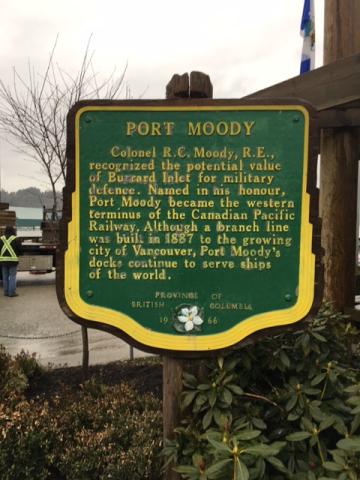
Port Moody, BC is named for Colonel Richard Clement Moody, Royal Engineers, who was appointed Chief Commissioner of Lands and Works and Lieutenant Governor of the new colony of British Columbia in 1858. Moody’s role was both to provide military support for the new colony and to carry out the major building projects that were necessary to keep up with a sudden growth in population and commerce – largely the result of the 1858 Gold Rush. Amongst the accomplishments of his sapper detachment contingent were the survey and construction of the Cariboo Wagon Road, exploring and planning the settlement of new towns in the BC mainland, and setting aside a military land reserve for what was to become Stanley Park. Port Moody was established at the end of a trail that connected New Westminster with Burrard Inlet to defend New Westminster from potential attack from the US. The town grew rapidly after 1859, following land grants to Moody’s Royal Engineers who settled there after the sapper detachment was disbanded in 1863. (Refer to memorial number 59029-002)
[front/devant]
TO THOSE WHO WALK BY
REMEMBER
WE GAVE OUR YESTERDAYS
FOR YOUR TOMORROWS
LEST WE FORGET
This memorial was erected by Royal Canadian Legion Branch No. 133.
(needs further research/recherche incomplète)
Needs further research
[side/côté]
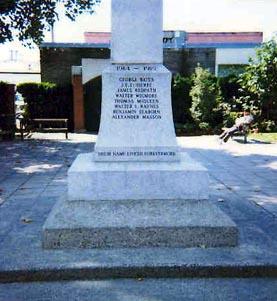
1914-1918
GEORGE BATES
J.E. ST. PIERRE
JAMES REDPATH
WALTER WIGMORE
THOMAS MCQUEEN
WALTER L. RAYNES
BENJAMIN SEABORN
ALEXANDER MASSON
"THEIR NAME LIVETH FOREVERMORE"
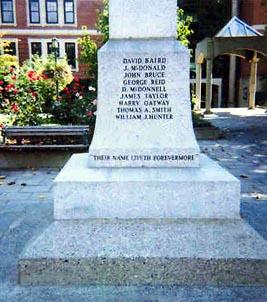
[side/côté]
DAVID BAIRD
J. MCDONALD
JOHN BRUCE
GEORGE REID
D. MCDONNELL
JAMES TAYLOR
HARRY OATWAY
THOMAS A. SMITH
WILLIAM J. HUNTER
"THEIR NAME LIVETH FOREVERMORE"
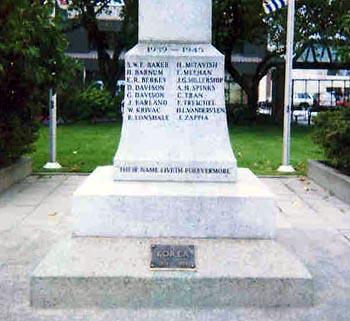
[side/côté]
1939-1945
S.W.F. BAKER
H. BARNUM
E.R. BERKEY
D. DAVISON
G. DAVISON
J. EARLAND
W. KRIVAC
R. LONSDALE
H. MCTAVISH
F. MEEHAN
J.G. MILLERSHIP
A.H. SPINKS
C. TRAN
F. TREICHEL
H.J. VANDERRVEEN
J. ZAPPIA
"THEIR NAME LIVETH FOREVERMORE"
KOREA
1950-1953
This memorial is dedicated to the veterans and local war dead of the First and Second World Wars and the Korean War.
[front/devant]
needs further research/recherche incomplète
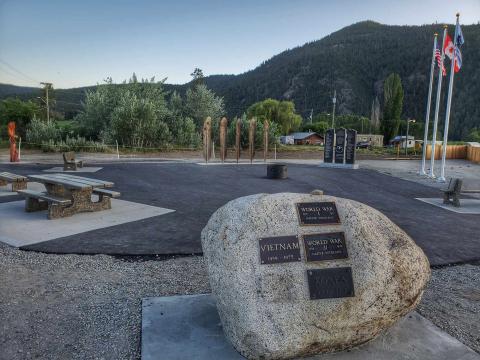
[large boulder]
(plaque)
WORLD WAR
I
1914 1918
NATIVE VETERANS
(plaque)
WORLD WAR
II
1939 1945
NATIVE VETERANS
(plaque)
KOREA
1950 1953
(plaque)
DEDICATED IN MEMORY OF
FIRST NATIONS VETERANS
WHO SERVED
IN THE ARMED FORCES.
NOVEMBER 11, 1994
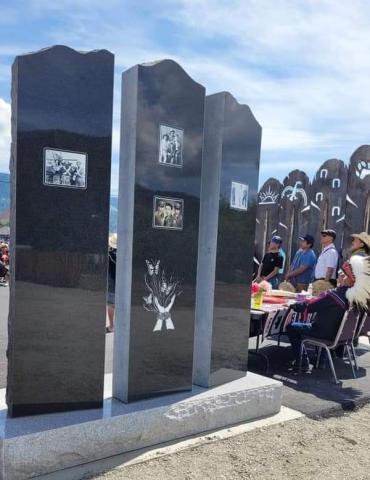
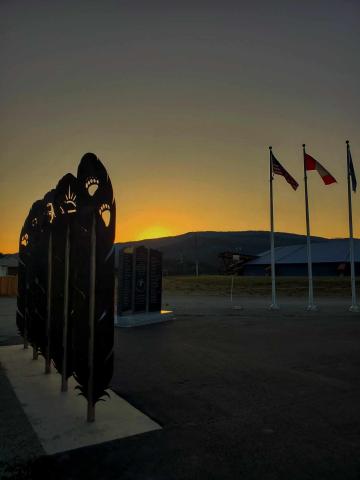
On 28 May 2023, the Nicola Valley First Nations Veterans Association unveiled the finished memorial at the Lower Nicola Indian Band Land (Nicola Mameet - Shulus). Prior to 2005, a group of Veterans and volunteers relocated a large boulder and placed four plaques representing the First World War, Second World War, Korean War, and Vietnam War. A tribute to the late Barney Stirling, the late Paddy Stirling, the late Don Moses, the late John F. Isaac, Percy Joe, Richard Jackson and many other Veterans and volunteers who ensured the First Nations Veterans were remembered, recognized, and respected. The Nicola Valley First Nations Veterans are honoured annually on Remembrance Day.
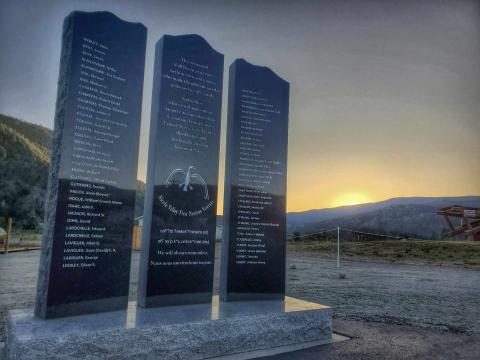
The original memorial is part of the new monument, which includes three pillars inscribed with the names of 66 First Nations Veterans which includes six who did not make it home and nineteen who recently received a military marker from the Last Post Fund. The back of the monument displays four photos of Veterans who served in either the First World War, Second World War, Vietnam War, or as peacekeepers and artwork, meant to embody freedom, created by a grade 8 Indigenous student from Princeton.
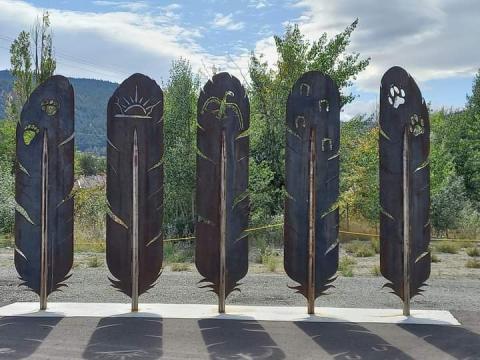
On the site, five steel feathers created by Syilx artist Clint George represent the five local First Nations, and a ceremonial fire pit honours and remembers children with the inscription "Every Child Matters".
This street was named by the Town of Princeton for the Royal Engineers or "Sappers".