Attention!
Cette vidéo est disponible en anglais seulement.
Description
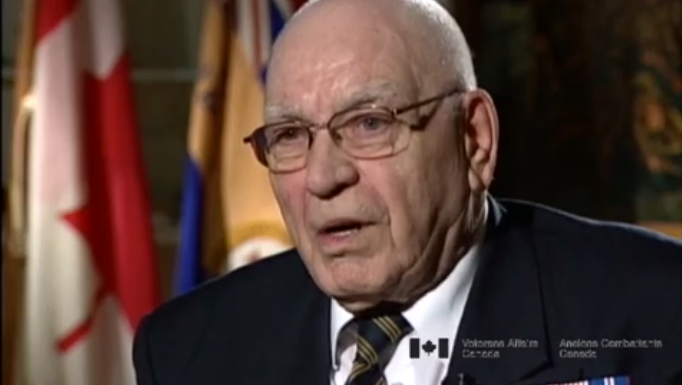
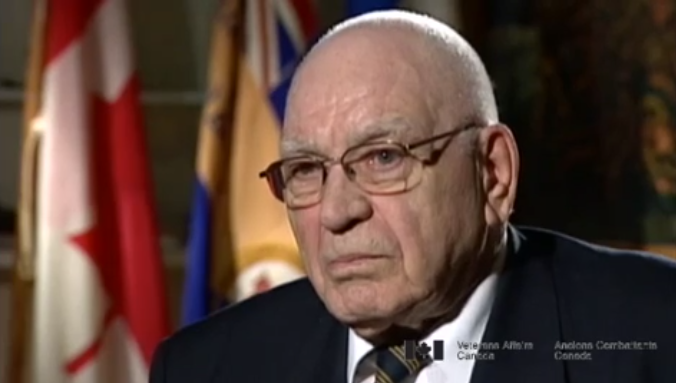
Mr. Pitcairn discusses the risk of gas attacks and compares the original flannel gas mask to the newer, more effective charcoal box filtered mask.
Transcription
We were never in a gas that came over in clouds. It was always shells, shell gas. We got quite used to them. They make a different sound when they’re coming over, and they make a different sound when they land on the ground. And we knew if they were close enough, whether to use our gas masks. We could not go anywhere when we were up at the front, never, never anywhere without gas masks. That was a very important thing. And we wore the gas masks when it was necessary, but a lot of the time it wasn’t necessary. And we had the latest type of gas mask. We had the two types of gas masks.The first one we had was like a flannel, a terrible thing, a wet piece of flannel with eyeglasses on it. We used to put it over our head. That was a messy thing. Now that was gone out and then we got a box one. And it was a box one, and inside was charcoal and there was a tube up through that you put over your face. And that was the better one. And that was the one we always, we carried it on our chest. When we went to sleep, we had it right beside us. And we always have, if we missed our gas, we immediately tried to find it, because it was very important if you got into gas. Now, we were often in gas that wasn’t bad enough. We didn’t put on our, yeah, but we often did put it on. Just … but we never had to use it during any of our … when we did the attacking. We never used our gas masks. I don’t remember using any of them, once we went into the open warfare.
Catégories
Gas Masks
Médium
Video
Propriétaire
Veterans Affairs Canada
Guerre ou mission
Première Guerre mondiale
Emplacement géographique
France
Personne interviewée
James Pitcairn
Branche
Armée
Unité ou navire
50th Battery
Military Rank
Private
Occupation
Artilleur
Durée
1:46