Attention!
Cette vidéo est disponible en anglais seulement.
Description
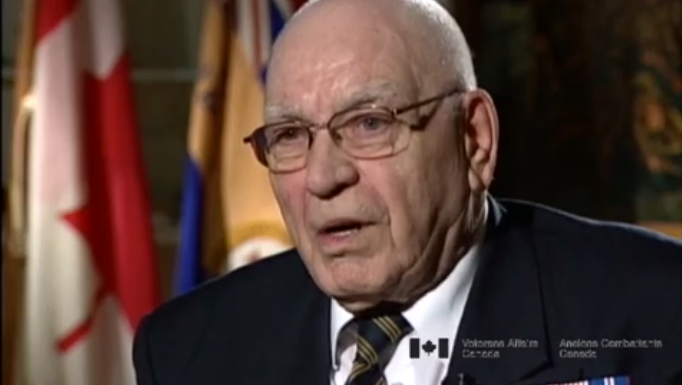
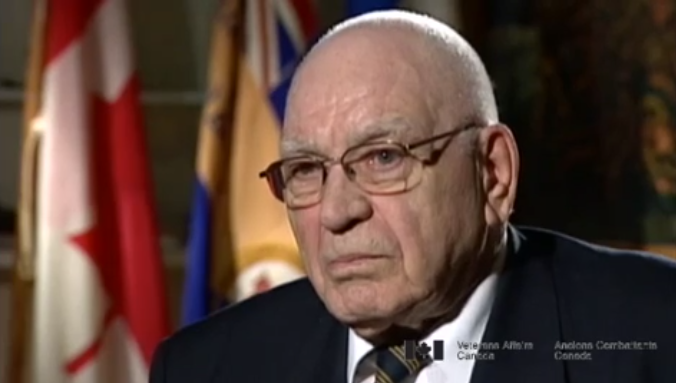
Mr. Enman recalls fighting into Holland, describing moving along the dykes and witnessing how Nazi sympathizers were being treated in Amsterdam. He then describes the crossing of the Rhine, and how they were cautious after the war ended, worried German troops may not be aware the war was over.
Transcription
Interviewer: Tell me about that campaign, liberating Holland.Well, it was a more of just a running battle. And a lot of places there, the Germans broke the dikes and flooded the area. Well, the only place you could travel was on top of the dikes, and it certainly cut off an awful lot of ways to travel. That’s the only way there was to travel and, of course, they kept any of those places where there was dikes, like that were travelling on, they kept them covered with fire all the time, artillery fire or something like that, all the time. So, they had it where it pretty well had to be a night move. But it was my experience in Holland, that’s what it was, was just from dike to dike. In Amsterdam, now, we were the first troops. The 1st division was the first troops that was in Amsterdam, and it was just getting through the city, that was all. It wasn’t the fighting or anything at all. It’s just … the people was just out … they were just … they plugged the streets that you couldn’t … they just stopped the convoy right up all together. That was one thing there in Amsterdam. The city there, that time. The people … the civilians was rounding up the ones that had patronized with the Germans. And they were cutting their hair and doing everything with them. Trimmed them right off, and they were chasing them around in the streets and everything like that.Interviewer: And you saw that? Oh, yeah.Interviewer: That must have been quite a sight for a young man from PEI.Yeah, but it just went along with the, you know, it was just their ... these people that had patronized with the Germans, they had no place for them in Holland. And there must have been an awful lot of them had an awful time afterwards, because there were some of them that couldn’t do anything else. They had to survive some way, and done most anything, same as any of us. We’d done most anything to survive.Interviewer: So you fellows fought your way through Holland to the Rhine. Tell me about the actual crossing the Rhine. That’s quite an event in the history of the world.Crossing over the Rhine? Well that’s all it was, was just that we crossed over on this bridge. There was no fighting. It was just that we had to cross over on...Interviewer: But you guys must have felt pretty special? Well yeah, it was all cleared out on the other side because we never hit one bit of opposition. It’s the only way it was to cross the Rhine River. That’s the only thing they had for a bridge. The fighting was over when we got there. As far as the fighting in Holland, from the time we got there, we were never into any. Just little skirmishes and stuff like that, was all that we ever had. And I guess, probably, it was probably days after the war was over before we realized that the war was over. When we got the word first, everybody just pretty near went crazy. But then, before we realized it was over, we were still on guard afterwards. After we got word the war was over, we were still on guard. But it was at least a week before we realized we could let things go.
Catégories
Fighting into Holland
Médium
Video
Propriétaire
Veterans Affairs Canada
Personne interviewée
Murdock William Enman
Branche
Armée
Unité ou navire
West Nova Scotia
Military Rank
Corporal
Occupation
Fantassin
Durée
4:01