Attention!
Cette vidéo est disponible en anglais seulement.
Description
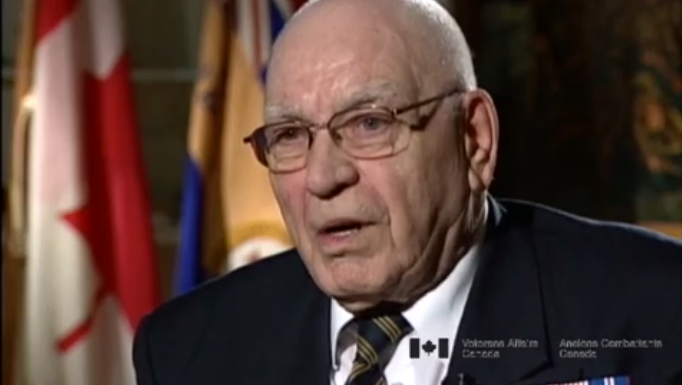
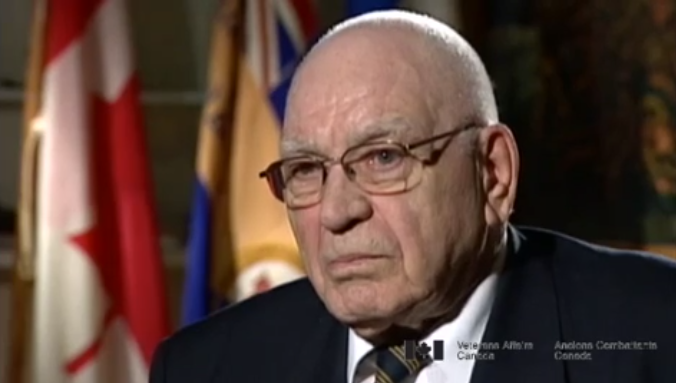
Mr. Kondra discusses some of the risks associated with bombers flying in proximity; mid-air collisions, bombs falling on aircraft flying at lower altitude, and even being fired on by other bomber crews.
Transcription
You couldn’t call it formation flying because formation flying can only be done in daylight and collisions did occur and a lot of losses were true collisions. But that was unavoidable and not only that, there were some aircraft that had bombs dropped on them because there was some aircraft that couldn’t attain the height that the Lancaster or the Halifax could. So there were planes that were damaged by our own bombs and not only that, there was a time when we almost got shot down by our own Lancaster where the rear-gunner mistook us for an enemy fighter or enemy aircraft. I was at my bomb aimer’s position up front when I saw an aircraft that I identified as a Lancaster ahead of us at night and he was doing some evasive action doing and finally when he, when we were lined up all of a sudden I saw a tracer just go beneath us and that was when he fired at us but we survived that one too.
Catégories
The Risk Of Formation Flying
Médium
Video
Propriétaire
Veterans Affairs Canada
Guerre ou mission
Seconde Guerre mondiale
Campagne
Europe du Nord-Ouest
Personne interviewée
William Kondra
Branche
Aviation
Unité ou navire
101<sup>e</sup> Escadron
Military Rank
Flying Officer
Occupation
Bomb Aimer
Durée
1:35