Attention!
Cette vidéo est disponible en anglais seulement.
Description
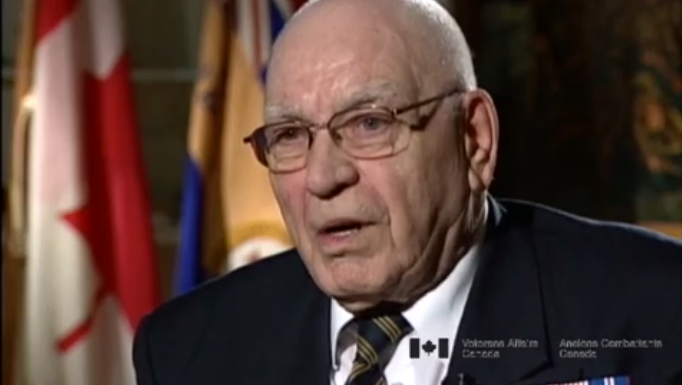
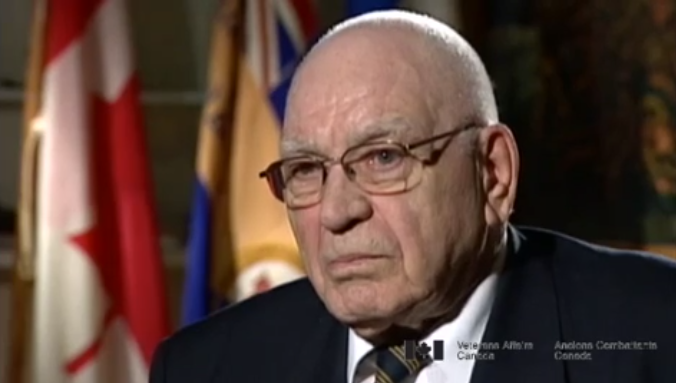
Mr. Leavey speaks about the Dakota recovery and remains of KN563 crew in Burma.
Transcription
The Burma recovery mission that I was on in 1997 where we recovered the remains of the six-man crew from KN563 Dakota that went down in Northern Burma during the war. That was emotional, I must say. For example, one of the artifacts that we dug up was the watch of Jimmy Cox who was one of the crew members and it said, it was engraved on there, “To Jim from Mom, Christmas 1943", so that was, you know, that was a bit of an emotional thing when we did that and we dug up several other things that obviously belonged to the crew and bones of the crew, and so on. And it was in the middle of the Burmese jungle, North of Mandalay and hard to get into but we managed with the help of the Burmese Army to get in there. And that was a joint DND-VAC operation and I was proud to have been on it and it was an honour to do that.
It took us about a year to plan it. I went back and forth to Thailand and Myanmar, former Burma, brought all our own equipment. We had a doctor, we had a dentist, forensic experts. We had a communications specialist. We had what I call a snake man who knew all about snakes. We buried the remains at Tokyan (sp) which was in Rangoon or Yangon they call it now formerly Rangoon and 29 members of the families came over - nephews, brothers, sisters, grandchildren, all that and we also had 28 Veterans who flew with them in the squadron at that time in Burma and it was quite emotional. All of them wanted to know what happened and we had to tell the story many times to different people.
Basically what happened is the aircraft hit monsoon, monsoon is a wall of water at about 7,500-8,000 feet and it sheared the port wing off. We found the wing two kilometres from the main site and, of course, it just thundered into the ground and it had about 2000 pounds of rice on it. They were delivering food to the forward troops and civilians. We found a lot of rotten burnt rice and a lot of artifacts. We brought back the prop and we brought back the round L, back to Canada and 135 other artifacts for museums and people across Canada. So it was quite the fascinating and emotional time because we were dealing with all of their buddies, all of their comrades that they flew with and we were also dealing with their families. We presented a watch to the son of the man, Cox who the inscribed watch which belonged to him. We also presented another one to a chap by the name of Kyle just outside of Ottawa. It was his brother, William Kyle. William Kyle’s watch is what started the whole thing. A hunter found William Kyle’s watch, took it to a cemetery, the cemetery guy handed it along to Veterans Affairs or the Commonwealth Grave service and they traced it as a Canadian and William Kyle was the co-pilot of KN563 so then we knew that he was there and we got the hunter to show us where it was, went in there and that’s how it started.
It took us about a year to plan it. I went back and forth to Thailand and Myanmar, former Burma, brought all our own equipment. We had a doctor, we had a dentist, forensic experts. We had a communications specialist. We had what I call a snake man who knew all about snakes. We buried the remains at Tokyan (sp) which was in Rangoon or Yangon they call it now formerly Rangoon and 29 members of the families came over - nephews, brothers, sisters, grandchildren, all that and we also had 28 Veterans who flew with them in the squadron at that time in Burma and it was quite emotional. All of them wanted to know what happened and we had to tell the story many times to different people.
Basically what happened is the aircraft hit monsoon, monsoon is a wall of water at about 7,500-8,000 feet and it sheared the port wing off. We found the wing two kilometres from the main site and, of course, it just thundered into the ground and it had about 2000 pounds of rice on it. They were delivering food to the forward troops and civilians. We found a lot of rotten burnt rice and a lot of artifacts. We brought back the prop and we brought back the round L, back to Canada and 135 other artifacts for museums and people across Canada. So it was quite the fascinating and emotional time because we were dealing with all of their buddies, all of their comrades that they flew with and we were also dealing with their families. We presented a watch to the son of the man, Cox who the inscribed watch which belonged to him. We also presented another one to a chap by the name of Kyle just outside of Ottawa. It was his brother, William Kyle. William Kyle’s watch is what started the whole thing. A hunter found William Kyle’s watch, took it to a cemetery, the cemetery guy handed it along to Veterans Affairs or the Commonwealth Grave service and they traced it as a Canadian and William Kyle was the co-pilot of KN563 so then we knew that he was there and we got the hunter to show us where it was, went in there and that’s how it started.
Catégories
Dakota C47 Recovery
Médium
Video
Propriétaire
Veterans Affirs Canada
Guerre ou mission
Forces armées canadiennes
Emplacement géographique
Canada
Personne interviewée
Bill Leavey
Branche
Armée
Military Rank
Lieutenant-colonel
Date d’enregistrement
Durée
5:01