
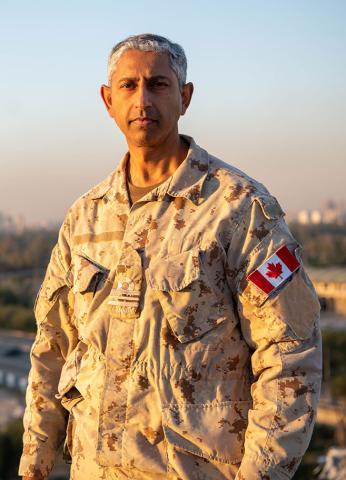

Joined
1999

Postings and deployments
- Maritime Forces Pacific
- NDHQ
- NORAD
- 2010 Winter Olympics
- 2010 G8/G20
- NATO - Iraq and Afghanistan
Serving Canada at home
When most Canadians picture the military, they think of far-away combat zones. Soldiers in desert fatigues, fighter jets soaring or warships patrolling foreign waters.
But for retired Public Affairs Officer Desmond James, some of his most intense and meaningful military service took place right here at home.
"Our military isn’t just about deployments overseas. We’re ever-present in Canada, even when people don’t realize it. From search and rescue to disaster response, we’re quietly watching over the country."
James grew up in Hamilton, Ontario and spent years stationed on Canada’s West Coast. For him, that presence was anything but quiet.
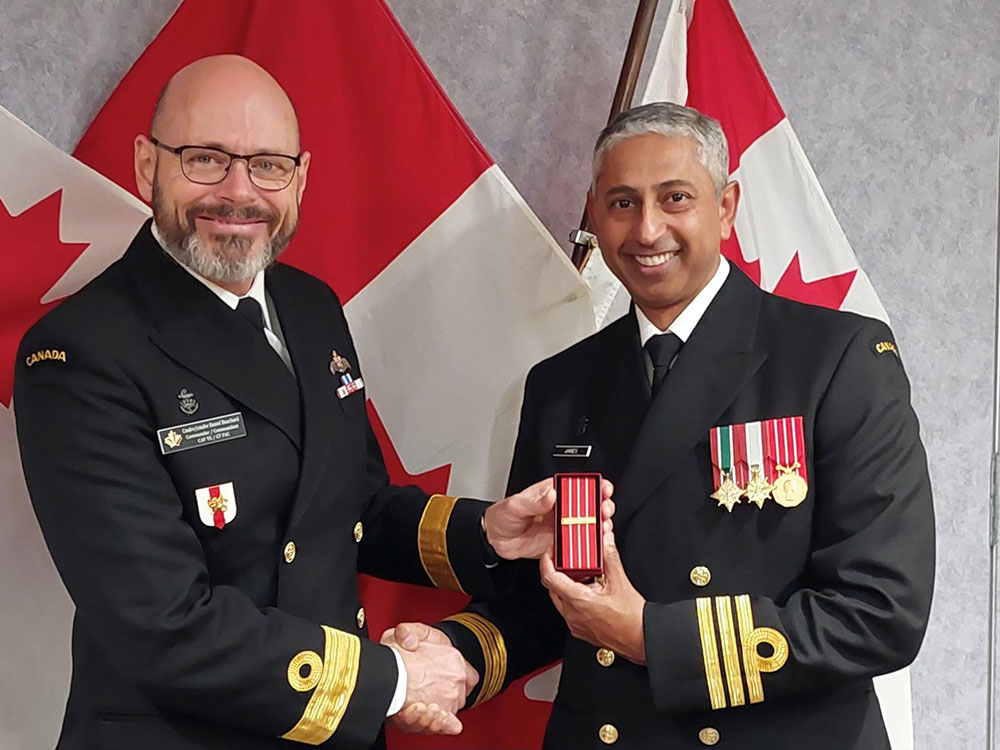
James receives his Canadian Forces Decoration with one clasp (CD1) at the Transition Centre in 2023.
Answering the call: Life on the West Coast
James spent four years working at the North American Aerospace Defense Command (NORAD) Headquarters in Colorado Springs. He returned to British Columbia in 2012 to serve as the Senior Public Affairs Officer with Maritime Forces Pacific.
"There was never a dull moment," he says. "One week we’d be dealing with a major earthquake response scenario. The next it might be a search and rescue mission or a ship collision. There was always something happening."
British Columbia’s rugged coastline and remote communities make it a hotspot for both natural disasters and maritime emergencies. As part of the Joint Rescue Coordination Centre (JRCC), the military works closely with the Coast Guard, local authorities and first responders. Together, they coordinate missions that can mean the difference between life and death.
James vividly recalls one incident in early September of 2015 involving an overdue fishing vessel, the MV Caledonian. The message came in around 10:00 p.m.
"The crewmember explained their boat had capsized at 3:30 p.m. He and the skipper had clung to the keel in the freezing ocean, losing track of their crew."
The JRCC immediately mobilized resources.
"After more than two hours on the open ocean, the Inshore Rescue Boat (IRB) arrived on scene. The crew eventually found one survivor, frantically waving his arms from the inside of a water-filled life raft. He was lucky. The conditions at sea were brutal for the IRB crew."
"The bodies of the others were recovered the next day," James said quietly. "It was tragic. The survivor was the only one wearing a life jacket. But what stuck with me was how quickly the system worked. Even in the most remote corners of this country, we were there. Canadians might not see it, but we’re watching over them."
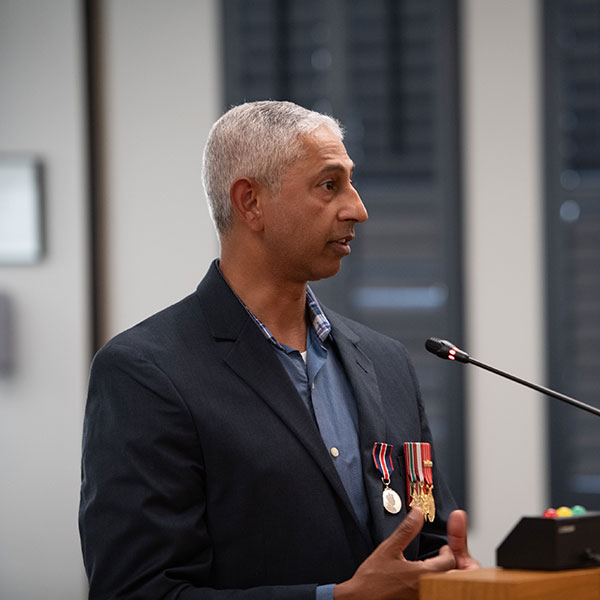
James receives the King Charles III Coronation Medal for his work to raise awareness of PTSD and his volunteerism.
The Leviathan II disaster
Not every mission has a happy ending, and some haunt the people involved for years. One of the most challenging operations during James’ time on the West Coast was the Leviathan II tragedy, a whale-watching vessel that capsized off Tofino in October 2015 not long after the MV Caledonian sinking.
"I was in the operations center, on the phone with the media in one ear," he recalls. "In the other ear, I was hearing rescuers describe pulling bodies out of the water. It was one of those moments where you just keep going because you have to."
For 72 hours, James and his team coordinated nonstop updates to the public. They balanced the urgency of the rescue with the need to respect the victims and their families.
"It’s incredibly emotional work," he says. "But it matters. The public needs to know what’s happening. Families need to know we’re doing everything we can.
"You cannot carry out any of your work without the support of the public. And if you have to do it, it's really challenging. So, you want that support. Public affairs helped build that support by bridging the information between the public and the military."
Fighting fires and calming storms
Sometimes crises hit close to home. When HMCS Protector, a Canadian naval supply ship, caught fire at sea, James was there to keep the information flowing.
"For 11 straight days, we were running on two to four hours of sleep," he remembers. "Our sailors were out there fighting the fire, risking their lives."
It was a balancing act between sharing operational updates to keep Canadians informed and protecting sensitive information.
"Every word mattered," he says. "One wrong statement could affect the safety of the sailors or fuel a political firestorm."
Search and Rescue: the unseen heroes
Among the most rewarding (and often heartbreaking) parts of James’ domestic service was supporting Canada’s Search and Rescue (SAR) community.
He describes missions that seem almost impossible. Rescuing a skier stranded on a sheer mountain face. Pulling fishers from sinking vessels. Reaching downed aircraft in remote wilderness areas.
"These are missions Canadians rarely hear about. But they happen all the time. And when they aren’t successful, when a life can’t be saved, it takes a toll on the rescuers. Those moments stay with you."
James believes more Canadians should know about the military’s role in domestic operations—not for recognition, but for connection.
"People think of the military as separate from their lives," he explains. "But when a loved one goes missing on the water, or a wildfire forces a community to evacuate, we’re there. We’re part of that story."
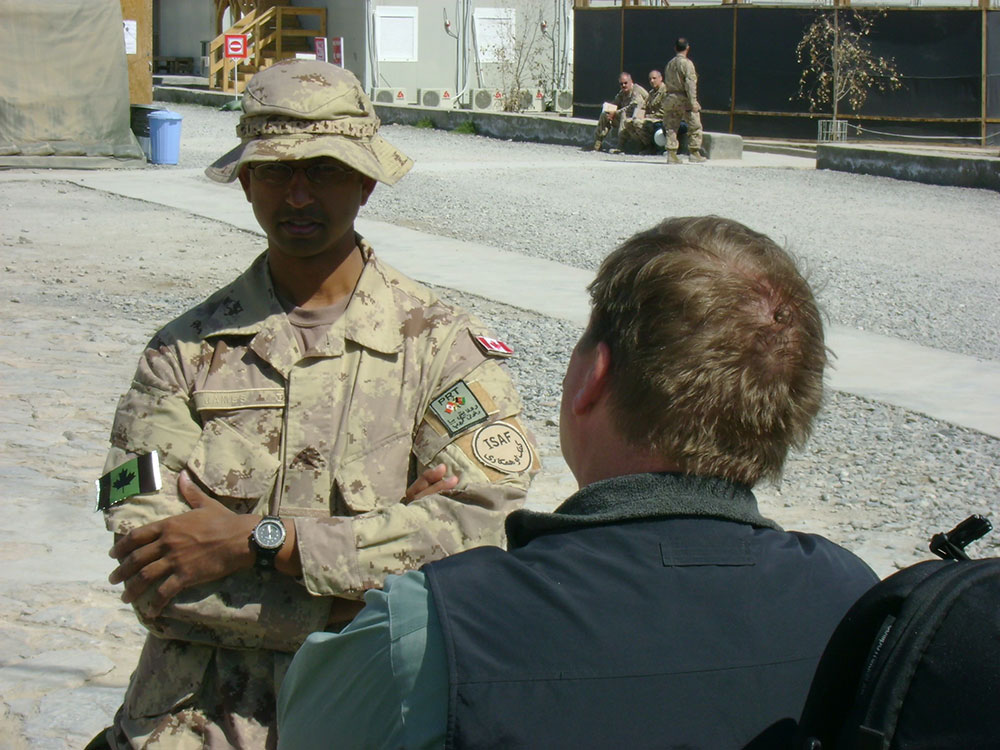
James briefs a journalist at Camp Nathan Smith in Kandahar, Afghanistan, 2007.
In 2007, James deployed to Afghanistan, a posting that left a deep impression on him. It was a time of heavy casualties for Canadian forces.
"We were losing people," he says quietly. "Even now, nearly twenty years later, I think about those names. That deployment stays with you. It’s part of who you are."
He was diagnosed with PTSD during a post-deployment screening in July 2020. James has been writing about it and helping other Veterans ever since. He credits Veterans Affairs Canada with helping him through his transition to life after service, "Without the programs from Veterans Affairs, this would have been way, way harder."
A quiet, constant presence
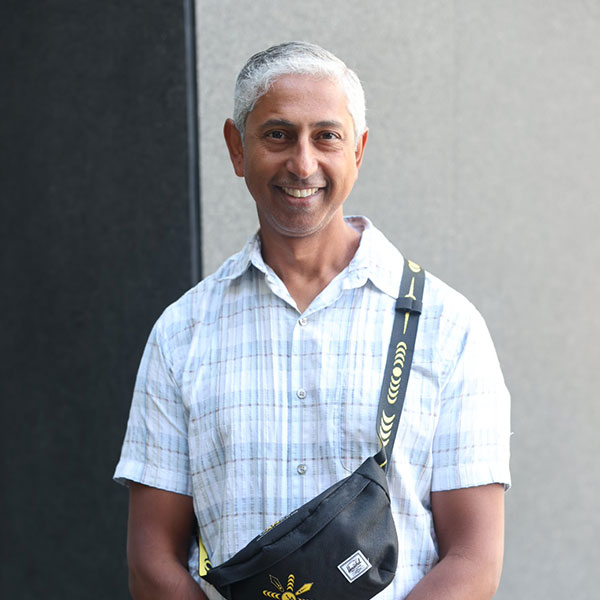
Desmond James in Ottawa.
Today, James has transitioned out of uniform, but his respect for those serving on Canadian soil is still strong.
"We don’t always wear camouflage in the streets of Toronto or Vancouver," he says. "But we are everywhere—ready to respond, ready to help."
James sees domestic service as the heart of the Canadian Armed Forces’ mission. It could mean fighting fires and rescuing stranded hikers. Sometimes, it’s simply reassuring Canadians during a crisis.
"Most of the time, you’ll never even know we were there," he says. "And that’s okay. Because the work isn’t about being seen—it’s about making sure Canadians are safe, no matter what comes their way."
Video
Learn more about the Canadian Armed Forces Service in Canada.
With courage, integrity and loyalty, Desmond James is leaving his mark. He is a Canadian Armed Forces Veteran. Discover more stories.
The well-being of Canadian Veterans is at the heart of everything we do. As part of this, we recognize, honour and commemorate the service of all Canadian Veterans. Learn more about the services and benefits that we offer.
If you are a Veteran, family member or caregiver, the support of a mental health professional is available anytime at no cost to you. Call 1-800-268-7708.