
Women in Canada’s military – then and now
Age group: 15 - 18
Lesson duration: 60-90 minutes
Summary
Students will compare and contrast representations of women in Canada's military by analyzing two videos from 1944 and 2026. They will discuss similarities and differences in the roles, opportunities and representation of women in military service over time. In a short written response, students will reflect on how the messages in the two videos reveal changing societal attitudes and expectations about women. An optional extension activity provides an opportunity to further explore and honour the topic by researching and recognizing one woman Veteran.
Objectives
Students will:
- Examine the experiences, contributions and lasting impact of Canadian women who served during the Second World War.
- Understand how social change and evolving views about gender have influenced women's participation in the Canadian Armed Forces.
- Analyze how historical and contemporary representations of military service reflect changing societal attitudes and expectations about women's roles in Canada.
- Appreciate the contributions of women who have served in Canada's military and recognize their service as part of Canada's Veteran community.
Classroom materials
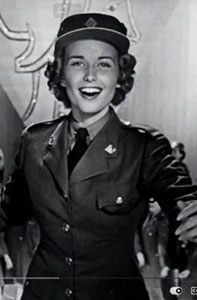
- Video: The proudest girl in the world (2:13), 1944 Canadian Women’s Army Corps recruitment video by the National Film Board of Canada
- Video: Her story: Canadian women in uniform (5:39), 2026 Veterans Affairs Canada overview of women’s military service from the South African War to present
- Transcript: The proudest girl in the world (PDF)
- Transcript: Her story: Canadian women in uniform (PDF)
- Handout: Video compare and contrast (PDF)
*Note: The Proudest girl in the world video is available in English only, with a French language translation. If you would prefer a French-language video, the first 7 minutes of Carrières de femmes can be substituted.
Warning
This activity requires consideration of how women and visible minorities are portrayed in historical material. Refer to resources your school, province or territory offers to support discussions about racism, sexism or sensitive topics. Please review all text and videos before use and assess appropriateness for your class.
Teacher resources
Before you begin the lesson, you may wish to review Canadian women in service and Women in service historical milestones.
Here are some points that will be helpful in supporting class discussions:
During the 1940s
- Women served primarily in support and administrative roles.
- They worked as clerks, drivers, mechanics, telephone operators and administrative staff.
- Women did not serve in combat roles.
- Recruitment often emphasized duty, patriotism and supporting men fighting overseas.
Today
- Women can serve in all occupations within the Canadian Armed Forces.
- They may work as pilots, engineers, naval officers, infantry soldiers, intelligence officers, doctors and nurses, or senior leaders.
- Policies emphasize inclusion, equality, leadership and diverse career opportunities.
Introduction
Women have always contributed to Canada’s military efforts, but the nature of their service has changed dramatically over time.
Engage your students in a brief discussion on the following points prior to watching the videos:
- What military jobs do you think women performed during the Second World War?
- What military jobs might women perform today?
- How do you think these changes might have affected how women in uniform are presented or perceived? For example, how might recruitment messaging aimed at women have changed over time?
Activity
Video analysis
Ask students to watch both videos and complete the Video compare and contrast handout. Provide transcripts The proudest girl in the world (PDF) and Her story: Canadian women in uniform (PDF) to support their analysis.
In addition to questions on their analysis sheet, encourage students to pay attention to:
Content
- The types of jobs available to women in the Second World War versus today.
- The responsibilities women have today compared to during the Second World War.
- The reasons given for enlisting in the 1944 recruitment video.
Visuals
- How women are portrayed (clothing, attitudes, beauty standards and other characteristics).
- Who is represented in each video and who is not represented.
- What racial stereotypes are present.
Language
- Words and phrases that stand out.
- What values are emphasized.
Compare and contrast discussion
Review observations from the Video compare and contrast handout as a class. Explore the questions below as part of your class discussion:
- What does The proudest girl in the world video tell us about people's views of women at the time?
- How have opportunities for women in the military changed since the 1940s?
- The proudest girl in the world recruitment video was produced in English only. What challenges might Francophone women, Indigenous women and other groups have faced when trying to join the military during the Second World War? How might language skills or cultural backgrounds be an asset in the military?
- The proudest girl in the world includes just one racial minority. How is she portrayed? What does this tell us about societal views at the time?
- What leadership roles can women hold in the modern video that are not shown in The proudest girl in the world?
Written assignment
Ask your students to write a response to the following question. Define the length and content according to grade-level expectations and abilities.
Using examples from both videos, explain how opportunities and expectations for women in Canada's military have changed since the Second World War.
Wrap-up
Review the main themes explored during the lesson. Remind students that during the Second World War, military service created new opportunities for women at a time when their abilities were often underestimated or restricted by societal expectations. Women's contributions to the war effort helped challenge stereotypes and change perceptions about the roles women could play in the military and in Canadian society.
Explain that opportunities for women in the military have continued to expand over time. Today, women serve in all trades and occupations in the Canadian Armed Forces.
Invite students to briefly reflect on one key thing they learned about women's military service or how attitudes toward women have changed since the Second World War.
Close by reminding students that all women who have served in Canada's military are Veterans. Their service, sacrifice and contributions are an important part of Canada's history and helped shape opportunities for future generations of women in military service.
Extension activity
Research and recognition
Challenge students to turn reflection into recognition by researching a Canadian woman who served in the military, either historically or in the present day. Students can create a poster, video, digital presentation or another tribute that honours her service.
The finished piece should include:
- Her role in the military
- Challenges she faced
- Her contributions and achievements
- How her experiences reflect changing opportunities for women in the military
- Why her story is important to remember today
For research inspiration, explore:
Canadian Virtual War Memorial or the Women in service timeline. Younger students may benefit from the research packages included in the Women and War lesson plan.