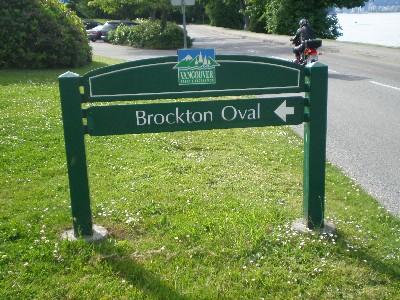
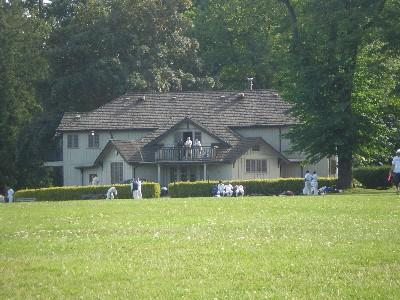
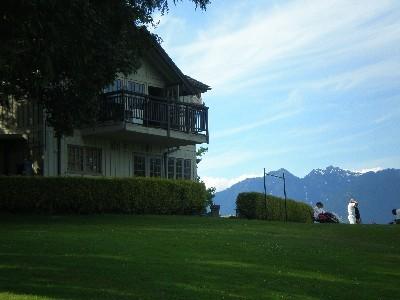
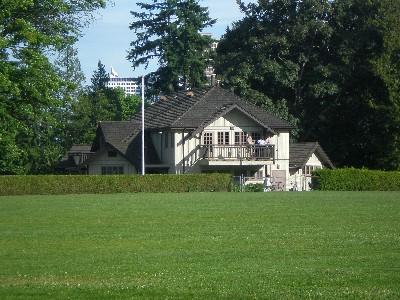
This area was named in honour of Francis Brockton, Chief Engineer aboard the HM surveying vessel Plumper.
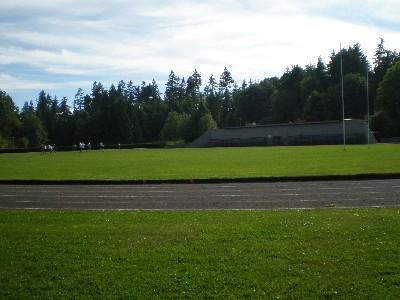
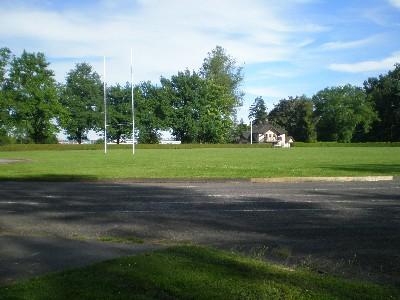
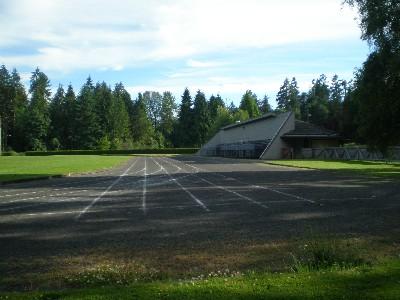
Brockton Oval
Sign in to My VAC Account
This area was named in honour of Francis Brockton, Chief Engineer aboard the HM surveying vessel Plumper.
[plaque/plaque]
WITH THIS PLAQUE
PIONEERS OF THE CANADIAN
MERCHANT SERVICE GUILD
HONOUR SEAFARERS AND THOSE
WHO CREATED AND DEVELOPED
PORT OF VANCOUVER
1972
The construction of the Lighthouse is associated with improving safety and providing maritime aids to shopping at Vancouver harbour. The lighthouse is also related to the pre-war phase of development of Stanley Park. It was named in honour of Chief Engineer Francis Brock from the surveying vessel HM Plumper.
This area was named in 1859 by Captain Richards of HM surveying vessel Plumper after Francis Brockton, Chief Engineer.
[plaque/plaque]
NINE O'CLOCK GUN
THIS GUN IS A NAVAL TYPE TWELVE POUND MUZZLE-
LOADER. CAST IN 1816 AT WOOLWICH, ENGLAND
IT WAS BROUGHT TO VANCOUVER ABOUT 1894. THE
CRESTS OF KING GEORGE III AND OF THE EARL OF
MULGRAVE, MASTER GENERAL OF ORDNANCE ARE
ON THE BARREL
GUN RESTORATION AND PAVILION WERE CENTENNIAL GIFTS
IN 1986 TO THE CITY OF VANCOUVER FROM
EBCO INDUSTRIES LTD. CHESTER F. MILLAR
FIRST GENERATION HUDSON'S BAY COMPANY
CAPITAL CORPORATION
This gun is a naval type twelve pound muzzle-loader. It sounds every evening at exactly 2100hrs. It was restored and a pavilion created in 1986.
[front/devant]
H.M.S. EGERIA
[plaque/plaque]
THIS CONCRETE SLAB WAS SET
BY THE ROYAL ENGINEERS IN
1863 AND WAS USED AS A SURVEY
POINT IN 1898 BY THE ROYAL
NAVY SURVEY SHIP H.M.S. EGERIA
1898
This memorial is an inscribed concrete slab, which was set by the Royal Engineers in 1865 and used as a survey point in 1898 by the Royal Navy survey ship, HMS Egeria. It is located just west of the Nine O'Clock Gun, in Stanley Park. HMS Egeria was a 4-gun screw sloop launched at Pembroke in 1873. In 1875 Egeria, commanded by Commander Ralph Lancelot Turton, proceeded to Perak, as one of a squadron of six ships under Captain Alexander Buller with his senior officer’s pennant in Modeste, to take part in an expedition against the murderers of Mr. J. W. Birch, the British resident in Perak. While the troops and a naval brigade advanced on the upper reaches of the Perak River simultaneously from two points, Egeria blockaded the Perak Littoral, and sent her boats up the Kurow River. These boats destroyed or carried off some guns, arms, and ammunition which might have been useful to the enemy. Severe punishment was inflicted on the natives, but the actual murderers were not brought to account for some time afterwards.
[left plaque/plaque de gauche]
HER MAJESTY'S CANADIAN SHIP DISCOVERY
WAS COMMISSIONED ON NOVEMBER 1 1941.
THOUSANDS OF MEN AND WOMEN HAVE BEEN
RECRUITED AND TRAINED AT THESE NAVAL
RESERVE FACILITIES OF DEADMAN'S ISLAND FOR
SERVICE TO CANADA IN PEACE AND WAR.
WORLD WAR II 1939 - 1945
KOREAN CONFLICT 1950 - 1953
OPERATION FRICTION 1991.
[right plaque/plaque de droite]
LE NAVIRE CANADIEN DE SA MAJESTE DISCOVERY
A ETE MIS EN SERVICE ACTIF LE 1 NOVEMBRE 1941.
DES MILLIERS D'HOMMES ET DE FEMMES ONT ETE
ENROLES ET ENTRAINES DANS LES INSTAILATIONS
DE LA RESERVE NAVALE DE L'ILE DE DEADMAN
POUR SERVIR LE CANADA EN TEMPS DE GUERRE ET
EN TEMPS DE PAIX.
SECONDE GUERRE 1939-1945
GUERRE DE COREE 1950-1953
OPERATION FRICTION 1991
[sign/enseigne]
H.M.C.S. N.C.S.M.
DISCOVERY
NAVAL RESERVE DIVISION
DIVISION DE LA RÉSERVE NAVALE
[plaque/plaque]
CITY OF VANCOUVER
DEADMAN'S ISLAND
The name of this six acre island comes
from its use as a burial ground by the Salish
Indians. Early settlers used it as a cemetery and
as a quarantine area during the 1893 smallpox
epidemic. In 1944 it became a naval station,
H.M.C.S. Discovery - named after one
of Captain Vancouver's ships.
1886 - 1986
See inscription.
Victory Square was at one time the grounds of the city's provincial courthouse, which was torn down in 1911-13. The location had significance when it was chosen, as it stands at the intersection of the old Granville townsite (aka Gastown) and the CPR townsite, which was the downtown-designated land grant obtained by the CPR as part of the deal to locate the terminus and thereby found the city. The Victory Square Cenotaph is located in this park (see memorial 59026-002).
This bridge was built in 1932 to connect downtown Vancouver to Kitsilano. The engineer, John Grant, had the idea to install huge lamps at both ends of the span as a tribute to Canadian First World War prisoners of war, who huddled around open fires in their prison camps.
needs further research/recherche incomplète
One of Vancouver's oldest Community Centres, the Kitsilano War Memorial Community Centre was founded in 1950 as part of a grassroots movement to provide indoor public recreation services while commemorating local citizens lost in the Second World War. Kitsilano War Memorial Community Centre is jointly operated by the Kitsilano War Memorial Centre Association and the Vancouver Park Board.