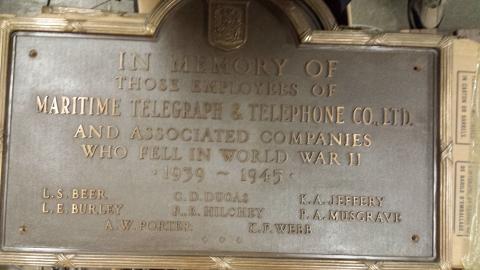
This plaque was dedicated by Halifax employees of the Maritime Telegraph & Telephone Company Limited in honour of their comrades who gave their lives in the Second World War. It is not known where the plaque is located now.
Second World War Plaque
My VAC Account
My VAC Account
This plaque was dedicated by Halifax employees of the Maritime Telegraph & Telephone Company Limited in honour of their comrades who gave their lives in the Second World War. It is not known where the plaque is located now.
HEINISH AV
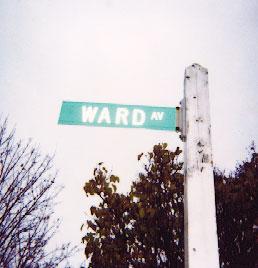
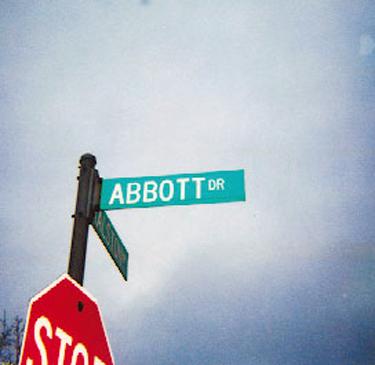
Named in honour of Sergeant Morton Ralph Heinish, RCAF. The Westmount Subdivision was constructed following the Second World War. The streets were named in honour of some of the service personnel from Halifax who were killed in the Second World War.
This plaque was dedicated by Halifax employees of the Maritime Telegraph & Telephone Company Limited in honour of their comrades who gave their lives in the First World War. It is not known where the plaque is located now.
PROTECTED HERITAGE SITE
under the
SPECIAL PLACES PROCTECTION ACT
Dedicated to the memory of the nineteen men
who lost their lives with the sinking of the
Halifax Shipyard tug
“ERG”
July 6 1943
in collision with freighter
S.S. “NORELG”
Memorial plaque donated by
Halifax Shipyard
IRVING
Erg was built at the Halifax Shipyard in 1915. The steam tug was first named Sambro and during the Halifax Explosion on 6 December 1917, while docked at the Graving Dock Wharf on the Halifax side of the harbour, sank to the bottom of the harbour from the force from the explosion. It is not known if there were any lives lost. The Explosion occurred 980 feet north of the Graving Dock and many yard workers were killed. Sambro was raised from the water in 1927 and renamed Erg.
During the Second World War the vessel assisted with the movement and repair of larger ships. On the morning of 6 July 1943, Erg was carrying workers and equipment on its way to service a Merchant Navy ship that was anchored in the Bedford Basin with an assembled convoy, and was hit by the Norwegian freighter SS Norelg, a larger ship weighting in at 3,382 tons. Erg was struck from behind, crumbled on the port side and completely tipped her over, sinking within six minutes. There were 24 men aboard and only five survived. A few escaped through the only exit door leading from the wheelhouse and the other nineteen men were trapped in the wheelhouse and the engine room below the deck.
On 19 July 1943 the Royal Canadian Navy raised Erg from the water and it was beached on the eastern side of the Bedford Basin. There they were able to recover ten bodies, but the other nine were never found. Erg's hull was too badly damaged to repair, so was taken to shallow end of the basin in Roach Cove and scuttled and sunk for the third and last time on 24 August 1943. A plaque was presented by the Halifax Shipyard during a ceremony to honour the lost workers.
Nova Scotia Underwater Exploration Society divers found the wreck in October 2000. The sunken vessel was described as being fully intact, sitting perfectly upright with its dented wheelhouse also sitting upright and its propeller still attached. The Erg’s back was broken with its back end slightly sticking up in the air. The divers were able to go inside the wreck and swim around viewing everything. The site was proclaimed a Protected Heritage Site under the Special Places Protection Act and divers placed this plaque beside the wreck.
ERNST AV
Named in honour of Lieutenant Colonel A.A. Ernst, West Nova Scotia Regiment. The Westmount Subdivision was constructed following the Second World War. The streets were named in honour of some of the service personnel from Halifax who were killed in the Second World War.
Erg was built at the Halifax Shipyard in 1915. The steam tug was first named Sambro and during the Halifax Explosion on 6 December 1917, while docked at the Graving Dock Wharf on the Halifax side of the harbour, sank to the bottom of the harbour from the force from the explosion. It is not known if there were any lives lost. The Explosion occurred 980 feet north of the Graving Dock and many yard workers were killed. Sambro was raised from the water in 1927 and renamed Erg.
During the Second World War the vessel assisted with the movement and repair of larger ships. On the morning of 6 July 1943, Erg was carrying workers and equipment on its way to service a Merchant Navy ship that was anchored in the Bedford Basin with an assembled convoy, and was hit by the Norwegian freighter SS Norelg, a larger ship weighting in at 3,382 tons. Erg was struck from behind, crumbled on the port side and completely tipped her over, sinking within six minutes. There were 24 men aboard and only five survived. A few escaped through the only exit door leading from the wheelhouse and the other nineteen men were trapped in the wheelhouse and the engine room below the deck.
On 19 July 1943 the Royal Canadian Navy raised Erg from the water and it was beached on the eastern side of the Bedford Basin. There they were able to recover ten bodies, but the other nine were never found. Erg's hull was too badly damaged to repair, so was taken to shallow end of the basin in Roach Cove and scuttled and sunk for the third and last time on 24 August 1943. This plaque was presented by the Halifax Shipyard during a ceremony to honour the lost workers.
Nova Scotia Underwater Exploration Society divers found the wreck in October 2000 and placed a plaque beside the wreck.
On 21 January 2020 the “Freedom Halifax 1814” painting by artist Richard Rudnicki was delivered to the Marion McCain Arts and Social Sciences Building by representatives of the Army Museum Halifax Citadel. Richard was the Army Museum’s artist-in-residence from 2012 until he passed away in 2019.
In 2012, Richard was commissioned by the Army Museum to research and create a painting illustrating the arrival of 2,000 Black Chesapeake refugees in 1814. His painting was featured in the Report on Lord Dalhousie’s History on Slavery and Race. Ken Hynes, head curator of the Army Museum, was inspired to loan the original painting to Dalhousie for long-term public display and contacted the chair of the History department.
The painting depicts King's Wharf, Halifax Harbour in 1814 and a British frigate with officers, Royal Marine, Royal Navy and sailors. Black refugees from the Chesapeake Bay region disembark the frigate, offered freedom from slavery in exchange for service to the British Army. In their new life, free from slavery, they suffered hardships and discrimination. The overwhelming majority of Black settlers during and after the War of 1812 chose to stay in Nova Scotia, refusing to go to any country where slavery still existed. They achieved freedom, but were faced with harsh conditions and discrimination.
MEMORIAL DR
This street runs between St. Stephen's Roman Catholic Church and the church's memorial park.
NORMANDY DR
This street was named after the Second World War invasion of France June 6, 1944.
WATERLOO ST
This street commemorates the Battle of Waterloo of 1815.