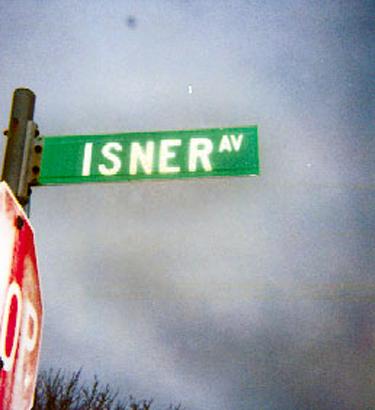
Nommée en honneur du lieutenant Donals A. Isner, RCIC. Le quartier Westmount a été construit après la Seconde Guerre mondiale. Ses rues portent les noms de certains des militaires de Halifax tués pendant ce conflit.
Avenue Isner
ISNER AV
Se connecter à Mon Dossier ACC
Se connecter à Mon Dossier ACCISNER AV
Nommée en honneur du lieutenant Donals A. Isner, RCIC. Le quartier Westmount a été construit après la Seconde Guerre mondiale. Ses rues portent les noms de certains des militaires de Halifax tués pendant ce conflit.
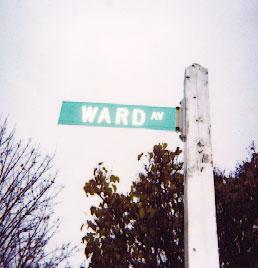
WARD AV
Nommée en honneur du soldat Charles A.V. Ward. Le quartier Westmount a été construit après la Seconde Guerre mondiale. Ses rues portent les noms de certains des militaires de Halifax tués pendant ce conflit.
needs further research/recherche incomplète
En février 1915, à l’église St Mark’s, dans le quartier nord de Halifax, Victor Hatheway, ancien élève de la Fredericton High School et aspirant de la Marine royale, a été honoré sur un monument commémoratif pour les personnes tuées au combat à bord du NSM Good Hope, les premières victimes canadiennes officielles de la Première Guerre mondiale. Victor est le fils de Frederick W. et de Christina Grace Hatheway. Il est diplômé du collège naval de Halifax.
L’église originale St Mark’s a été complètement détruite lors de la fameuse explosion d’Halifax en 1917 et cette plaque commémorative a été détruite. L’actuelle église St Mark’s a été inaugurée en 1921 à un autre endroit.
Le NSM Good Hope était un croiseur blindé de la classe Drake de la Marine royale, qui était le navire amiral de la 4e escadre de croiseurs du contre-amiral Christopher Cradock au début de la Première Guerre mondiale. Le navire a été coulé par l’escadre d’Extrême-Orient de la marine allemande, sous le commandement du vice-amiral Graf Maximilian von Spee, lors de la bataille de Coronel, le 1er novembre 1914.
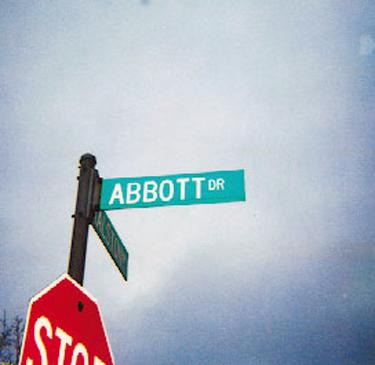
ABBOTT DR
Nommée en honneur du soldat George William Abott. Le quartier Westmount a été construit après la Seconde Guerre mondiale. Ses rues portent les noms de certains des militaires de Halifax tués pendant ce conflit.
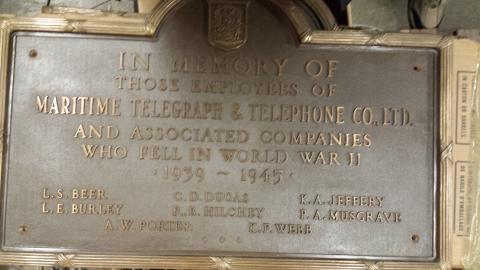
Cette plaque a été inaugurée par les employés de la Maritime Telegraph & Telephone Company Limited d’Halifax en hommage à leurs camarades qui ont donné leur vie au cours de la Première Guerre mondiale. On ne sait pas où se trouve la plaque aujourd’hui.
HEINISH AV
Nommée en honneur du sergent Morton Ralph Heinish, RCAF. Le quartier Westmount a été construit après la Seconde Guerre mondiale. Ses rues portent les noms de certains des militaires de Halifax tués pendant ce conflit.
Cette plaque a été inaugurée par les employés de la Maritime Telegraph & Telephone Company Limited d’Halifax en hommage à leurs camarades qui ont donné leur vie au cours de la Première Guerre mondiale. On ne sait pas où se trouve la plaque aujourd’hui.
PROTECTED HERITAGE SITE
under the
SPECIAL PLACES PROCTECTION ACT
Dedicated to the memory of the nineteen men
who lost their lives with the sinking of the
Halifax Shipyard tug
“ERG”
July 6 1943
in collision with freighter
S.S. “NORELG”
Memorial plaque donated by
Halifax Shipyard
IRVING
Erg was built at the Halifax Shipyard in 1915. The steam tug was first named Sambro and during the Halifax Explosion on 6 December 1917, while docked at the Graving Dock Wharf on the Halifax side of the harbour, sank to the bottom of the harbour from the force from the explosion. It is not known if there were any lives lost. The Explosion occurred 980 feet north of the Graving Dock and many yard workers were killed. Sambro was raised from the water in 1927 and renamed Erg.
During the Second World War the vessel assisted with the movement and repair of larger ships. On the morning of 6 July 1943, Erg was carrying workers and equipment on its way to service a Merchant Navy ship that was anchored in the Bedford Basin with an assembled convoy, and was hit by the Norwegian freighter SS Norelg, a larger ship weighting in at 3,382 tons. Erg was struck from behind, crumbled on the port side and completely tipped her over, sinking within six minutes. There were 24 men aboard and only five survived. A few escaped through the only exit door leading from the wheelhouse and the other nineteen men were trapped in the wheelhouse and the engine room below the deck.
On 19 July 1943 the Royal Canadian Navy raised Erg from the water and it was beached on the eastern side of the Bedford Basin. There they were able to recover ten bodies, but the other nine were never found. Erg's hull was too badly damaged to repair, so was taken to shallow end of the basin in Roach Cove and scuttled and sunk for the third and last time on 24 August 1943.
Nova Scotia Underwater Exploration Society divers found the wreck in October 2000. The sunken vessel was described as being fully intact, sitting perfectly upright with its dented wheelhouse also sitting upright and its propeller still attached. The Erg’s back was broken with its back end slightly sticking up in the air. The divers were able to go inside the wreck and swim around viewing everything. The site was proclaimed a Protected Heritage Site under the Special Places Protection Act and divers placed this plaque beside the wreck.
ERNST AV
Nommé en honneur du lieutenant-colonel A.A. Ernst. Le quartier Westmount a été construit après la Seconde Guerre mondiale. Ses rues portent les noms de certains des militaires de Halifax tués pendant ce conflit.
Erg was built at the Halifax Shipyard in 1915. The steam tug was first named Sambro and during the Halifax Explosion on 6 December 1917, while docked at the Graving Dock Wharf on the Halifax side of the harbour, sank to the bottom of the harbour from the force from the explosion. It is not known if there were any lives lost. The Explosion occurred 980 feet north of the Graving Dock and many yard workers were killed. Sambro was raised from the water in 1927 and renamed Erg.
During the Second World War the vessel assisted with the movement and repair of larger ships. On the morning of 6 July 1943, Erg was carrying workers and equipment on its way to service a Merchant Marine Ship that was anchored in the Bedford Basin with an assembled convoy, and was hit by the Norwegian freighter SS Norelg, a larger ship weighting in at 3,382 tons. Erg was struck from behind, crumbled on the port side and completely tipped her over, sinking within six minutes. There were 24 men aboard and only five survived. A few escaped through the only exit door leading from the wheelhouse and the other nineteen men were trapped in the wheelhouse and the engine room below the deck.
On 19 July 1943 the Royal Canadian Navy raised Erg from the water and it was beached on the eastern side of the Bedford Basin. There they were able to recover ten bodies, but the other nine were never found. Erg's hull was too badly damaged to repair, so was taken to shallow end of the basin in Roach Cove and scuttled and sunk for the third and last time on 24 August 1943. This plaque was presented by the Halifax Shipyard during a ceremony to honour the lost workers.